A Musical Biography: Las Cantigas de Santa Maria 2025

In this 13th year of my production, for public radio, I present the narrative and play list to “Las Cantigas de Santa Maria: A Musical Biography of 13th Century Monarch, King Alfonso X” 

I dedicate this program to my mentor, the late David W. Bauguess and to all music teachers who instill the love of music in their students.  

I invite you to listen to this program on December 24, from 2:00 to 4 p.m. in the Central Time Zone.  The public radio station that has sponsored Las Cantigas in this 13th year is High Plains Public Radio.  Please tune in on hppr.org under holiday programming (not to be confused with HPPR connect, the talk show portion of their dual programming). 

 Hello. I’m Debra Bolton. Welcome to Las Cantigas de Santa Maria (The Holy Canticles of St. Mary), Songs and poems in praise of the Virgin Mary – and the poetic/musical biography of Alfonso, “the wise”, The King of Castile-Leon, now Spain, and who lived from 1221 to 1284.  I’m happy you’ve joined me today.   

Today, my research comes from the authors Deirdre Jackson, Dr. Jessica Knauss, and Emilio Villalba with Sara Marina, and Maestro Jordi Savall.   

I like to begin this musical journey with The Learned King declaring himself Mary’s Troubadour who will take her teachings to his Kingdom and beyond. We hear the prologue where The Learned King states, “I am here to spread your good word to my people, and in doing that, I pray for my place in the Kingdom of Heaven.”   

This is Pavel Zarukin 1:18  

Followed by the spoken declaration that Alfonso the Wise states that from henceforth, he will be Mary’s troubadour. :18 and CSM #4 by Ricardo Alves Pereira with the Prologue CSM B 3:47  

Pavel Zarukin – Score Exchange

That was Ricardo Alves Pereira with an instrumental version of the CSM Prologue B and King Alfonso X announcement that he serves as the Virgin Mary’s troubadour, henceforth, from Emsemble Obsidienne with Emmanuel Bonnardot.   the Learned King’s spoken declaration that he is Mary’s greatest public relations ad man, so to speak.  Alfonso pledges to use every means to extol Mary’s virtues, especially where her miracles are concerned.  

In writing about the Enigma of the Cantigas de Santa Maria or the CSM, Emilio Villalba, says, “The curious thing about this marvellous musical monument from the 13th century is that it still holds many secrets and enigmas that make this work even more valuable.” He adds, “There is no doubt that Alfonso was one of the first kings to sign a musical book, making this work a unique codex.  

The CSM collection consists of poems put to music. The king also engaged 2D and 3D artists to depict visually what the songs portrayed.   The catalog consists of more than 420 poems set to music beginning with what is called a “cantiga de loor” song of love, that is “courtly love” and every 10th song is a song of love while the others focus on scenarios related to sins and crimes with their accompanying stories of Mary’s miracles from which Alfonso X hopes to promote morality in his kingdoms of Castile and Leon, which later become what we know as Spain.   

Let’s turn to the works of This Breton band called Bleizi Ruz, meaning red wolves in the Breton language.  This interpretation demonstrates that the Cantigas de Santa Maria continues to be of interest to musicians and scholars world wide. Here Blizi Ruz collaborates with Spanish Ensemble, La Musigaña. 

Cantigas de Santa Maria: 4:04 

CSM 1 – Des oge mais quer’ eu trobar.  Hana Blaziková, Barbora Kabátková, Margit Übellacker & Martin Novák  5:44 

Album Cover

That was Hana Blaziková, Barbora Kabátková, Margit Übellacker & Martin Novák performing CSM 1, The Seven Joys. We began the set with Blizi Ruz and La Musigaña with an instrumental of CSM 1. 

You can find this transcript, along with photos, and links in my blog, Peopleandcultures.blog. Look for “Cantigas de Santa Maria 2025” 

You’re listening to Las Cantigas de Santa Maria, a musical biography of Medieval King Alfonso X and his devotion to the Virgin Mary. In this, we come to understand the miracles of the Virgin Mary as seen through the eyes and ears of Alfonso X, who ruled what is now Spain during the 13th Century.  

Each year, when I prepare this production, I like to read different scholarly interpretations of the CSM.  King Alfonso X remains an enigma. Instead of having his musicians and scholars do the work, he worked alongside them offering his own poetry and musical notations to the songs praising the miracles of the Virgin Mary.  Musician and musicologist, Emilio Villalba posits that four copies of the vast works were made so that the King could have them at each of his palaces. During great illness, the King held the rather weighty volumes on his chest as a sort of balm for healing.   

We’ll dive into works of other Alfonsine scholars later in this program.  Let’s continue with an Arabic tribute to the Virgin Mary.  Remember, King Alfonso X was a pluralist, and he ruled his kingdom, rather effectively, with Muslims, Jewish, and Christians side by side. We’ll hear two version of a la quarte estampie royal.  A Royal dance, specifically of Medieval times: 

La quarte estampie royal – Ensemble Alcatraz  2:33 

La quarte Estampie Royal – Jordi Savall 4:47 

We just heard Jordi Saval and his Hesperion XXI (21) from an album called Estampies & Danses Royales on the Alia Vox label. 

You’re listening to Las Cantigas de Santa Maria, a musical biography of Medieval King Alfonso X. I’m Debra Bolton. We now pause for this station break: 2:00  
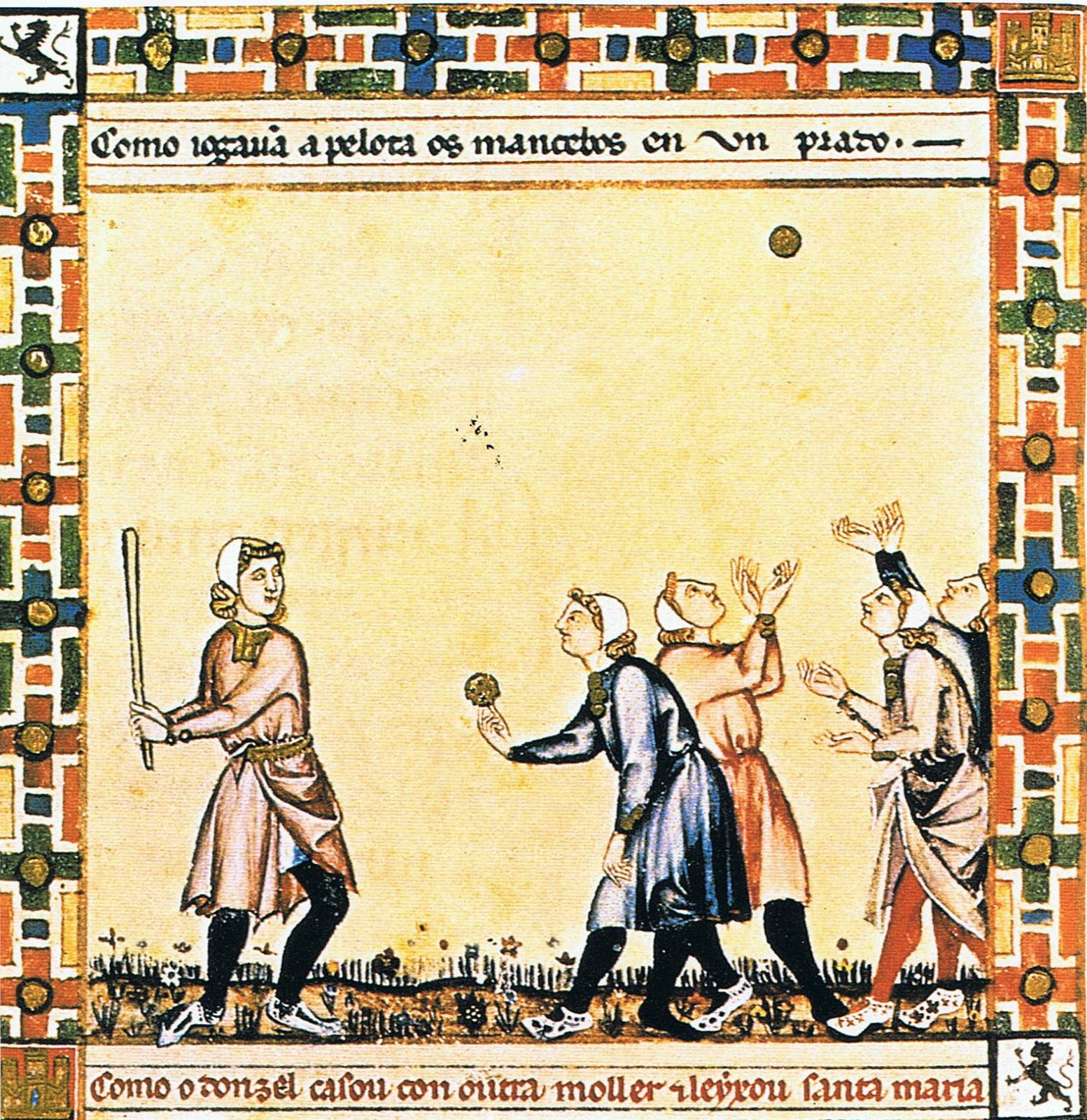
Welcome back to Las Cantigas de Santa Maria, a musical biography of 13th Century monarch, King Alfonso X, who ruled what is now Spain from 1251 to 1284. I’m your host, Debra Bolton. A friend from Spain shares a few articles he’s found on King Alfonso.  One such article, Work and Workers in Alfonso X’s CSM by Deirdre Jackson, sheds light on ways men and women coped with work challenges from work accidents to crop failure. Some scholars posit that Alfonso the Wise made a conscious effort to preserve ways of life in his kingdom, while committing himself to creating a cultural time capsule in the dominant language of the time: Galician-Portuguese, the embryonic Castilian of today.  We’ll hear two pieces of the CSM that speak to work life, with the added twist of Mary intervening to ease a tragedy.  

CSM 213 tells the story of A man named don Tomé from Elvas who made his living carrying things to market on his beasts. Tome worked with the thought that  his wife was faithful to him, but he was mistaken.  

One day authorities found her stabbed to death. When Tome returned to Elvas, they tried to arrest him, but he fled to the border. 

He settled in Badajoz, and decided to go to Terena on pilgrimage hoping the  Virgin would protect him from arrest, since the charge was unjust. He prayed to the Virgin to have mercy on him and to defend him. 

On his return to Badajoz, he encountered his enemies, but the Virgin prevented them from seeing him. Still hoping to find him, they went to Terena. On a riverbank, they saw the devil in the man’s guise. 

Once the devil’s trick was revealed, the authorities understood that Tome was innocent, and they begged his pardon. 

Here we have Tomoko Sugawara, performing CSM 213 on the Konghou, a plucked concert harp instrument of ancient China.  

CSM 213 Tomoko Sugawara 3:49 

CSM 267 Aquel Trovar 4:44 
That was Aquel Trovar performing CSM 267, A rich merchant from Portugal vowed someday to go on pilgrimage to Rocamadour. 

The merchant loaded his ship and sailed up the Atlantic coast toward Flanders. The ship was struck by a storm and the merchant was thrown into the sea. As he sank into the waves, he asked the Virgin to save him. The Virgin calmed the sea and carried the merchant to dry land.  

The ancient city of Rocamadour, with a current population of 604 people, includes buildings that appear to have been carved in the clifftop. Considered a religious city in the Occitania region of southern France,  Rocamadour borders Spain and features the body of St. Amadour and the sculpture of the Black Virgin.  This village figures into the CSM frequently. 

Let’s hear  CSM #8, the Minstrel of Rocamadour, named, Pedro de Sigrar, who sang and played  his fiddle in front of a statue of the Virgin. He prayed that she’d give him a candle, and she caused one to rest on his fiddle. A monk, the shrine treasurer, snatched it back, and accused the minstrel of sorcery. The candle returned to the fiddle and the people, seeing this, did not allow the monk to take it away from the minstrel again. The monk acknowledged the miracle, repented, and asked the minstrel’s pardon. This is the Waverly Consort with the late Michael Jaffee, leading. 

CSM 8: A virgen Santa Maria Pt. 1                   0:19 

CSM 8: Song    3:38 
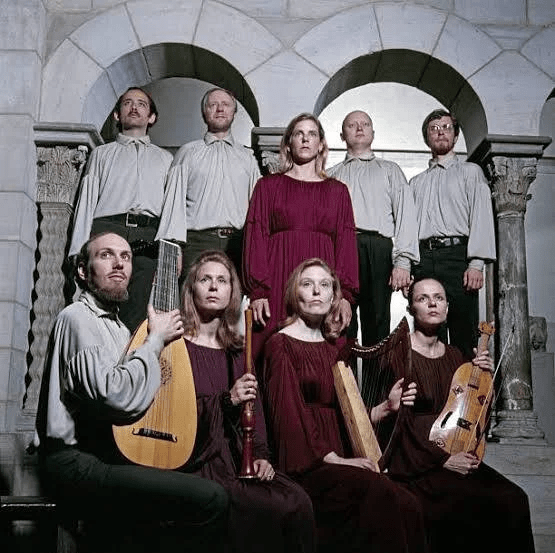
Waverly Consort: eBay Australia (source)

That was the Waverly Consort from their album: Las Cantigas de Santa Maria, one of my first encounters with the CSM, and it continues to delight. 

You’re listening to a musical biography of Medieval King Alfonso X of what is now Spain.  I’m your host Debra Bolton.  Thank you for listening.  Coming up in the second hour of Las Cantigas de Santa Maria, we’ll look at some contemporary interpretations of the CSM, including electric guitars replacing instruments of the 13th Century. 

In this vast collections of the CSM, we learn that of the 420 songs, every 10th song is a Cantiga de Loor, a song of courtly love.  Let’s continue with Maestro Eduardo Paniagua, a musicologist and multi-instrumentalist specializing in period instruments of the time including viola de rueda, a.k.a. the hurdy gurdy, the oud (precursor to the guitar), the organetto (a portable organ), and varying horns and recorders. You can see some of these instruments on my blog: peopleandcultures.blog. We’ll hear CSM 80 and CSM 130, songs of courtly love, performed by Eduardo Paniagua. 

CSM 80       2:54 

CSM 130     3:02 
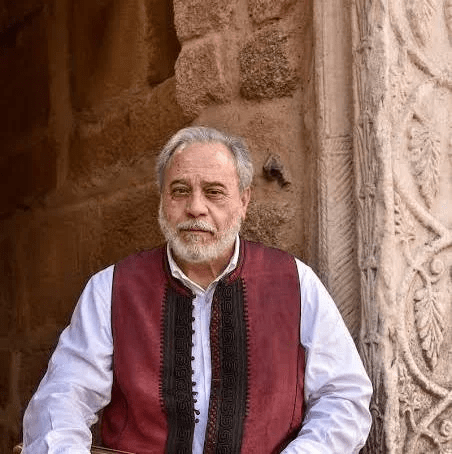
Maestro Eduardo Paniagua: Architect and Musician: Melomano Digital – “The Cantigas are kind of like a chest of gold coins!”

We just heard Eduardo Paniagua with CSM 80 and 130, songs of courtly love.  

As we approach the top of the hour, I hope you join us for the second hour to further our exploration of the history, the music, the King’s goals for this vast collection, and much more. 

Let’s listen to Frederic Hand performing, what he calls, a CSM fantasy followed by CSM 139, the boy who offered bread to the Christ Child.  You’re listening to Las Cantigas de Santa Maria, a musical biography of Medieval King Alfonso X.  I”m your host, Debra Bolton. 

HR 1 Segment 2 total timing: 29:27 
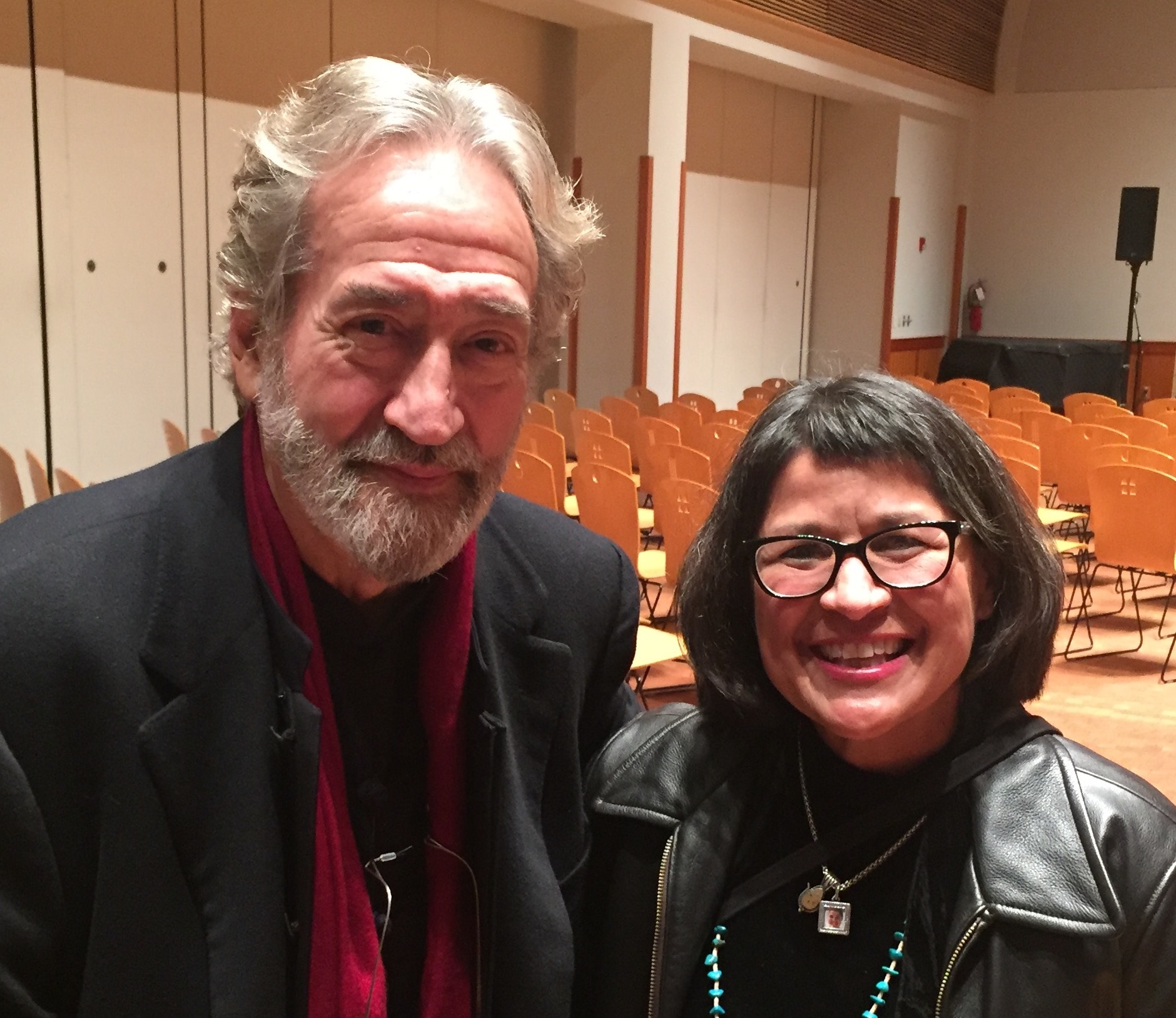
HR 2 Segment 1 

Welcome to the second and final hour of this holiday special Las Cantigas de Santa Maria, the holy canticles of the Virgin Mary and musical biography of Alfonso X, the King of Castile-Leon, now Spain.  I’m your host, Debra Bolton. 

Alfonso X ruled from 1252 to 1284.  To put the world into perspective at the time, the English language continued to change from its Germanic-rooted Olde English of the Beowulf poet (circa 9th or 10th century) after the Norman invasion of 1066. In the next century, we hear the English of Geoffrey Chaucer of Canterbury Tales fame and the Gawain Poet.  Europeans now use Arabic numerals in favor of Roman Numerals. In the Mongol Empire, Mongke, officially, marks the worship of his grandfather, Genghis Khan while Buddhism, Islam, and Christianity flourish. The Inca Empire of Peru is thriving. England begins the process of segregation of Jewish peoples, and other countries begin to follow suit. Poland became a place of refuge for exiled and homeless Jewish Peoples, but it later became host to many Jewish death camps under the Hitler regime. The Mexica people, also known as Aztecs, are building their great capital city Tenochtitlan on Lake Texcoco, what is now Mexico City.  King Alfonso X’s bid to be King of the Holy Roman Empire but fails as Pope Alexander IV (4th) denies Alfonso’s rights to the throne in favor of Count Rudolf, bringing prominence to the Habsburg family.  Count Rudolf was considered mediocre by many, as Alfonso was too ambitious and certainly too bright for that particular Pope of the time. 

From the 13th to the 21st Century, the Cantigas de Santa Maria continue to influence new and exciting interpretations.  Let’s begin this second hour looking at an electric influence of one of the most recognizable of the CSM, , and since it has an even number, 100, we know that it’s a song of love.  Here we have Gabriel Fox with his contemporary interpretation of CSM 100. 

Gabriel Fox, CSM 100         2:37 

Takashi Tsunoda, CSM Medley      6:26 

Album Cover: Apple Music (No copyright infringement intended)

That was Takashi Tsunoda performing on the Oud Harp, an instrument that he helped to build. Tsunoda also plays the gourd  banjo in that piece.  Tsunoda is listed under classical, jazz, and world music genres. 

You’re listening to Las Cantigas de Santa Maria.  I’m Debra Bolton, your host.  By the bye, you can read the transcript along with photos of the instruments and the musical playlist on my blog, peopleandcultures.blog.  Also, you can comment or communicate with me through the blog, too. 

Let’s continue with our exploration of the CSM.  Often, the performers will list their song or instrumental by the first few lines of the poem.  Thanks to the Oxford Cantigas de Santa Maria database, I can find the CSM number by using the lines from the poem.  Let’s hear Enea Sorini’s interpretation of CSM 48, the stream that was diverted for the monks of Montserrat. 

CSM 48  3:46 

CSM 77-119 by Forfaitz    5:12  

That was the Ensemble Forfaitz with CSM 77-119.  I can find little to no     information about Ensemble Forfaitz other than they play with Ensemble Unicorn. I’ve noticed that many interpreters of the CSM tend to bundle CSM 77-119 into a medley.  Rather than my telling you what each of the stories entail, this is where you can find each of the 420 poems: the Oxford Cantigas de Santa Maria database.  I continue to be fascinated by the stories in each of the poems.  

King Alfonso ruled Castile-Leon in the Iberian Peninsula. If you think about it, Muslim rule began in 711 and lasted until 1492, the year of the Inquisition, when Muslims and Jewish people were victims displacement by Christian rule some 200 years after King Alfonso X’s rule.  Alfonso the Wise ruled alongside his Muslim counterparts.   

 Let’s listen to the music of al-Andalus, the name of Muslim rule of the region. This is Eduardo Paniagua, an architect, musicologist, and multi-instrumentalist dedicated to reviving the music of the Iberian Peninsula in the Medieval era. Here he plays with Ensemble El Arabi. This is called Cordoba Lozana 

El Arabi with Eduardo Paniagua  Cordoba Lozana 5:52 
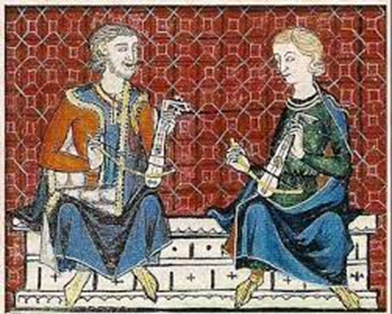
That was El Arabi with Eduardo Paniagua. You’re listening the a musical biography of Medieval King Alfonso X, Las Cantigas de Santa Maria.  I’m your host, Debra Bolton.  Let’s take this break from your public radio station, and then we will return with the second part of this hour. 

Music bed: Istampitta: La Manfredina (Italia Medieval) Jordi Savall 2:00  

(Hour 2: Segment 2) 

Welcome back to the final segment of Las Cantigas de Santa Maria. I’m your host, Debra Bolton Thank you for listening and for supporting your public radio station. 

Scholars and Alfonsine devotees continue to celebrate the Learned King’s birthday on November 23 of each year, this being the 804th year since his birth in 1221.  

Let’s discuss, for a moment, the language of King Alfonso X.   

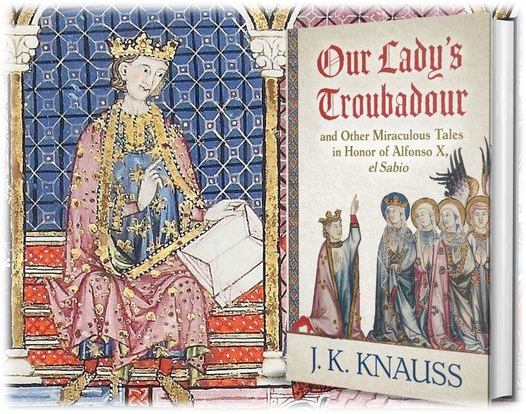
In a past interview with Alfonsine scholar, Dr. J. K. Knauss, she noted that the great legacy of El Sabio is that he lived up to his name, “the wise” because he was obsessed with writing everything down.  Whether it was mathematics, astronomy, the virtue of playing board games and other leisurely activities to balance hard works, laws to govern his subjects, and teaching morality, he not only wrote continually, but he chose not to write in Latin, the language of Kingdoms of the day.  What made his legacy so strong is that he wrote in Galician-Portuguese, the embryonic Castilian, the present-day Spanish, though, like all language, changes continually as it incorporates varying native language of the Americas and other places colonized by Spain .  The Learned King is considered the “Father of Castilian.” Was he that much of a visionary?  It would seem so since Spanish only trails Chinese as the most common language worldwide, flanked by English, Arabic, Hindi, Portuguese, Bengali, Russian, Japanese, and Lahnda, aka, “Western Punjabi” according to The World Economic Forum and Encyclopedia Britannica online.  

Let’s begin this segment with Maestro Jordi Savall, the music scholar, historian, and viola de gambist extraordinaire!  I’ve had the great honor of attending three of his performances in Kansas City.  Nearing 90, Savall still gathers musicians from around the globe to see his vision of bringing to the fore music through the centuries from composers, obscure and famous.   

Here, we have Savall’s arrangement of CSM 248-353.   

Ductia (CSM 248-353) ( 3:43) Jordi Savall 

Je vivroie liement  (I’ve been living)– Ensemble Gilles Binchois 3:06 

You’re listening to Las Cantigas de Santa Maria, a musical biography of King Alfonso X, I’m Debra Bolton.  That was Ensemble Gilles Binchois with Je vivroie Liement, I’’ve been living! Preceded by Jordi Savall with his arrangement of CSM 248-353. 

When I spoke to Alfonsine scholar Dr. J.K. Knauss, who lives in Spain and focuses on writing books, non-fiction and historical fiction, she told me that the higher the number in the CSM collection of more than 420 poems, the more local the miracle is happening.   

Let’s hear Hana Blažíková performing CSM 383, The Pilgram woman saved from drowning, saved by the Virgin to whom the woman prayed. 

CSM 383 – Hana Blažíková   O fondo do mar tan    5:07 

Alfonso X El Sabio – Narciso Yepes    4:58 
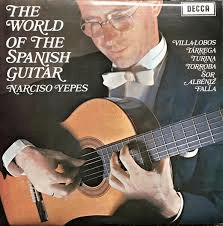
Narciso Yepes: Copyright DECCA Records

That was the great Narciso Yepes, born in Lorca Spain in 1927 and died in Murcia, Spain in 1997.  Yepes brought to prominence, the 10-String Classical guitar known for its range and timbre. Yepes performed his arrangement of a CSM medley in 1989.   

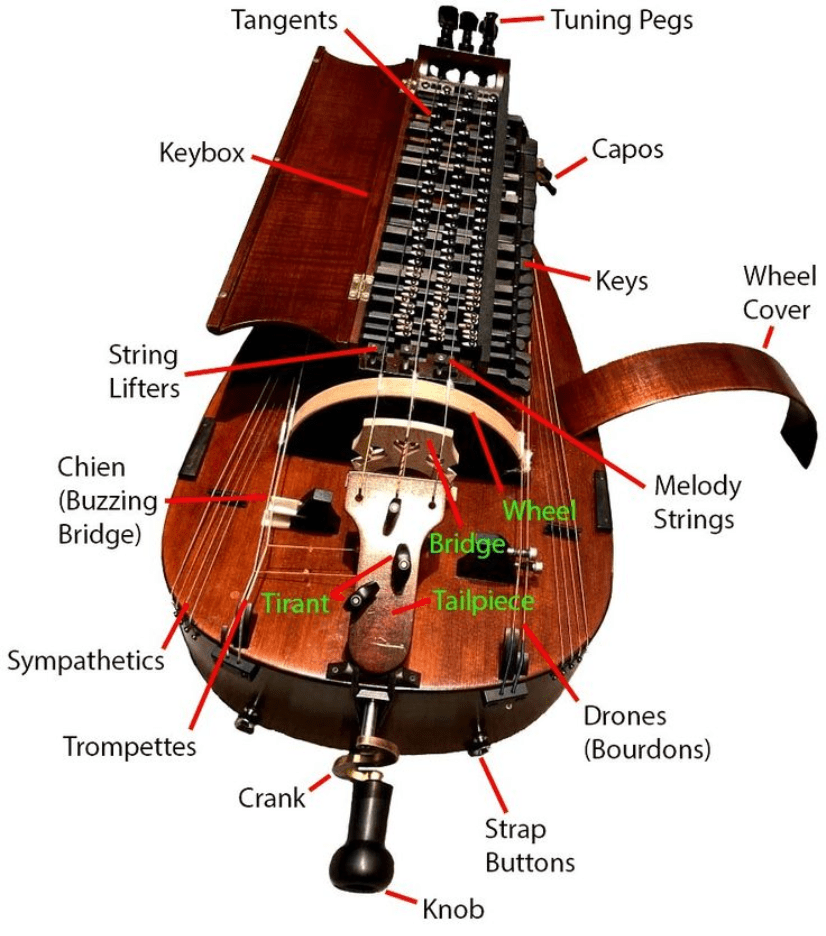
Well, our time together is waning.  Thank you for listening to this special programming, Las Cantigas de Santa Maria with your host, Debra Bolton.  Be sure to check out my blog, peopleandcultures.blog for this narrative and song selections.  You can also see pictures of the medieval instruments featured on this show.  Speaking of instruments, let’s hear the Viola de Rueda, which translates to a violin of the wheel. I’m speaking of the hurdy gurdy also called Zamphona.  I read that it takes five years to build one hurdy gurdy.  On my blog, peopleandcultures.blog I show the anatomy of the hurdy gurdy, a most fascinating instrument still played today. Let’s listen to Eduardo Paniagua and his Fuego de San Marcial. 

Fuego de San Marcial  Eduardo Paniagua              2:38 

 That was Musica Antigua led by Maestro Paniagua. 

Thank you for listening to Las Cantigas de Santa Maria.  I’m your host Debra Bolton.  Thank you for supporting your public radio station. 

To take us to the top of the hour,  Waverly Consorts CSM medley Instrumental from Waverly Consort’s Las Cantigas de Santa Maria (6:43) 

Instruments of the time:   

Shawm – 12th c conical bored double reed instrument of Middle Eastern origin, a precursor of the oboe. Like the oboe, it is conically bored; but its bore, bell, and finger holes are wider, and it has a wooden disk (called a pirouette, on European shawms) that supports the lips 

Recorder – Yes.  That woodwind instrument that many of us learned in grade school. We hear this in the CSM, usually, on a wider variety of wood recorders. 
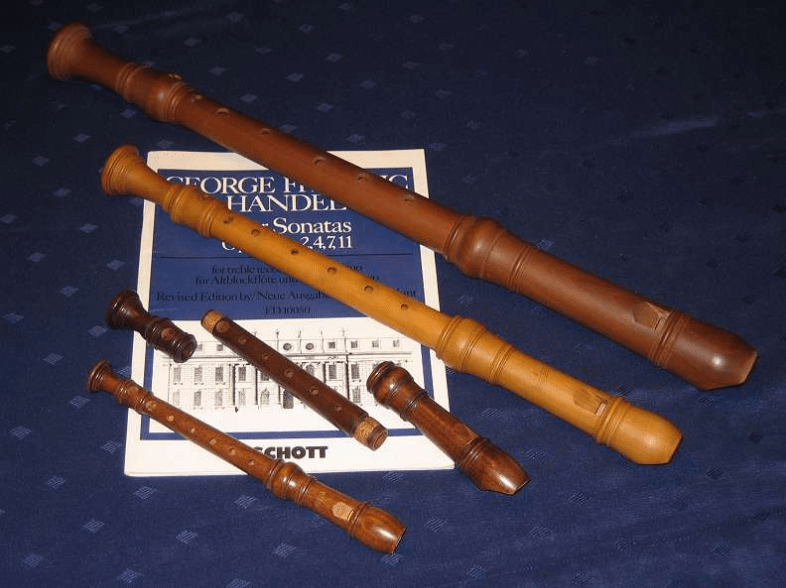
Organetto – a small portable organ, often championed by Soprano, Esther Lamandier 

Oud – Literally, wood in Arabic, short-necked, pear-shaped with 11 – 13 strings grouped in 5, 6, or 7 courses.  A few of the oud players that stand oud are Driss El Maloumi, a group called 3MA and Haik Egitim Merkezi Yalova, both Maloumi and Yalova perform with Jordi Savall’s Hesperion groups.  The Oud is considered the most important instrument in Middle Eastern Music.   
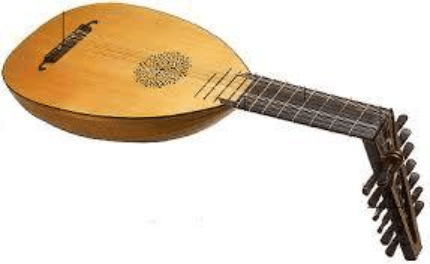
Qanun (a.k.a., kanun, ganoun, kanoon) an Arabic stringed instrument, introduced to Europe in the 12th Century.  It’s played on the lap with picks that surround both index fingers, and the player can change the pitch of the strings with brass levers. 

Hakan Güngör plays Kanun on the right, with Jordi Savall playing his vièle 

Hurdy Gurdy, a.k.a. Viola de Rueda, and the Zanfona.  Here we hear this instrument in Musica Antigua.  
Vielle – the Medieval fiddle with five strings and six tied frets. 

See image above 

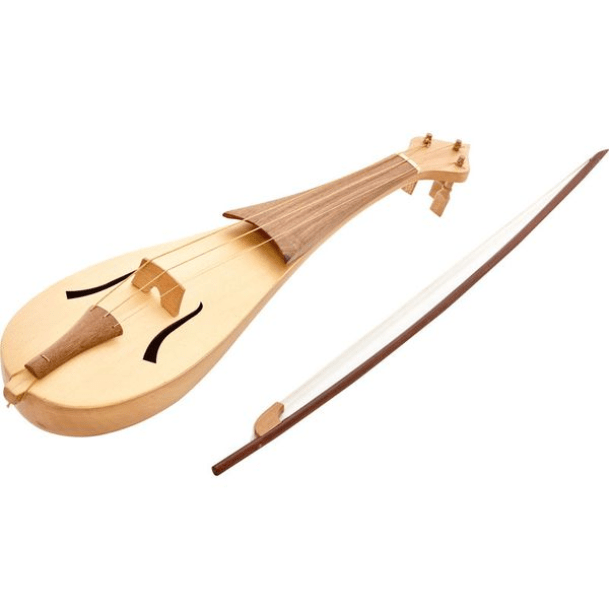
Rebec – A three-string “fiddle” often held between the legs as it’s played. 
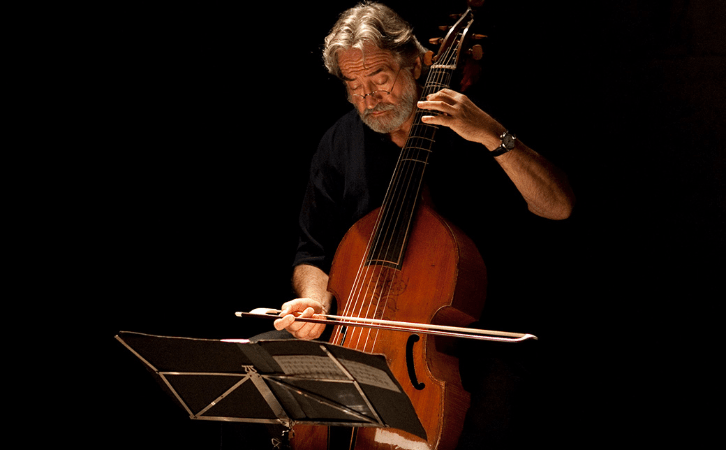
Viola de Gamba – (a.k.a., Viol or gamba), a six-stringed instrument, said to be a precursor of the four-stringed cello.  The Gamba, usually, is much larger and has frets, like a guitar. 
Gaita – Galician bag pipe, also common in Portugal.  

Duduk – Double reed Armenian flute, featuring those mournful, lamenting tones. Haïg Sarikouyoumdjian, pictured below, plays with Jordi Savall’s Hesperion group. 
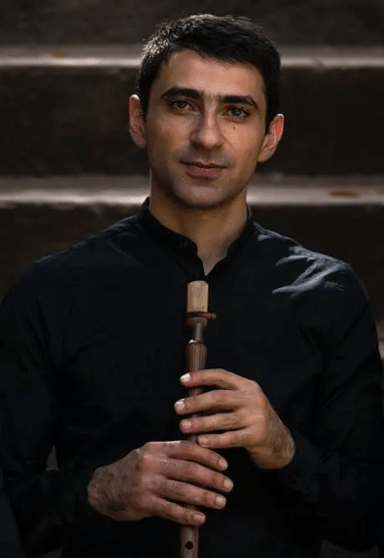
I wrote this part for narrative, but did not include in radio program.  

For perspective of the time, King Henry III ruled England about the same time Alfonso X ruled Castile-Leon, the greater part of what is now known as Spain.  While El Sabio ruled his lands with Christians, Muslims, and Jewish peoples living and studying side-by-side with some appreciation and great tolerance, it would not be until 208 years later that Isabella and Ferdinand would expel all non-Christians and the time Christopher Columbus would set sail for Asia but landed in the Americas, which changed extensively the lives that he touched. Before that, well-civilized Indigenous tribes had not yet had contact with European colonizers. The surnames that most people connect with Latin American countries were the surnames of their Spanish conquerors.  During and after the inquisition, many non-Christians, Jewish and Muslim people, added the suffixes of –ez, -es, or –os, meaning “son of,” to their surnames. For example, the Muslim man, Alvar, became Alvarez.  The Jewish man, Martin became Martinez.  Consistent with most surnames, there remained a connection to the family trade or place of origins.   The Herrera were Sehphardic Jewish iron-smiths of Galicia.  Those hailing from Galicia, or Galego, were the Galegos.  In the present day, an extra “L” was added to make it “Gallegos” with the double-L being pronounced as “ya.” 

Let’s explore the music of the Iberian Peninsula during Alfonso’s time with music of the Jewish and Muslim peoples. First, we turn to the music of Jewish People of the region known as the Sephardim, who populated Spain, North Africa, Turkey, differing from the Ashkenazi Jewish of Eastern Europe.  King Alfonso welcomed Christians, Jewish, and Muslims musician into his Court.  He respected Muslims, the keepers of classical knowledge and for their sophisticated, cultured and their technological advances.  They were poets, artists, artisans, mathematicians, merchants, and ship builders.   the Jewish were known as astronomers, writers, economists, scholars, and architects. You’re listening to Las Cantigas de Santa Maria, a musical biography of 13th Century monarch, Alfonso the Wise. Be sure to check out my blog, peopleandcultures.blog for a transcript of this presentation and pictures of the many instruments played in these musical pieces. 

King Alfonso employed artists to create two and three-dimensional works of art to correspond to the poems and songs, which would have made the Learned King an early pioneer in multi-media.  Now, here we are putting it all in digital form!  Scholars say the works of art, the songs and the poems were Alfonso’s way of teaching morality to the subjects of his kingdom on many levels.  While those in his court were, themselves, learned and well-educated people, there were many in his kingdom who, perhaps, could not read or write.  Hence the need for the lessons in more than written forms.  

As we think of the language of Galician-Portuguese morphing into Castilian, and many now call the language “Spanish” coming from Spain, originally.  During the expulsion of Jewish and Muslims in 1492, we can see some of the suffixes that may be telling of their origins.  Christian suffixes were –ez, -es, and –os. When colonizing other lands, ironsmiths were quite important.  Think of the many people you know with the surname of “Smith.”  Hierro means iron in Castilian.   The surname Hernandez denotes the Christian ironsmiths, and the surname Herrera were the Sephardic Jewish ironsmiths, and the Gallegos hailed from Galicia.  We don’t think that the double-l was pronounced with the “y” sound at the time. In case you’re  wondering about Galician-Portuguese, the language that is now known as Castilian, here’s a short phonics lesson, “Cs” and “Zs” were pronounced with a “TH” sound or a lisp.  Most of those pronunciations hold true today in the Iberian Peninsula.  When Castilian came to the Americas beginning in1492, the thousands of Indigenous languages were erased, in most cases, as each of those countries were colonized by Columbus and those who followed him from Spain, a European Country. Spain made it to what is now New Mexico about 25 years before the Plymouth rock landing. Spain continued south and the English settlers moved west, illustrating why we speak English in the United States and much of Canada. 
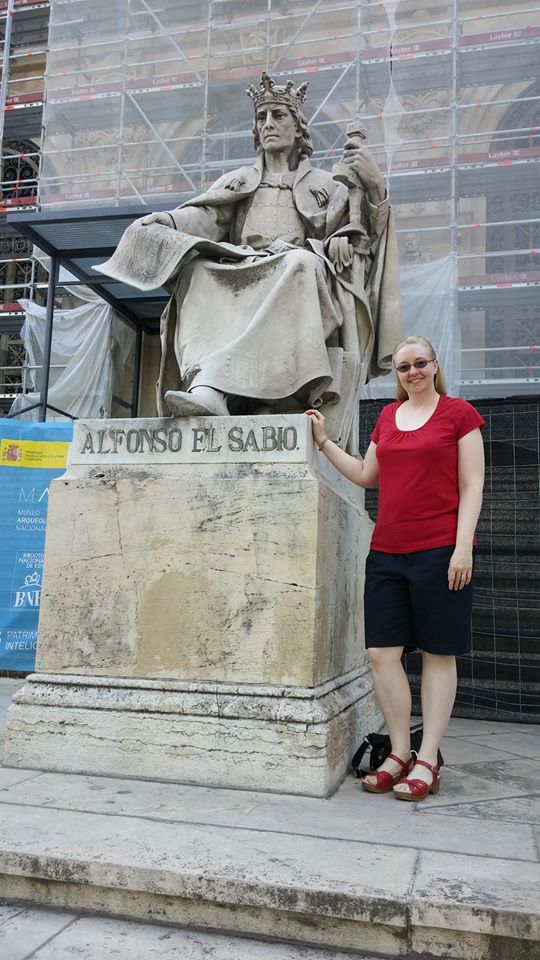
Thanks to the authors who continue to educate me. My references come from the writings of Dr. J.K. Knauss. In addition, I refer to the research of Maestro Jordi Savall, and Maestro Eduardo Paniagua. , John Esten Keller, Robert I. Burn, Editor of “The Emperor of Culture” and from Oxford Univesity’s CSM database.  

Thank you for reading my blog. Be sure to listen to this radio program on High Plains Public Radio, December 24, at 2:00 p.m. Central Standard Time. (hppr.org)

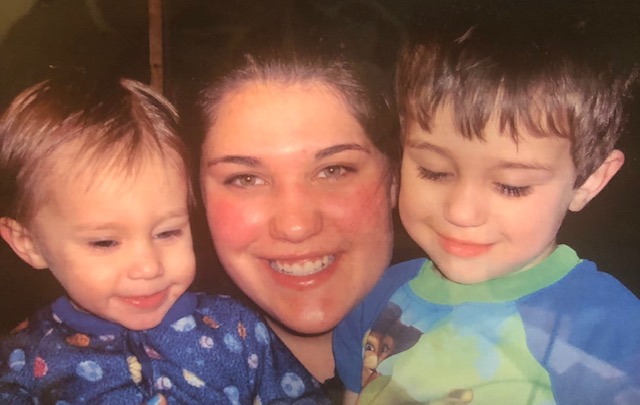
My Letter to Riki

September 27, 2025 

Dear Riki, 

As we draw near the 10th year of your passing, I want to tell you how we’re doing, because I remember that you called me every day to check on me. I know that you check on your children every day, too, even now. Today would have been your 44th birthday. 

First of all, we miss you so deeply.  We remember your sense of humor, your devotion to your three babies, your talents in the kitchen, your ability to draw people to you, your friendliness to everyone you met, your high vibrations, and your empathy toward others.   

Your children are doing well.  Korbin is moving up the ladder at Walmart, and he continues to cook at Coyotes, because that’s where his friends work.  He loves cars, and he plays in Pokémon tournaments. Shawn is a wonderful daddy to his little girl, Nova.  He is thriving at work as an HVAC expert, and he’s supervising a crew, too. He is going through a rough patch, and he tells me every time we talk, that he misses you dearly, and he wishes you were here to give him advice. Nova is thriving and seems to be a happy little girl. 

Sam is in school and doing well. Her lowest grade is an A-. She is a wonderful mother to the happiest little boy I’ve ever met.  His name is Finn.   

I know you’d be the best grandmother for these babies.  Finn loves to talk to the big portrait I have of you in my living room.  He senses that you are his grandmother and that you are special. 

As you know, we went through some terrible times last year, but we came through it, because we are strong.  All of my GC friends were there to support us during the whole time. Your children have your strength. I see you in them every day.  They learned how to be strong from you, and that is what has carried them through the tragedy of losing you, of watching their own daddy struggle with addictions, and through having a “grandpa” who only hurt them all with his deceit and selfishness.  Oh, how I wish you were here to ease their pain.  Please go to them in their dreams.  That would help a great deal. 

I know your friends miss you desperately, too! They continue to celebrate your birthday, and none of the Village misses your children’s big events, like graduations, birthdays, births, and the like.  I still have some of your recorded voice, so I listen to that every now and again.  I continue to ask why a wonderful young mother would be taken from her children in at the prime of her life and at the serious developmental stages of her children?  You were the heart and soul of your family and of your friend group, the Village.  That’s why they called you, “Mama Bear.”   

Your Brother will likely light a fire in your memory tonight.  The children and I will go out to dinner and reflect on your legacy.   

Finally, I think of you every day.  I ask for your guidance of your children. I love you, dearly, Riki, and I hope you are resting in Power! 

Love Mom. 

A Reflection on King’s Legacy

For the past five years, I have offered a pre-luncheon reflection to honor the legacy of Dr. Martin Luther King, Jr.’s legacy. I post these remarks for your contemplation.

Please join me in an attitude of reflection.

As we gather to honor Dr. Martin Luther King’s powerful legacy, we stand in the wake of the passing, last Monday, of his second son, Dexter Scott King, himself a civil rights activist.  The Universe reminds us of how fragile life can be and our need to care for one another, as admonished by Dr. King.  May Dexter Scott King rest in Power. The elder King modeled for us servant leadership and showed us the power in finding value in each and every human and choosing love over hate and exclusion. We observe that King, often, had to stand alone on these beliefs. Dr. King said, “The ultimate measure of persons is not where they stand in moments of comfort and convenience, but where they stand at times of challenge and controversy.”  Were Dr. King alive today, what would he see?  Would he see progress or further chasms between love and hate?  King’s work toward social Justice and equity, possibly, leads us to ask, “Why does this struggle continue today?”  “What have we learned?”
Remember that King was lodged into the Birmingham Jail, because it was illegal for “Black Folk” to participate in public demonstrations; an exercise NOT afforded to those who were deemed “un-worthy” or “un-deserving.” Hear his voice, “We protest for the Negro brothers and sisters smothering in airtight cages of poverty in the midst of an affluent society.”  What do we observe these 56 years later?

Dr. King emphasized, “If we are to have peace on earth, our loyalties must transcend our, so-called, races, our tribes, our classes, and our nation. This means we must develop a world perspective and tear down the walls of separation and hatred to seek common ground and to dissolve hierarchies.”  He added, “Humans are put on this earth to serve one another.”

Alas, let’s ponder the words of U.S. Youth Poet Laureate, Alexandra Huynh: “Find shelter and strength in one another to go the distance that spans across what we’ve been given and what we deserve. Self-sovereign smiles and applause at every turn. It’s not so impossible when you start to consider that we are bigger together as brothers and sisters.”  

May Kansas State University, as a community defined by pluralism, find the common ground to stand together against darkness and hate to find light and love.

As we prepare for these bodily nourishments, let us greet one another with our own words or action that communicate Love. “Every effort we make to connect is meaningful.”    Verily, I say unto you…, and so it is.

I wish each of you, readers, love and respect.

Thank you for reading my blog. 

A Life Cut Too Short

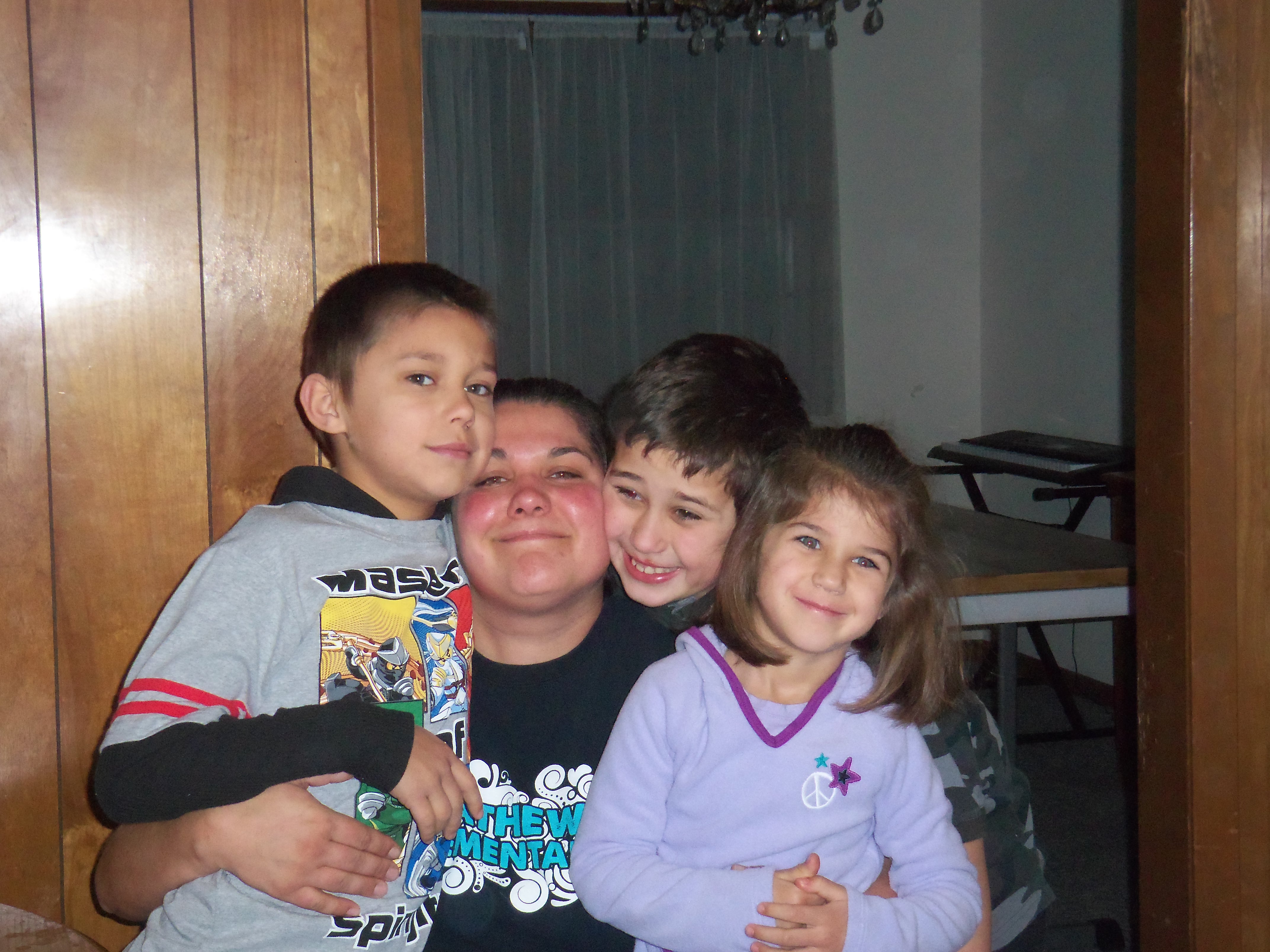
My lovely daughter, Riki L. Warner, would have been 42 years old today. We’re coming up on eight years of her passing. We continue to wonder what would have been had her medical care team met her needs and better served this young mother who left behind three beautiful children and a loving husband. I suppose we never should ponder such questions.

The top image features my necklace with Riki’s picture. The compass rose, given to me by Lynn, not only represents my occupation and passions as a geographer, but I love that it sits next to Riki as she was my north, my south, my east, my west, my working week, and my Sunday rest, so the W.H. Auden poem goes. The Zuni turquoise inlay ring represents the drum, so important in our (Native) ceremonies and prayers.

The past two weeks have been those of family gatherings and celebrations. On September, I had the honor of officiating my nephew’s wedding in Southwest Colorado, and then this past weekend, I officiated my grandson, Shawn to his bride Gracie. Shawn is Riki and Jonathan’s middle child. His empathy for others shines as his super strength. My sister, Eileen, joined in the celebration which took place in Southwest Missouri. Yes! We had a busy week.

I will have to write about the first wedding later, but my focus for this is to highlight Riki’s son, Shawn. This would have been a major event for Riki to see her son married. Shawn and Gray have known each other since middle school. Similar to Riki and Jonathan who met in 6th grade and had been married 12 years when she passed from a heart condition that doctors did not take seriously, because, “She’s very young and may grow out of it.” Who says that. We found out later that she should have had a defibrillating pacemaker. I now share some lovely pictures of the wedding. Here’s Riki with Shawn as a sweet child.

Jonathan sat next to this picture for the ceremony. I thought it such a great tribute to Shawn’s mommy. Shawn’s brother, Korbin, my eldest grand child was the best man, and gave a lovely speech to his brother and new sister-in-law at the reception.

Everyone felt Riki’s presence at the wedding. Her children made her proud on this beautiful day. Sammy and her friend Darrell distributed the bags of bird seeds on the chairs for the recessional. That was fun, and my sister Claudia made the bird seed bags.

Maybe it’s not everyday that a grandma gets to officiate her grandson’s wedding. My son, Stevie, took his nephews to his special barber for their wedding haircuts the day preceding the wedding. My sister gave me tremendous emotional support and great suggestions. Riki’s “Village” was there to celebrate Shawn and remember their dear friend, Riki. I am so grateful to those young families.

Stevie and Dianna entertained Eileen and me, after the reception, with hilarious talk and Stevie’s rendition of Tony Montana from Scarface! Who knew this bittersweet celebration could be joyous and sad at the same time? We make the best of our situations everyday while we greatly miss our Riki.

This time last year, one of Riki’s school friends wrote to me on messenger. Joey told me that he thought about her in so many different situations. The greatest gift Joey gave to me was to say, “Thank you for bringing Riki into this world.” Such a kind and beautiful thing to say to a grieving parent. Riki, we miss you everyday.

Thank you for reading my blog.

Well-Being Concepts

Now that we’re shedding out winter blankets, in the Northern Hemisphere, it’s time to think about warmer weather. Often times, we tend toward a more sedentary life in winter weather. That means we may gain a few pounds, lose a little muscle mass, and our motivation decreases. How do we keep this all in line so that we experience optimal health year around? My answer? Holistic Self-Care.

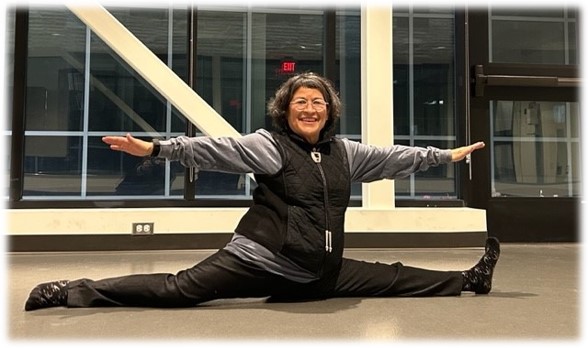
About a month ago, I reached my 66th birthday. The day before my 66th year, I taught a self-care class for my co-workers. It was fun. I called it, “Finding Hygge and Other Emotional Well-Being Concepts.” I’ve written about hygge and other forms of coziness in previous blog articles. I had a co-worker take the picture you see in the “featured image.” That was for my “Meet Your Presenter” slide in the power point for my workshop.

Let’s get started.

I offer this lovely image that I call, “Sunset on the Flinthills” as a gentle reminder for you to bring the natural world into your time reading this and for engaging in self-care practices. Here are some learning objectives:

  • Self-advocacy promotes equity and belonging
  • Health and well-being practices promote physical, emotional, social, and occupational well-being
  • Long-term outcomes include increased confidence and overall well-being

“When we cultivate environments of well-being, we see each other as holistic beings who seek fulfillment through work, leisure time, and personal or professional development. We strive to engage in self-care when necessary and without judgment.” -Bolton

Let’s Breathe

I borrowed this image from social media promoting a Mastery of Self, a book by don Miguel Ruiz Jr.:

  1. Sit quietly with all distractions muted as best as possible.
  2. Circle arms above head while inhaling – then exhale. Do this 8 times.
  3. Breathe in through your nose and out through your mouth: 8x
  4. Inhale to the count of 5 – Exhale to count of 5: 8x
  5. Place your hands on your diaphragm and breath out with a loud “ho!”: 8x

What is Holistic Health and Well-Being?

When we think of when we humans are at our best, there are many needs that must be met. I could bring in Maslow’s Hierarchy of Human Needs, here, but you likely know what those are, and this reflects that, too. I think most humans work toward self-actualization. Here is what we need:

  1. Physical needs – Food, clean water, oxygen, elimination, clothing/shelter, sleep, and movement/activity for sensory and motor stimulation
  2. Mental/psychological needs – attachment, orientation/control, self-esteem, pleasure, and avoiding pain
  3. Spiritual needs – Meaning, purpose, to love, and to be loved
  4. Social needs – Relationships, belonging, respect, affirmation

What under-girds each of these human needs, of course, is SAFETY? 

Safety means, security of body, employment, resources, our moral codes, any type of family, optimal health, and a place of one’s own.  Can you image what happens to humans who do not have the privilege of holistic health and well-being?  Can you imagine what happens to the human psyche when one is displaced due to war, poverty, colonization, or no job opportunities?

We must feel safe and affirmed in any space in which we navigate.  All of these needs move forward once safety has been met.

On another note of importance, we must understand others’ identities  and how those identities may contribute to feelings of non-safety when others view them as lesser than, who don’t belong, or somehow don’t fit in.  Remember, there are those who do not feel safe in certain environments.  That happens when basic human needs are not met.    Abraham Maslow was absolutely correct when he talked about basic human needs as critical to thriving.

Our Own Cultural Behaviors Contribute to Our Senses of Work, Rest, and Play

A dominant cultural behavior of the United States is work, work, work. Brené Brown tells us that “crazy busy is a great armor. It’s a great way for numbing. What a lot of us do it that we stay so busy, and so out in front of our life, that the truth ow how we’re feeling and what we really need can’t catch up with us.” I see this in my work place when my colleagues boast that, “I’m losing vacation days, because I don’t use them!” Unfortunately, that is an ethos that is honored in my work place. That is the opposite of praising for self-care.

Think About You:

  • What are some things you do to wind down after a hard day at work?
  • What are ways in which you balance work and rest?
  • Is “winding down” a practice you do?

Most of us are not in survival mode nor are we in subsistence mode. We tend to forget about “self-care” mode. Let’s change that practice!

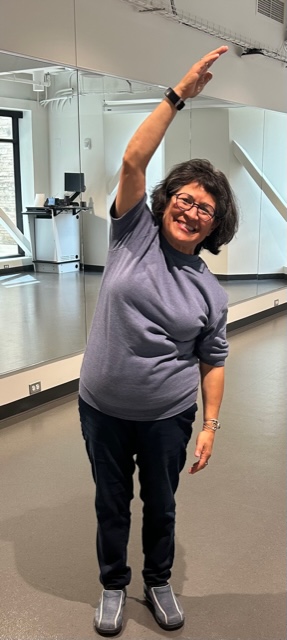
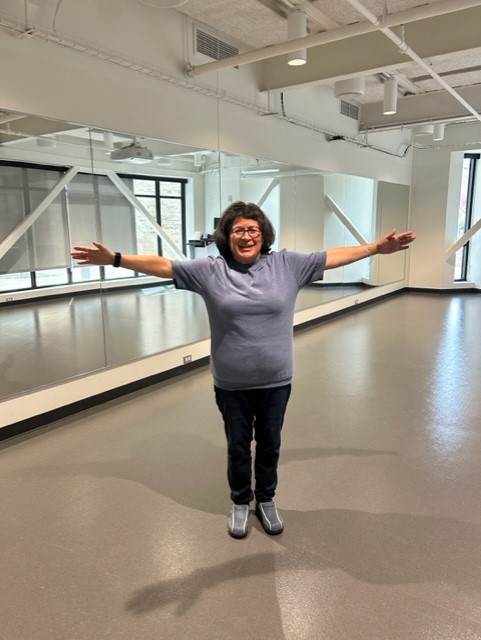
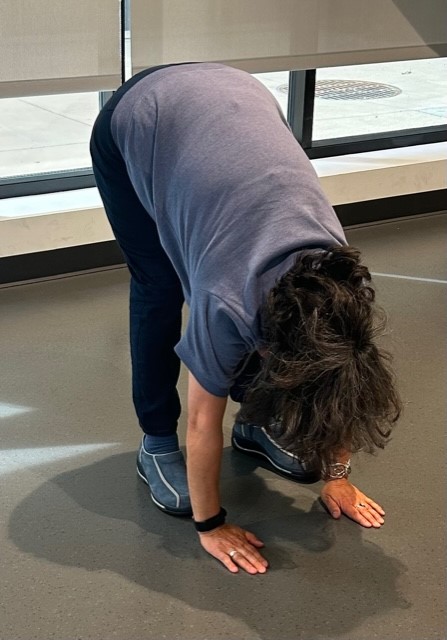
Let’s Stretch

  1. Stand tall and reach for the sky with a full inhalation. Drop your arms as you exhale. 8x
  2. Stand tall and reach from side to side over your head. You will cross your right arm over to your left side and vice versa. 8 x
  3. Stand tall and reach for the sky. Take deep breaths. Reach up, and then bend to touch the floor. 8x
  4. Now, squat low and stretch your inner thighs to a ten count on each side. 8x

Take This Moment to Reflect

•What gifts or talents do you possess?

•What new characteristic did you discover about yourself recently?

•What are you grateful for?

Looking to the future

•Which value or action would bring you closer to a vibrant way of living?

•If you have or would design a personal ritual, what would it be?

•Have you found a way to focus on your successes?

•What kind of person do you strive to be?

•Have you ever thought of naming what you want your life to be as a chapter in a book?

What is Mental Health?

“…a state of well-being in which the individual realizes [their] own abilities, can cope with the normal stresses of life, can work productively and fruitfully, and is able to make a contribution to [their] community.” (WHO, 2004, p.12)

= positive capacity
= social and emotional wellbeing
= behavior, thoughts and emotions

≠ mental ill-health*
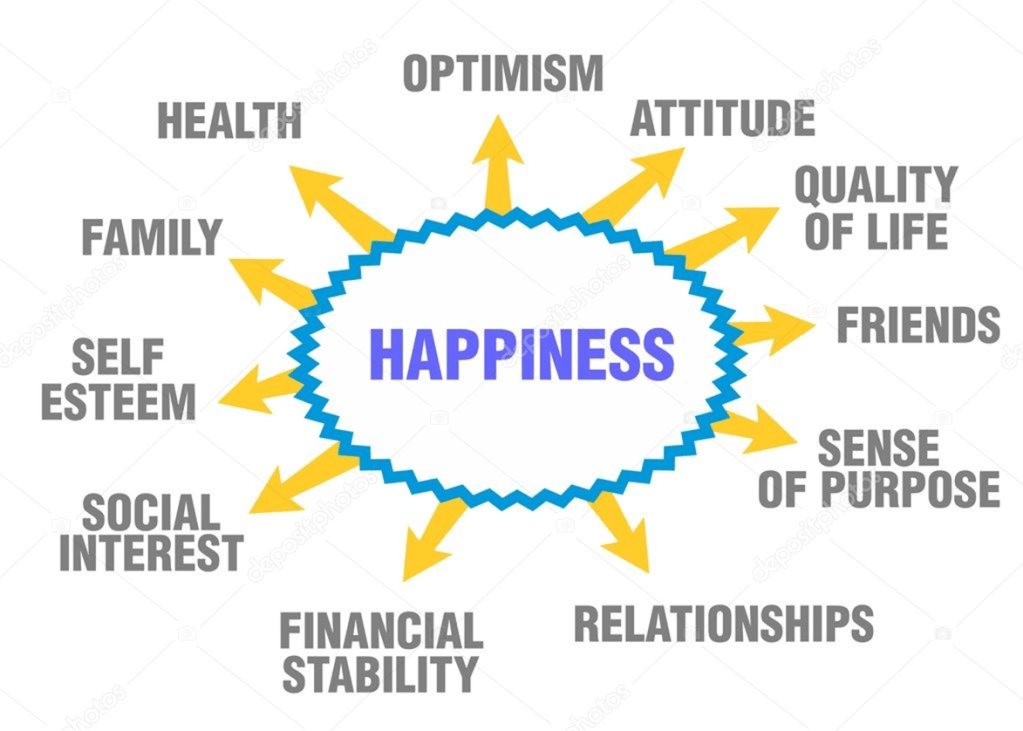
≠ happiness

Open dialogue on Mental Health

In you own words, what does the phrase “Mental Health” mean to you? What definitions/connotations does this phrase evoke?

Mental Health Defined

Its important to recognize that mental health encompasses our recognition of adapting ourselves to our surroundings in a way the promotes our well-being, while still acknowledging the experience. I say this to note that mental health isn’t singularly about being “happy” (especially not all the time). That is an unrealistic or attainable standard for mental health and ignores that we utilize all of our emotions to make sense of our experiences.

Prioritizing mental health ensures we are taking the necessary steps to alleviating those stresses while retaining our functionality in life. We see this in

-Driving personal development

-Seeking out and maintaining relationships with others

-Positive & Affirming

-Speaking Up when in need / communicating our concerns/problems to others who can help

-Expressing our Emotions

-There is no such thing as a “bad” emotion, its how we understand them and express them

-We all feel sadness, anger, joy, etc. We need to see all emotion as natural, but learn how to cope with them as they come

-Last example is a continuation of development

-When we stop problem solving, or setting goals we can slip into states of ill-health that can perpetuate the stresses we are experiencing

So now, what is ill-health?

How Do We Maintain Our Balanced Mental Health?

Personal Development

Positive/Respectful Relationships

Open Communication

Identify/Understand/Expressing Emotions

Setting Goal / Problem Solving / Taking Responsibility

So, Then Ill Mental Health May Be…

“… a spectrum of problems that interfere with an individual’s cognitive, social, and emotional abilities including both ‘mental health problems’ & ‘mental illnesses’”

Reflect

Stress is a normal response to situations

It includes both eustress (“good” stress) and distress (“bad” stress)

Stress responses vary based on the person

What does stress look like during an infectious disease outbreak?

Fear or worry about your own health

Fear or worry about the health of a loved one

Changes in sleep or eating patterns

Difficulty sleeping or concentrating

Worsening chronic health problems

Increased use of alcohol, tobacco, or other drugs

Stress can impact your body, thoughts, feelings, and behaviors- it can effect so much!

Body- headaches, muscle tension, chest pain, tiredness, upset stomach, etc.

Mood (including thoughts and feelings)- anxiety, restlessness, lack of motivation, feeling overwhelmed, irriability or anger, sadness or depression

Behavior- changes in appetite, angry outbursts, drug or alcohol misuse, tobacco misuse, social withdrawal, exercising less often

Self-Care is More Than a Hot Bath or Taking a Day from Work

Here are two quotes from researchers who study human behaviors in societies that push for power and material wealth.

Thank you for reading me. I hope this can be a nice road map for returning to a healthy way of life.

Namaste!

Cooking for One: Fun in the Kitchen

The kitchen window over my sink gives me great pleasure, because I see beautiful juniper trees, and I’m looking through colored glass!

Every time I cook a meal for myself, I think, “I should write about this in my blog!” It seems like I hesitate to write. I like having written more than my desire to write, sometimes. Two of my favorite pasttimes are writing and cooking. It’s great to share these loves.

Many of my friends love to cook! We used to make it a common practice to take turns hosting dinner parties. Then I moved. Establishing oneself in a new community takes time. Perhaps I don’t know the “right” people for such a thing, but I will keep trying. I love to cook, and I love to entertain.

Many people do not like to cook for themselves. I find it relaxing after a tough day at work. I use my mind in a different way than what I do at work. Music always accompanies my time in the kitchen. Time in the kitchen and listening to music are one of the places and times where/when I find my coziness (Hygge).

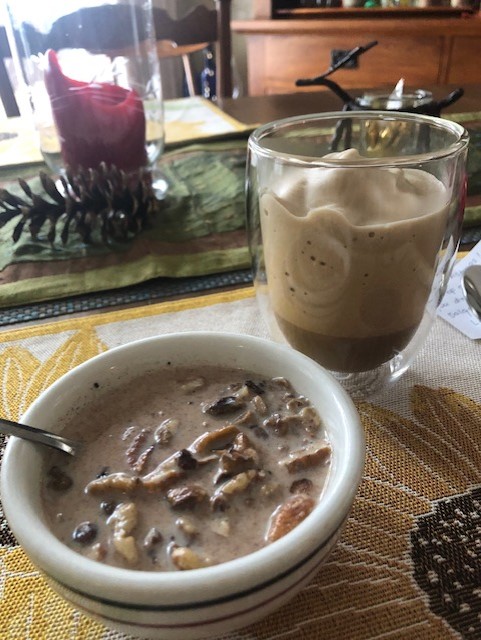
Let us begin with breakfast! My morning routine consists of drinking a lemon/olive oil system cleanser. I make it with 8 cups of water, two whole lemons, a dash of vanila, and four tablespoons of good olive oil. I blend it in 4 cups of water, and then I add the other four cups. Strain it into a half-gallon bottle. I drink 4-6 ounces before 30-minutes of exercise while listening to daily affirmations. Then I prepare my breakfast. Pictured here includes homemade granola (I think the recipe is found in a much earlier blog of mine). Some times I like to eat it was plain yogurt and honey, and other times I like to pour milk on it. I’m having this with a frothy coffee that I prepare in an electric milk frother.

The spices in my granola turn the milk a little murky looking, but the delightful flavor and crunch make it great!
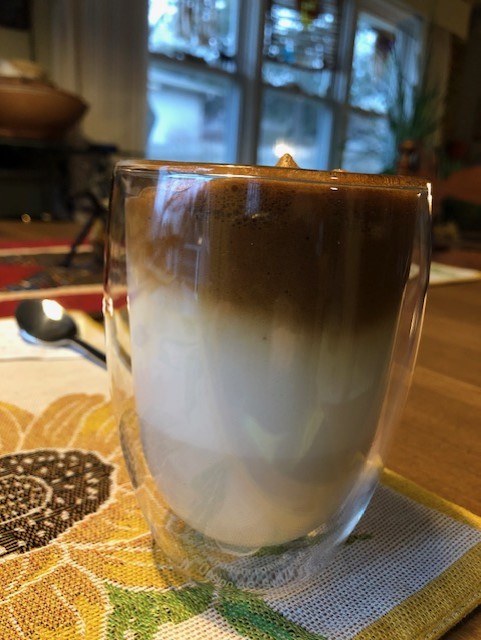
This “Dalgona” coffee was made by whipping the instant coffee in two tablespoons of hot water. The middle layer is frothy milk, and the bottom layer comes from the frothy milk and whipped coffee blending.
This breakfast features homemade bread for the toast, peanut butter, raisins, and hemp seeds for added protein. It tasted great with a steaming cup of chai!

Winter drags out, but spring will be here soon, and the weather will be more amenable to having breakfast, lunch, or dinner out on the back deck or the front patio. During the pandemic and working from home, I took many breakfasts al fresco so that I can watch birds. Two rivers flow on the outskirts of town along with a 30-mile long creek/reservoir. That means we have bald eagles flying over town. What a better way to eat breakfast?

Often times, my breakfast may consist of left overs from the previous night’s dinner. I tend to eat anything for breakfasts. My 93 year old mother finds that “really weird” that her daughter eats “odd” things for breakfast. She defines “odd” as anything that is considered a “non-breakfast” item, like what we ate the night before. I have no such restrictions on myself. Lunches often consist of dinner leftovers, too.

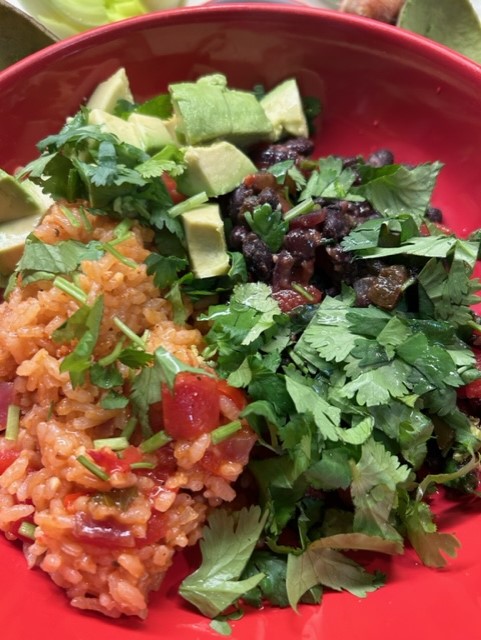
This is a black bean burrito bowl. It can be vegan, but I used chicken stock to make the Spanish rice.

With social media, magazines, and cook books, one can always find new recipes. Of course, magazines and cookbooks contain such beautiful illustrations of the process and the final product. I like to read ingredients lists, which I think are there for suggestions, but recipes are meant to be experienmented with and tailored to fit your favorite flavor profiles. Most cooks know what kinds of spices go with specific dishes. I like to change it up sometime, so I will share some of those here, too.

This is a take on Jollof Rice with seasonings given to me by a friend from Ghana! I used garbanzo beans instead of lentils, because I had no lentils in the house!

With the two illustrations of rice dishes, I found these recipes online. Remember, when you cook with dry beans (garbanzo or black), since they are likely not “new crop” means that you must soak the beans to re-hydrate them before cooking. I don’t have access to new crop garbanzo or black beans, so I do soak and rinse before cooking them. Always add boiling water to your cooking pot. It helps the beans maintain their color and it helps them hydrate quicker in the cooking process.

I make the distinction between older pulses (legumes), because I love pinto beans, and I only buy new crop. They do not have to be soaked. Simply rinse and add to boiling water, which makes for a quicker meal. I get my new crop beans (usually harvested in late September or early October) from a farm in Colorado. The variety of pinto beans that I love is called, “vibrant,” and vibrant they are!

Sometimes a simple lunch can be grilled cheese, with marinated cucumbers and red onions with sparkling water.
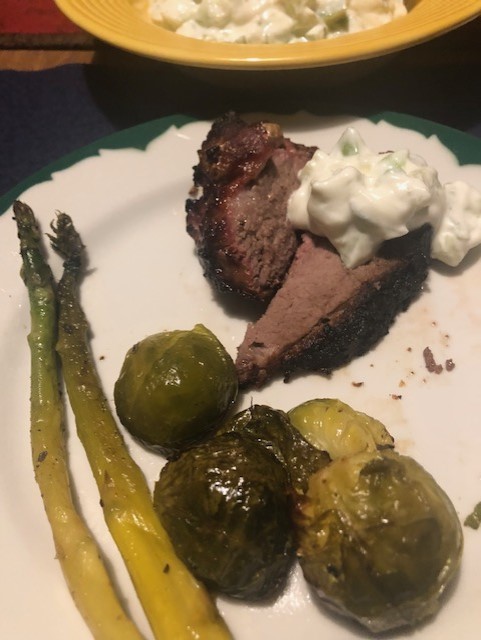
When my grandchildren visit, lamb, Brussels sprouts, and asparagus are always on the menu. They set the menus in these cases.
This simple supper of tuna patties with homemade tartar sauce and a light glass of buttery chardonnay makes for a lovely meal.

I did not share my recipes in this blog today, because I think it’s fun to explore your own preferred flavor profiles. You likely know that some herbs and spices combine with certain ingredients. For example, I never put green chili in my marinara sauces, but I do add green chili to my bean and corn soups. You figure it out, if it interests you.

I realize that cooking or baking does not appeal to everyone. I present this as something that appeals to me.

Thank you for reading my blog.

Remembering Riki

Today, I pay tribute and remembrances on what would have been my daughter Riki’s 41st birthday.  As we near the seven-year anniversary of her passing, I observe that losing a child to death at an early age tends to stay fresh in my mind as if it happened yesterday.  Riki made such an impact on those around her, and her tight friend group, “The Village” continues to honor her on her birthday.  The Village, also, continues to offer emotional supports to the children left behind by the premature death of their mother, my daughter.

I loved watching Riki connect to people.  She always paid special attention to those who were, perhaps, less fortunate.  At her funeral, during reflection comments, a man stood up to tell about how she made him feel special when he met Riki for the first time.  Many told similar stories. What made her special? She loved to laugh, and she had a quick and clever wit. Riki loved to engage in deep discussions with her friends.  Before “google,” she would call us for answers to questions in these deep discussions.  Mainly, the call would be for us to affirm her points of view.

Riki knew how to make moments special even in the most mundane of tasks. She directed nutrition in school food programs.  Riki loved to prepare and share food with friends.  Her children consider her “the best cook ever!” On Wednesdays, Riki used to prepare a “taco bar” for the Village.  This year’s “Riki Celebration” will feature a taco bar for friends and family paying tribute to her memory.

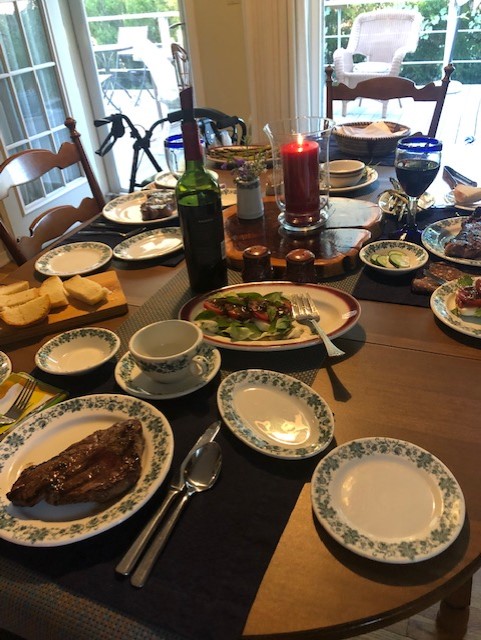
I took the day from work to pay tribute. My 92 year old mother and her 85 year old husband are visiting. My mother and I took the day to prepare a lovely meal of grilled steak, asparagus, caprese salad, and fresh cucumbers. We offer a toast to my daughter and my mother’s great granddaughter, Riki. We prepared foods loved by Riki.

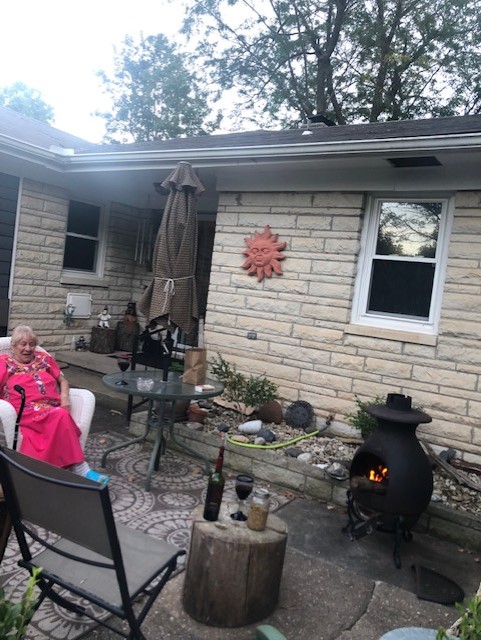
We could have enjoyed a lovely meal at a local restaurant, but Riki loved to cook and bake, so Mother and I prepared a meal that Riki would have loved: steak, asparagus, caprese salad, and fresh cucumbers. A nice bottle of cabernet sauvignon rounded out the meal, and we had a lovely slice of peanut butter cake for a crowning glory to the “good eats!”

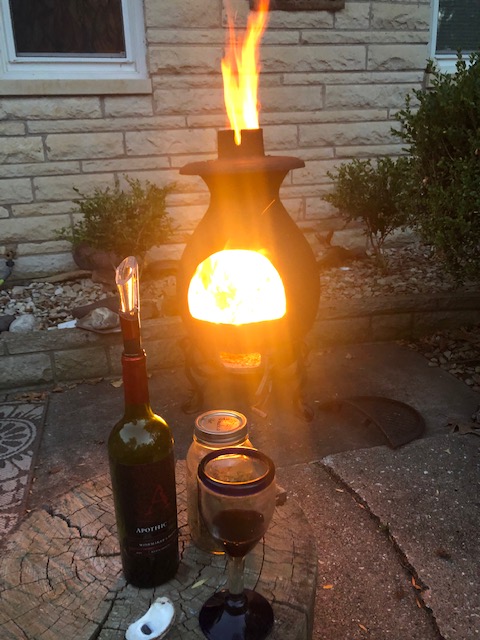
As Indigenous tradition would have it, at least for my tribe/nation, we sing songs and give thanks to Mother Earth and the Creator for what we have and for what we love. We built a roaring fire to which we gave sage and tobacco. We felt Riki’s presence. It was a great honor to be Riki’s mother. She gave all to those who were around her.

To that point, I received a lovely note from one or Riki’s high school friends. Joey thanked me for bringing Riki into the world, and he shared in honor in knowing her. That lovely note came at just the right time to give me a great blessing. Thank you, Joey.

Reflections in the Heat of Day

I find it difficult not to reflect on the pain in the world, at present. How do we center ourselves in the face of such hurt? Well, here I go again touting the benefits of mindful thinking and about my outlook on life. These are some common question that I ask myself. Am I practicing gratitude? Am I practicing stewardship of the land, water, language, and preserving other parts of the natural world? I do realize that when we navigate in environments of poverty, exclusions, marginalizations, and living in the fringes, it becomes a great challenge to have gratitude for much of anything. But, what if we looked inside for what is going well for us? Are we able to stop for a minute and think about for what we can be grateful?

I know. Digging through your mind in the midst of conflict, deep emotions, and sadness may be the worst time to gather positive reflections. I do know that it works, however. My practice, which now is a habit, has been part of my life these past four months. Yes. I am facing some great life challenges, and I can tell you that focusing on gratitude and daily affirmations works! Challenges become navigable.

Bianka’s Hummer

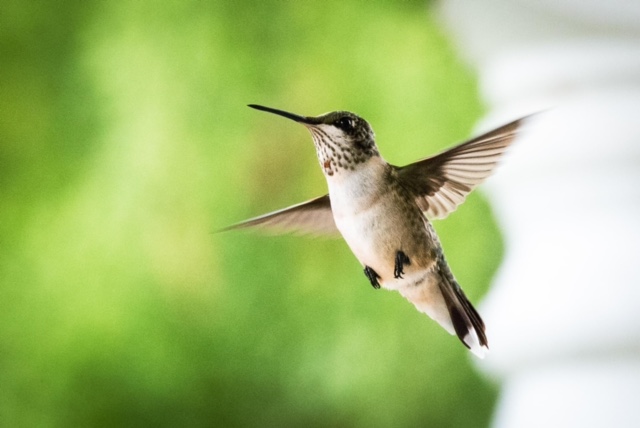
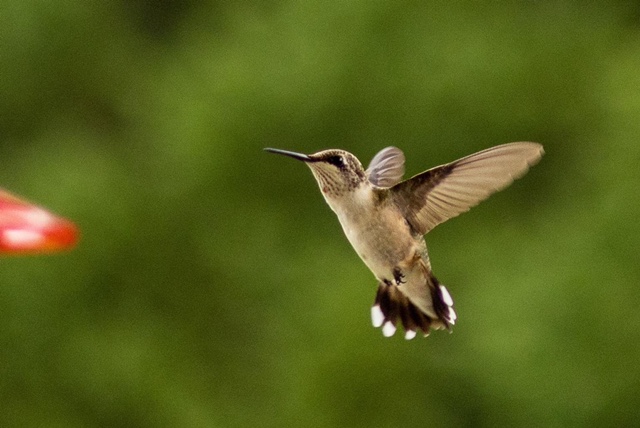
I find that nature offers the best self-care, meditative, and gratitude-giving opportunities. My sweet cousin, Bianka, a war veteran who now spends much of her time bike racing on BMX tracks with her twin brother, also a military veteran, who builds racing bikes, like his father did, now works to perfect her photography skills. That’s her hummingbird picture. It gave me time to stop to appreicate the delicate body, the exquisite little feet, the striations on the neck, and the moment in time when Bianka got this perfect photo of the little bird hovering near the sugar water feeder. When we take that time to appreciate the perfect details of the natural world, we begin to offer gratitude for what some may think of as mundane, but it helps us to be thankful for what we may think of as insignificant details of the world. Also, when we take time to offer thanks for the small things, it helps us to slow down from busy lives and be in a moment with ourselves. Try it.

Bianka Hummer 2

Consider camping as an outdoor activity where you get to interact with the natural world. Camping is one of my favorite pasttimes. It’s a time when I just allow myself to do nothing but breathe in the clean air, listen to the birds and other flying, loping, crawling, or jumping lives of the natural world.

Kelly’s Flock (a few of them)

My dear friend, Kelly, recently, acquired a flock of chickens to raise in his and his lovely wife’s backyard. Kelly told me about raising chickens, “It is therapeutic for me and I have peace when I am around them! I know they are just chickens to most people and is not a big deal, but I almost can’t put into words the joy these animals bring to me! I want many more, and one day, I will have chickens galore will be our theme!” I cannot imagine a flock of chickens being in more gentle hands!

Kelly’s Chickens at His Feet

Kelly went on to say, “I think the older you get the more you see the benefit of working to live and not living to work! We are in a world that is so disconnected from the natural things around us that we forget the incredible inner peace found in nature! We have lost the fact that nature is our kin and we have neglected that relationship.” Those are words that we Indigenous People live by, and those words coming from my dear friend Kelly mean the world to me.

I will end with a few of my daily affirmations that come from those around me who inspire me to improve:

  • I am curious to know something about everything and everything about something
  • I am thankful for…
  • I am courageous
  • I am living a great life
  • I am interested in everyone I meet (from my Dad)
  • I am valuable
  • I have wonderful friends who enrich my life
  • I learn great lessons from my loved ones
  • Today, I will learn something new

There are more, but I leave you with this great picture of a friendly kiss from Heidi, a dog who belongs to a business associate of my son.

Heidi Kisses!

Thank you for reading my blog.

Hopfulness and Positive Self-Talk

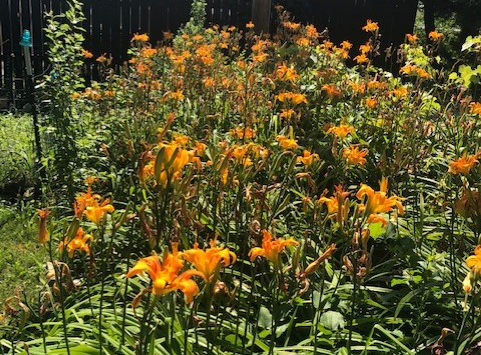
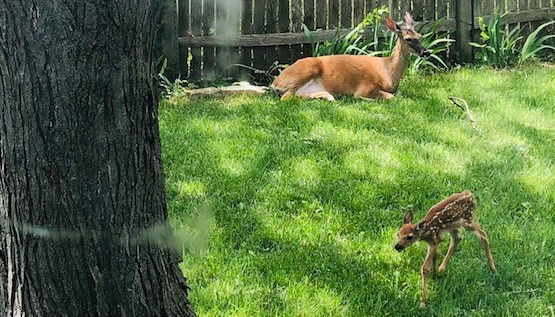
My featured image shows a doe and her fawn. When I took this picture, the fawn was about three days old. The doe gave birth in my day lily bed, and she parked her baby next to the house under a ladder. Now, two weeks later, the fawn has taken up residence in my front patio. Apparently, the doe comes at night to feed the baby and graze in the yard, a bit. We stay quite aware of the little guy’s presence and work very hard not to disturb. Also, as the Star Trek “prime directive” states, “Do not interfere in a life to change its course.” Hard as that is, I continue to worry that the doe will not return to nurse the fawn, but they have the instincts for survival and do what they need to do to survive as long as there is no human intervention.

What do you do to advance self-love? Many have been socialized to believe that self-love is selfish and wrong! That is likely a Puritan ideal, which very much permeates the dominant culture in the U.S. (Settler/Colonial culture). I’m not sure if there has ever a spiritual leader who’s asked us to hate ourselves. Of course, there are many political people, who call themselves “leaders,” who tell us quite often to dislike, hate, or exclude others who are considered “different.” I am happy to ignore them in this writing. What I do mean is that when we love ourselves, it’s nearly impossible to hate others, because true self-love helps us to love others even when they are not like us.

My point today is that unconditional self-love helps us to survive many things and may even be a support when tragedy strikes, such as recent school, church, and hospital shootings. Some of my past blog posts consist of other details in self-care, such as the Art of Hygge, cooking/baking, entertaining in your friend-circles, interactions in the natural world, and other activities in which we can engage to keep us from brain wiring and emotions ryfe with trauma.

Trauma does terrible things to emotional and physical health and well-being. All of us have likely experienced some form of trauma in our lives. That may mean that we spend many hours of our lives finding coping mechanisms and acquiring coping skills. We soon realize that coping/navigating skills are a life-long learning and behavioral journies. We do not take “training” and then we finish. Check box! No. Practicing self-love takes a life time. The key word is “practice” with the idea of not attaining “perfection!” I do think self-love is a choice, and I think when we have suffered adverse childhood experiences and forms of adult trauma, we tend to loose site of our abilities to choose a positive outlook. I do know that some have brain chemistry that can “hi-jack” that choice to have a positive outlook. Those instances require that we exercise great understanding and empathy.

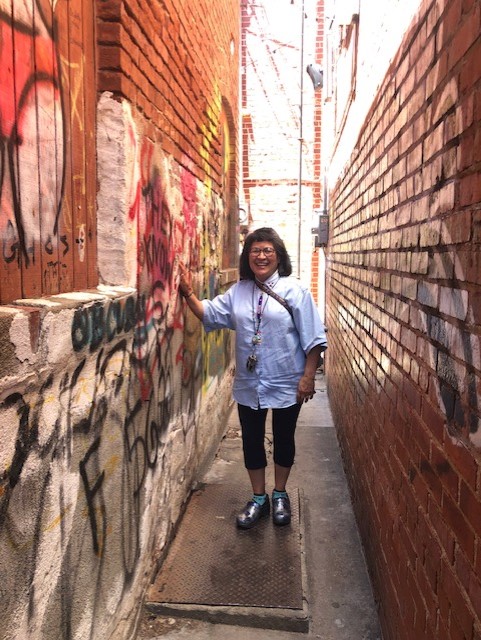
Enjoying a moment in the “secret” alley way to corn dogs

Not too long ago, I interviewed a man from Kerala, India. He’s a mathematics teacher at a high school. Mr. K has lived in the U.S. for many years. He and his lovely wife “R” have raised two beautiful daughers. This family has the most positive outlook on life of any people I know! Mr. K takes his family on excursions to visit all of the National Parks in the U.S. They know their geography very well! During the interview, Mr. K said, “You know. The world is so beautiful. The people are beautiful. The landscapes are beautiful. I believe the world is so beautiful.” It was at that moment that I realized that Mr. K lives a life of positive thinking and he will always see the best in people, in nature, and in his relationships, because he chooses to see his life that same way. I see this attitude reflected in his daughers and in his spouse, too. Mr. K models and eminates self-love and the love of others. It sounds like a simple, wonderful, and balanced way to live.

I work on the concept of balance every day. The practice comes in the form of morning affirmations, yoga stretching, and fresh air. I end my day with more affirmations and the hopes of a adequate sleep. Getting adequate sleep and staying positive throughout the day tend to be my greatest challenges. The world is hurting, and I navigate institutional inequities on a daily basis. My hope continues to be that we may strive toward a positive outlook on life, so that we may be a beacon of light in this world and its pain.

Thank you for reading my blog. Next time, I’ll write about food.

Extraordinary Times

The hounds of winter (Sting) linger where I live. The north winds blow the warmth from a seemingly sunny day, and the chill cuts to the bone. Relief from the grind of work comes from gathering with friends, family around the table enjoying a slow meal featuring a nice glass of wine.
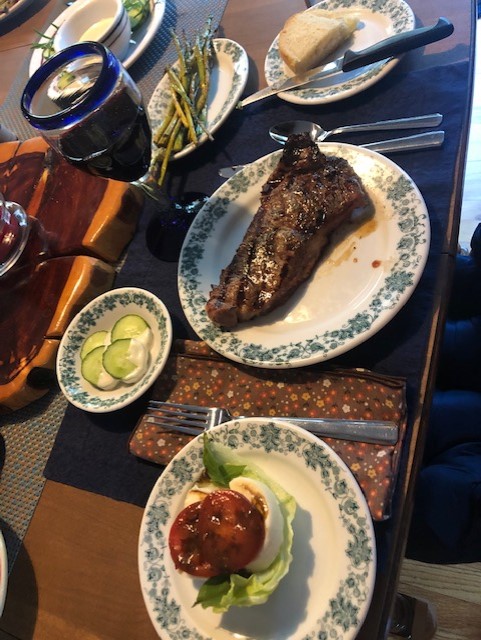
Since the holidays of winter my joy continues to be hosting family and friends. While conversations and food go hand-in-hand, I find the loving preparation of a meal to be an intense form of love, because I want it just right! Here, I offer some highlights from varying meals along the way, with pictures of food and company.

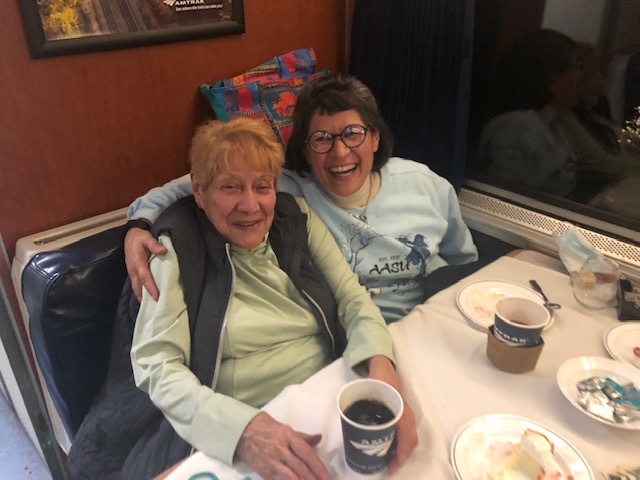
2021 proved to be a wonderful year for riding the train. In November, we boarded the California Zephr to Salt Lake City. We stopped in Grand Junction Colorado after passing through 31 tunnels in the Rocky Mountain from Denver. My 92 year old mother and her 84 year old husband boarded in Grand Junction. My mother had not ridden the Amtrak until this point. We had roomettes, so the meals were included, and the Amtrak works hard at assuring a great dining experience. Dinners come with a glass of wine, white linen table cloths, and the tables always feature a red rose in a silver vase. I love riding the train. It appears to be the one time that I allow myself to sit and do nothing but watch the world go by. Here, I share some lovely highlights from the trip. We arrived in SLC at midnight and departed for home a few days later at 3:00 a.m.

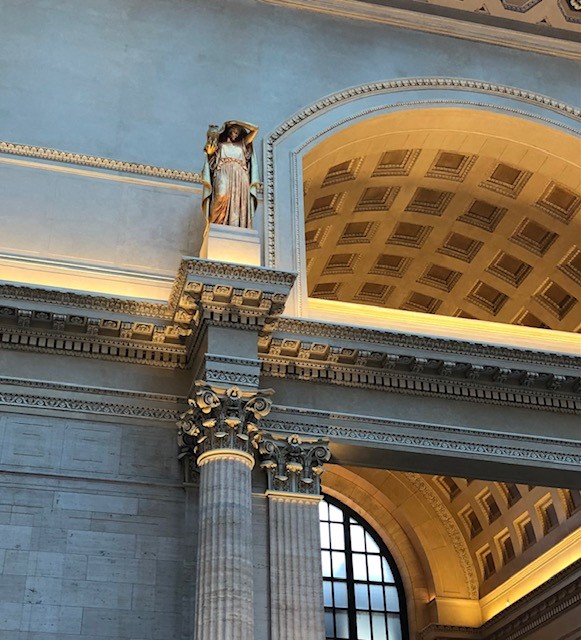
Early in January, we set out on the train to head to our friends in West New York. Amtrak’s Southwest Chief travels from Los Angeles to Maryland in its entirety. We boarded in Kansas City, MO, and it took us to Chicago for a five-hour layover, which afords the travelers some time for sightseeing in Chicago. Though, its Union Station provides some great history and a lovely environment. The lounges provide quiet or busy areas to relax with snacks and beverages.

I’ve read train reviews by a younger set of riders who appear to be in a hurry and are grumpy about less than perfect accomodations. Like a slow meal that one savors, I find train travel to be a time to savor. Why be in a hurry? I find it a great time to sit back, enjoy the passing scenery, eat lovely meals, and get in some reading or napping. Try it sometime. The life in a cozy roomette is like a gentle hug.

Back to the layover in Chicago. With the lake affect chills, we found it difficult to roam the city, so we made our way to a close restaurant to have a little bite to eat.

Sorry. I can’t seem to make the pictures smaller.

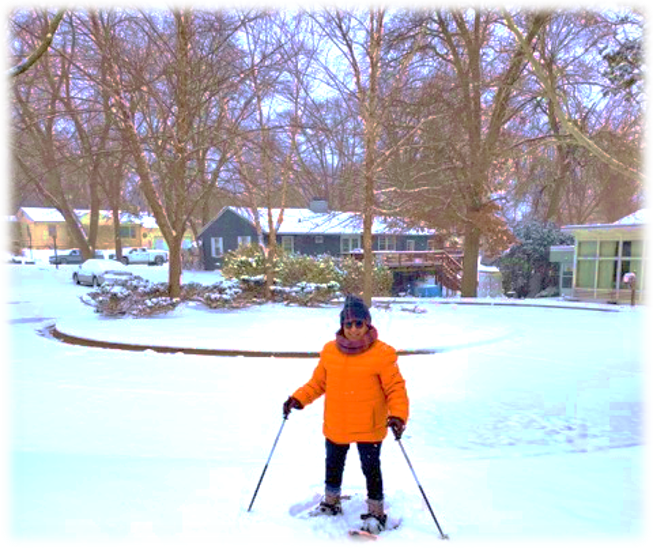
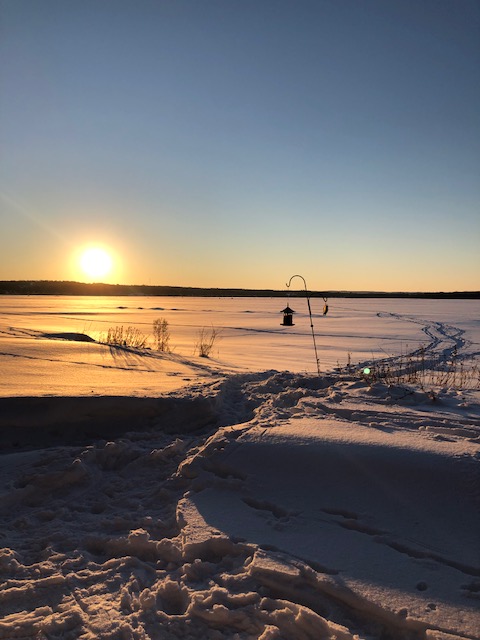
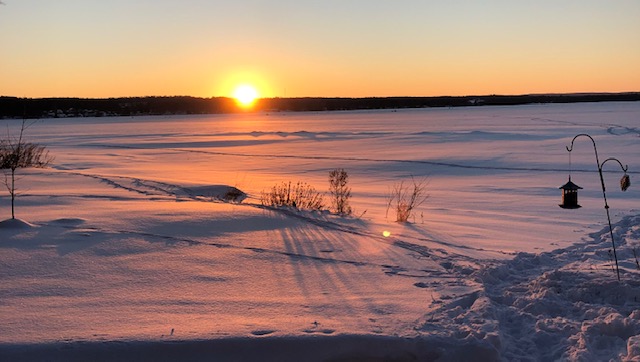
As we made our way to see our friends, we waited until 9:00 p.m. to board the next leg of the trip. We arrived in Erie, PA at 7:00 a.m., and we traveled 45 minutes to the cottage on the frozen lake. How wonderfully delightful that was. After a nice breakfast, we set out snowshowing on the lake frozen so deeply that it serves as a winter paradise of ice fishing.

We enjoyed a delightful time with our friends, with whom we’ve traveled to Alaska, the Gulf Coast, to Puerta Vallerta, and on many camping trips together. I love these friends.

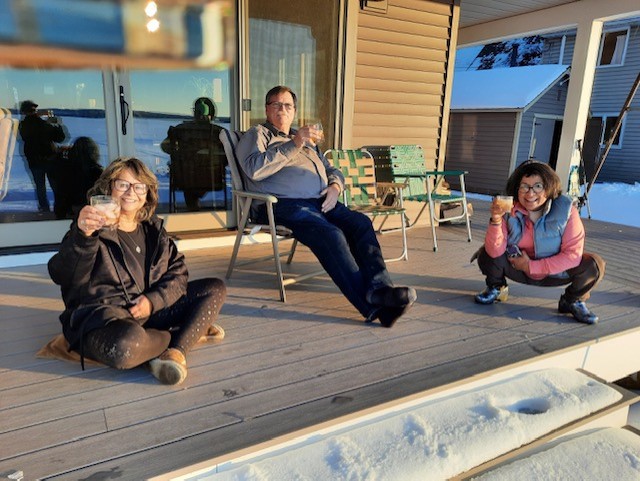
Well, I could go on and on, but I will leave you with a lovely picture of happy hour at 20 degrees Farenheit. Thank you for reading my blog.