Loss and Grieving

Loss of a loved one garners emotions that hurt to the very core of who you are.  Humans experience such emotions, because we have the power to love.  We lost our lovely daughter nearly three years ago, and the deep pain never goes away.  We just learn to live with it.  Our daughter, Riki, married her childhood sweetheart.  They had been together since they were 12, and it was a life long love story until her death at the age of 34.  She left behind three bright and lovely children, and the love of her life, Jonathan, and her brother, Stevie, and her parents.

My observation is that people don’t always know what to say when a friend, co-worker, or acquaintance are grieving.  My suggestion is that you ask about it.  Ask about the well-being of the one who is grieving.  Give a loving pat, hug, touch, or anything that establishes a physical presence.  I cannot imagine anyone, in the throes of grief, who would not appreciate such a gesture.  It is a most generous gesture, and it takes nothing from you.

Also, I can tell you what not to say: “Life goes on.”  Not sure why anyone would say such a non-affectionate, heartless thing.  As the news got around about our daughter, several people said that to me.  Okay, I get it.  They simply did not know what to say.  Then, I think, say nothing at all.  Other phrases that I’ve heard, “Aren’t you over it yet?”It boggles my mind.

I can say, here, that grief is not a linear process.  One simply learns a new way of life with its emotional ups and downs while missing the loved one.  Our daughter was extraordinary, and we see it in her children.  She was on this earth, as their mother, just enough to instill her joy for life, her curiosity, and her acerbic wit!  We miss you so very much, Riki.  I’m not posting pictures of her family since the children are young, and Jonathan needs his privacy.

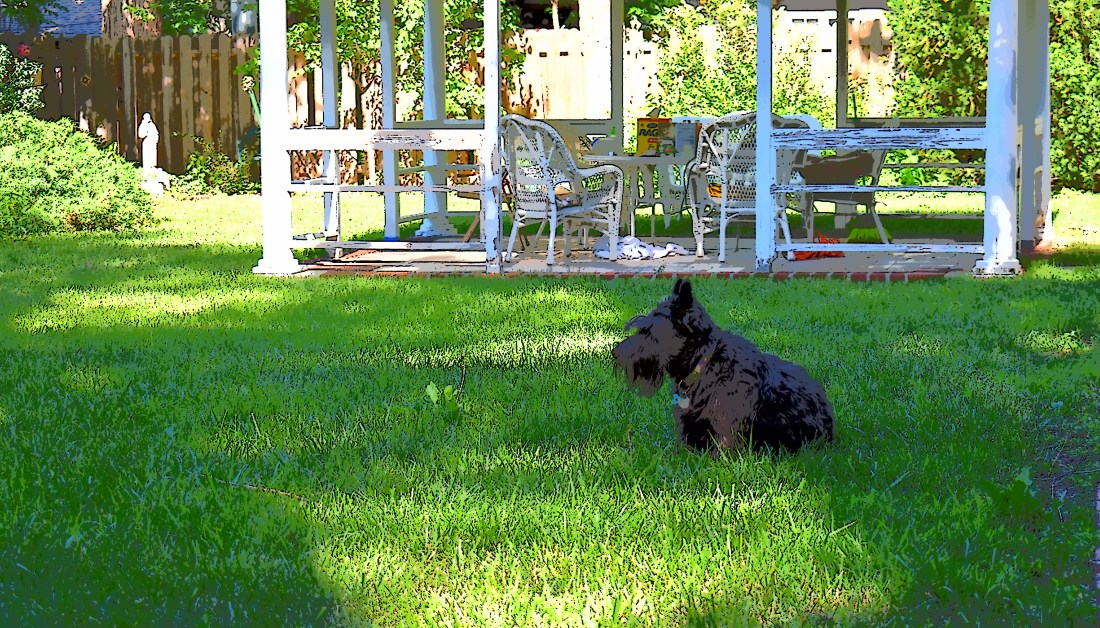
Now, are you wondering why there is a dog in my featured photo.  That’s our Scottish Terrier, Fiona.  She’s in our back yard, and please notice, she is under the watchful eye of St. Francis, patron saint of animals.

Fiona came to us 13 1/2 years ago.  Her parents, Skye and Shamus, and her brother, Tavish, lived with their humans, Jeff and Jo.  We shared furbaby sitting with Jeff and Jo.  We lost daddy, Shamus, in April 2017, mom, Skye, April 2018, and two days ago, Tavish went over the “Rainbow Bridge”.  Loss is never easy, even when it’s our family “pets”.  Our furkids are such a deep part of our lives, especially when those animals belonged to our children.  Here’s Tavish, Fiona’s brother:

Upclose Tavvie

Most people who have dogs or cats know that they are important members of the family.  I have read that children who are experiencing hardship, in any form, are better able to cope if they have a close relationship to a family pet.  I tend to think that dogs are the better choice.  I find that cats are a little too independent to be affectionate when there are high emotions in the home.

Our love of Scottish Terriers began when we bought one for Stevie when he was in 7th grade.  Beth, was affectionate and sweet.  We lost her to heart failure when she was eight.  We had found an abandoned cat, Skippy, who was two weeks old.  Bethy raised that cat with all the parental chores of the “whelping nest”. Here they are:
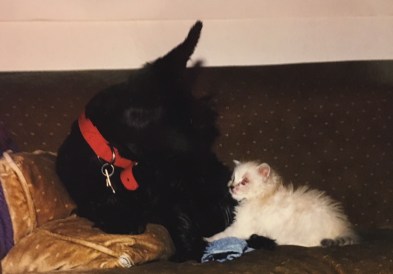
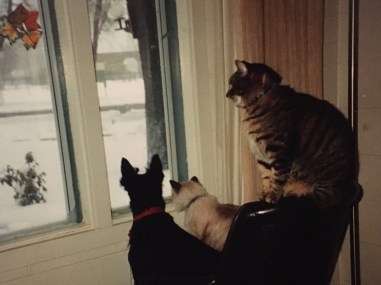
beth and skippy They were inseparable, and when Bethy died, Skippy screamed while looking for her, for weeks.  Their favorite past time was watching the world go by at the front window when they were not outside.  I have several pictures of the two, and the only thing that changed was the weather!

Skip and Beth at window

Sometimes, Skippy and Bethy even allowed the tabby, Clovis, to share their window-watching space.  Notice the snow.
three at window

We still have Fiona.  Skippy, Beth, and Fiona’s family are gone now.  We know that 13 1/2 is old for a canine, so we dread the day.  Our furkids continue to help us through our grieving for Riki, for which we are grateful.  Here’s Fiona and our sheep dog, Jitsu.  They’re watching it rain from the deck, Fiona looking woolly and in need of a Scottie trim.

J and F

Thank you for reading.

Love to Cook and Eat with Friends

It’s good to be back.  While away from my blog these past many days, my attentions focused on lots of writing for my job and preparing presentations around building relationships in multi-cultural, multi-lingual, multi-ethnic populations.  My “lessons” and publications target educators who work with multicultural populations.  So, I have not sat down to write in this blog, but I still have to eat, and I still have many friends who stop by for a meal.

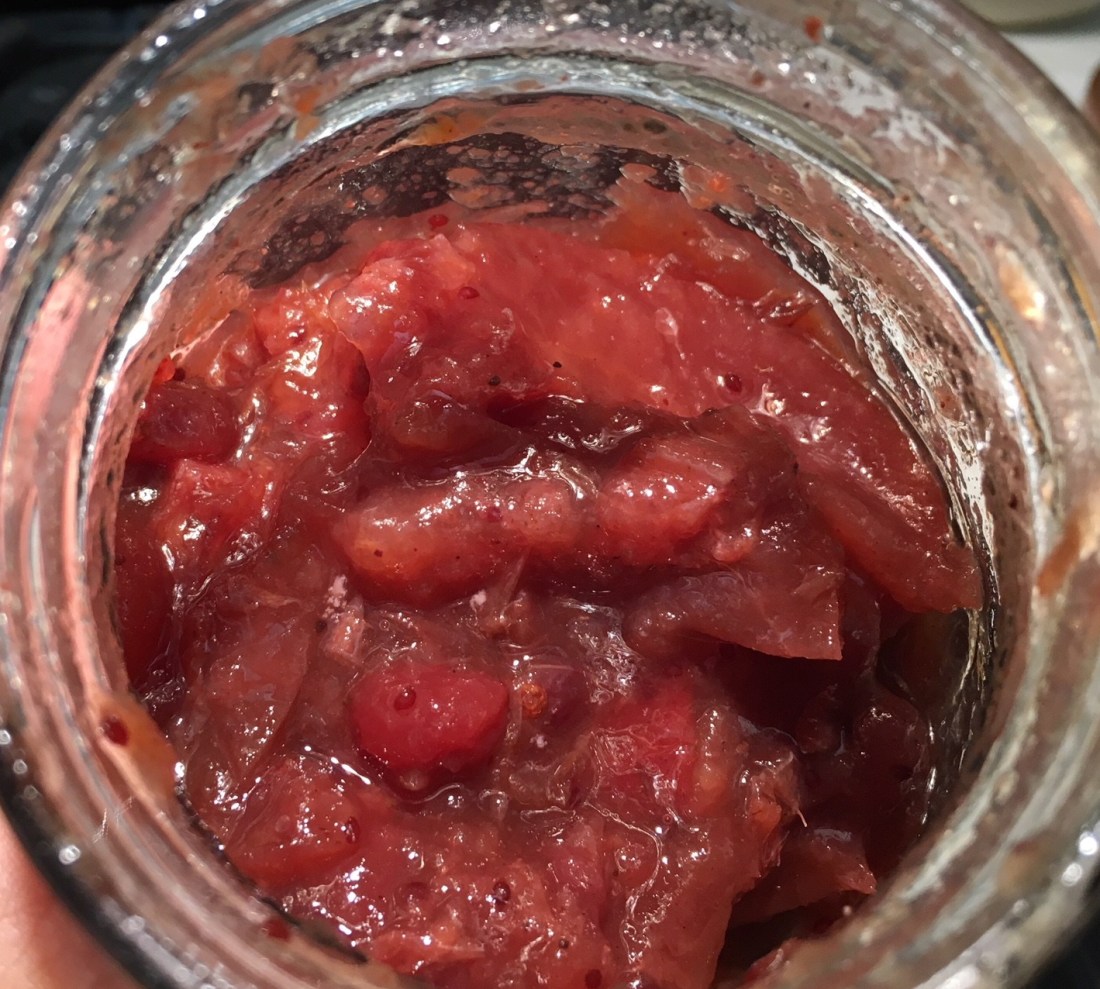
My featured photo today is my jammy fruit compote that I call CAOS (sounds like chaos!)  I created this one Thanksgiving as my answer to cranberry sauce that we serve with turkey.  Making more than one jar at a time also assured that I will have fruit to serve during times of our Native ceremonies where we have some fruit of the bounty.

So, what is CAOS? Cranberry, apple, orange, spice.  I love the taste of Chinese 5-Spice, so I used it as my spice.  Here’s my recipe:

24 ounces (680.39 g) fresh cranberries

6 red (any kind) apples – cored and chopped (do not peel)

3 oranges – chopped (do not peel and remove seeds if applicable)

2 cups (453.59 g) apple cider

1/2 cup (113.40 g) honey

1 Tablespoon (140.18 g) Chinese 5 Spice (my version is a mixture of cinnamon, ginger, cardamom, cloves, and nutmeg). Sometimes I use fennel or anise seeds in place of cardamom.

Combine all ingredients, and bring slowly to a boil stirring to a simmer.  Simmer until nice and thick until to a gelling point.  You can test for gelling by checking your stirring spoon.  I like to put a small pat of butter in my jams to reduce foaming.  When the jam is thickened, ladle into hot canning jars leaving 1/4 inch head space, seal with new lids and rings.  Process in a boiling water bath “canner” for 15 minutes.  Remove from boiling water and place on a towel on the counter out of a breeze.  The jammy fruit is ready to store when you hear the little “pop” that tells you it’s sealed.  Let the jars cool completely before you store on the shelf in your pantry.

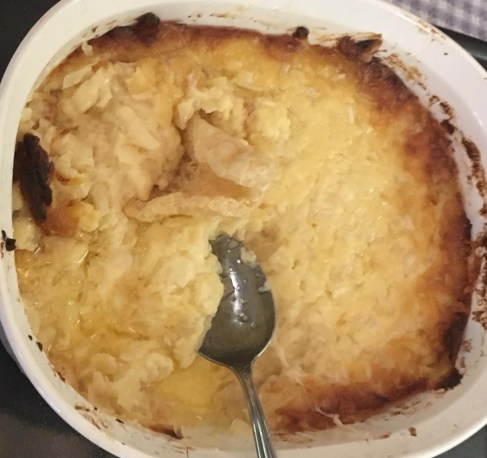
Now, dinner with friends, Mark and Kathy, which was sort of a potluck since Kathy brought one of her famous appetizers (“appies”), Vidalia Onion Dip.  Rather than serve with the, usual crackers, we ate the dip with pork rinds to make it a low “carb” snack. I can’t remember Kathy’s recipe for the dip other than 1 or 2 whole onions, Swiss cheese, and mayonnaise.  Then you bake it.  Kathy says it freezes well, too.  I think I prefer it with crackers over the pork rinds.

vidalia-onion-dip.jpg

For the main course, I served ground lamb kabobs, which are really ground lamb with a handful of chopped cilantro, garlic, and salt/pepper.  Form a log or a patty.  Grill the lamb and serve with tzaziki (yogurt, cucumber, and garlic powder).   Lately, we’ve been sauteing red cabbage in butter with a little pepper.  It’s delicious when you allow the butter to caramelize the cabbage a bit.  We served the ground lamb with a dollop of my cilantro pesto (made with walnuts, Parmesan, garlic,and olive oil) and grilled Halloumi cheese.

  ground lamb kabob tzaziki cabbage and grilled halloumi cheese

Delightful flavors await you when you experiment.  Luckily, I have friends who like my experiments.

Thank you for reading.

Time With Friends

I’ve had a very close knit group of friends in this past 25 years. As we’ve aged together, some of us have moved away and some of us have interests in children and grandchildren that live elsewhere, so that takes us away quite a bit. Some of us have aging parents who need attention, so that requires lots of travel that takes time away from the group, too. Phil and Paula moved about 212 miles (341 km), so we are passing a weekend with them. That means eating out and trying new restaurants!

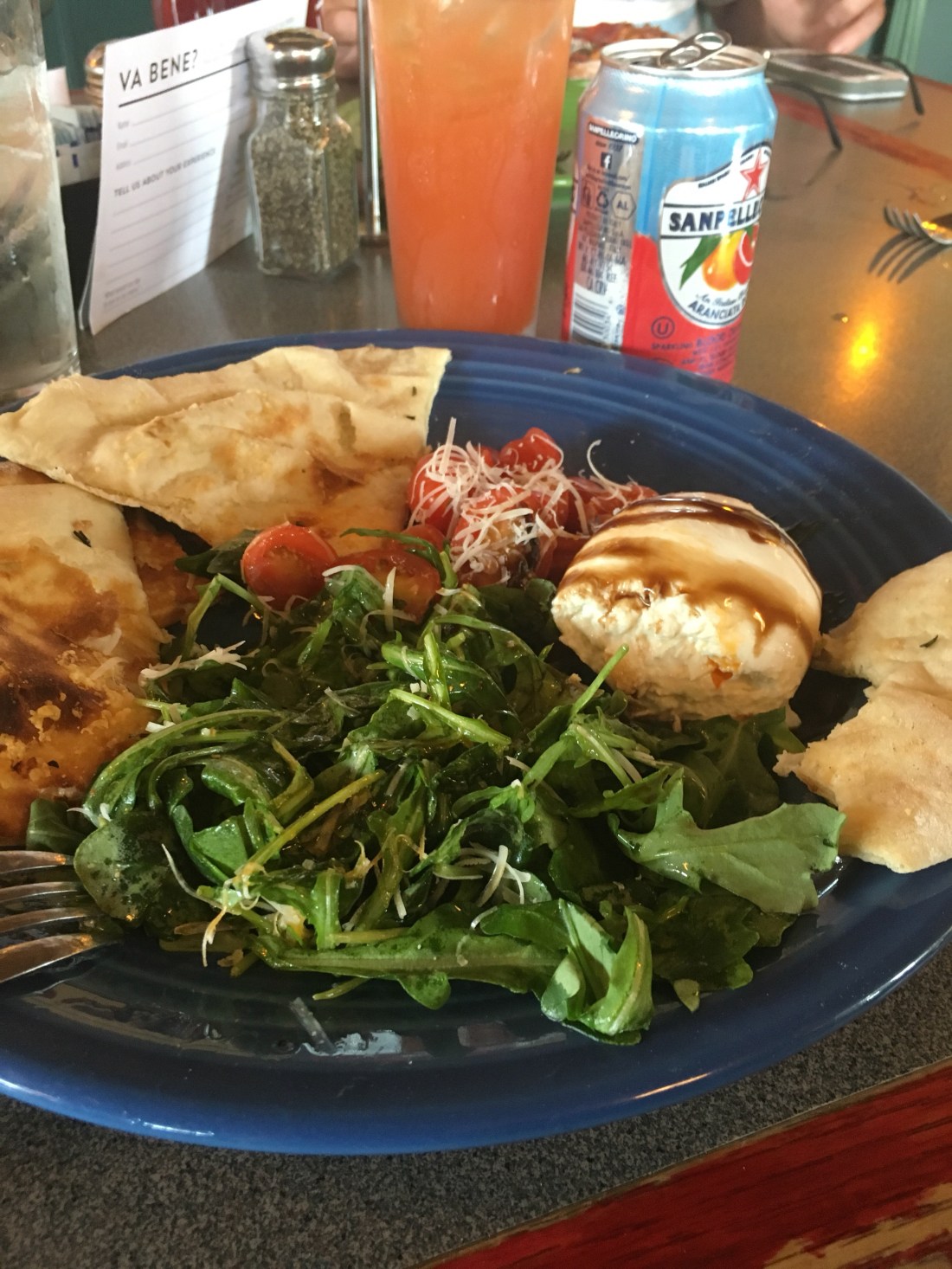
We ate at a small chain Italian cafe. I ordered a burrata. Burrata is fresh mozzarella wrapped around cream and shreds of cheese make from water buffalo milk. The lovely, little pillow of burrata sat plated near a bed of arugula and wood-fired flat bread make from pizza crust dough. Cherry tomatoes gave the plate a cheery look, and a balsamic reduction brought all the flavors together.

The flavors married well, and The joy shone on my face. Since it was lunch, I enjoyed blood orange San Pellegrino as my beverage.

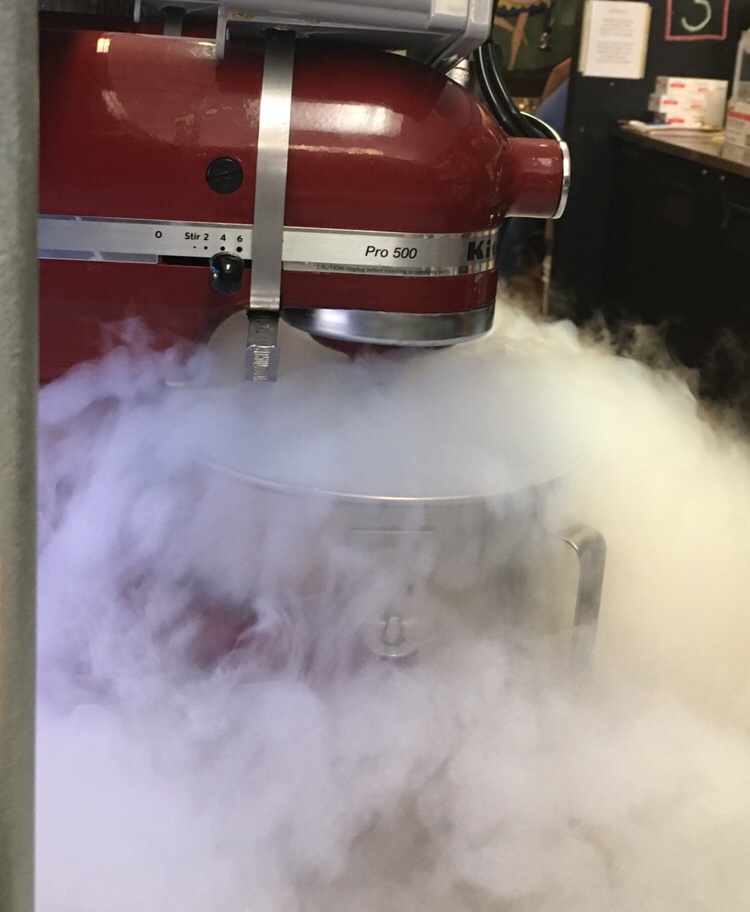
After some vigorous shopping, we went to sample some artisan ice cream. “Churn and Burn” is a coffee and ice cream place. I chose cranberry walnut as one scoop and the other scoop was lavender. Wow!

They make the ice cream and coffee with the use of liquid nitrogen for a quick production. The creamy ingredients go into the bowl, and while the beaters are churning liquid nitrogen is infused, and ice cream or a delicious frozen coffee beverage comes alive!

I love the creativity of small batch restaurants and specialty food shops. I love the passion of the proprietors, as well.

Thank you for reading.

Cooking with Wild Game

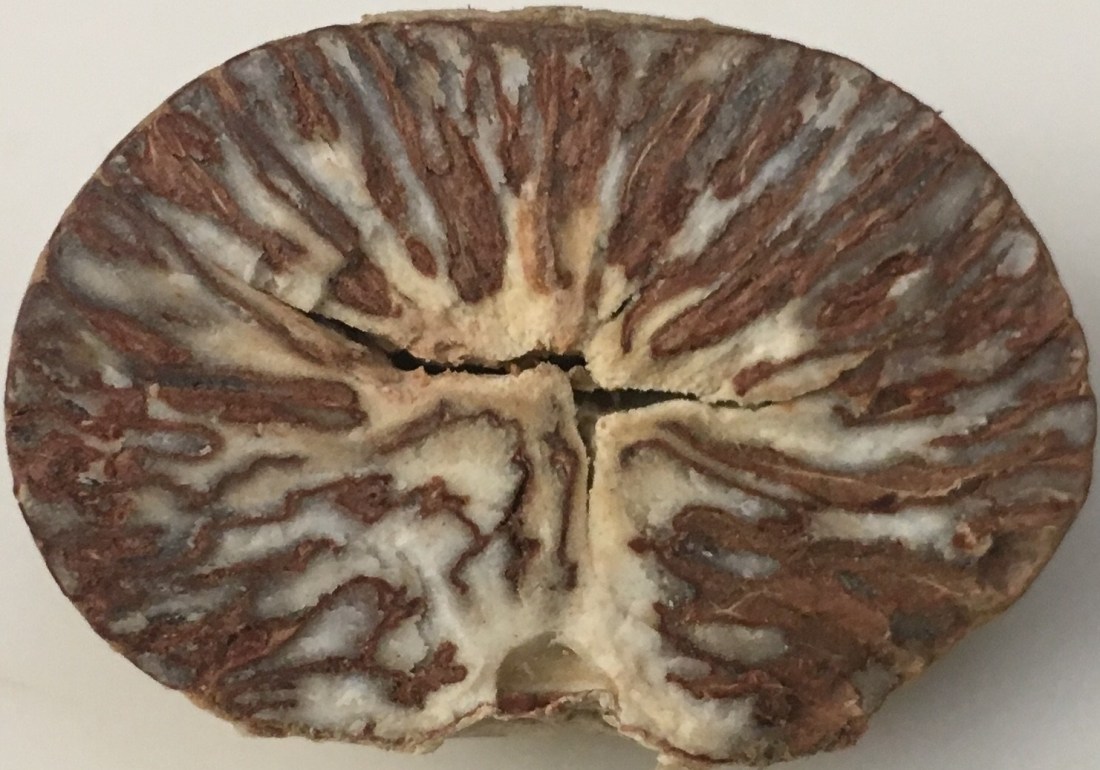
First of all, I should tell you about my featured photo, which has little to do with my story today.  The community in which I live hosts a wide cross-section of refugees and other immigrants, so I like to visit their markets.  Keep in mind that my county is 40,000 people, and the city where I live has about 26,000 inhabitants.  Today, I visited the Burmese, the African (I’ve told you about their delicious tea-making), and the El Salvador markets.  From each store, I purchase a variety of cooking ingredients.

Pictured here is the betel nut, which comes from the areca palm (Areca catechu).  The nuts are known their stimulant properties much like coffee and tobacco.  In fact, those who make a regular practice of chewing these nuts expose themselves to a variety of ill-health conditions such as rotting teeth and mouth cancers.  I purchased the half nut that you see here.  I like the patterns.  The convolutions remind me of the brain.

I really want to talk about cooking with wild game today.  I am a deer hunter, because I love the taste of venison.  I hunt white tailed deer.  They are a beautiful animal: graceful and lithe.  Part of me rather mourns before I take the shot, and even more when the animal goes down.  I always thank the creature for giving his or her life so that I have a bountiful table.  Debra Hunting

Today, I made a wonderful marinara sauce for topping a plate of pasta.  My ingredient list:

  • I pound (.45 kg) of ground venison
  • 5 cloves smashed garlic
  • 1/2 yellow onion
  • 1 large bunch fresh basil (chopped)
  • 1 spoonful of OGB (my mixture of olive oil, garlic, and basil). Venison is super lean and needs some oil
  • 4 Tablespoons (56.7 g) tomato paste (I like to purchase large jars of tomato paste at the African Store. It comes from Instanbul)
  • 1/2 Cup (113.4 g) red wine
  • Salt and pepper to taste
  • Usually, I add mushrooms, but in the absence of the tasty fungi, I used my dehydrated mix of onions, mushrooms, and celery.

Let simmer on stove top until all ingredients are blended. I like to prepare my sauce in the morning.  Then I place it in the refrigerator.  At noon, we come home and prepare the pasta and re-heat the marinara.  Here’s my sauce:

Venison Marinara

If I would have remembered to take the picture of sauce on the pasta, it would have made more sense.

When cooking with wild game, the flesh often takes on the flavors of what the animal eats.  In Colorado, where I grew up, the high snowfall hinders access to grains, leaves, and other browse.  Consumers of that meat will say, “That’s really gamey!”  My grandmothers used juniper berries to neutralize the strong flavors, which worked beautifully.  It works wonders for mutton, too.  My grandmothers fed us mutton all my years growing up, and I never noticed the strong flavors, thanks to juniper berries (Rocky Mountain or Utah junipers).

In Kansas, where I live and hunt, the deer enjoy farm fields of sorghum and corn, much to the chagrin of local crop producers.  Kansas venison tastes quite delicious!  I hope you get to try it sometime.

Last summer, my friend Bob, when rabbit hunting.  When he returned, he called to ask if I would/could make something out of rabbit.  I said, how about rabbit cacciatore, hunter’s style rabbit?  I use passata (rich, strained tomatoes), garlic, fresh rosemary and basil, mushrooms, and white wine.  I cut the rabbit in pieces as one would with chicken.  Simmer until all ingredients are well blended and the liquids are thickened.  Serve with pasta, white wine, and lots of crusty bread to sop up the rich juices.  Here I am with a skinned rabbit.  My friend, Adrian, is married to the rabbit hunter, Bob.

debra-with-rabbit.jpg

Hopefully, I have frightened you with this talk of eating beasts, large and small.

Thank you for reading.
A Meal for a Special Friend

In another life, I worked in Adult Education.  I worked with a fine group of women with whom I have occasional contact.  I was able to see a friend this past weekend.  Her name is Cheryl, and her expertise was early literacy for children and their, mostly, under-educated parents.  Working in adult education afforded my colleagues and me a chance to interact and work with people from around the world who came to our part of the state as political and economic refugees.  They came to our part of the state, because there are plentiful job opportunities in the agricultural sector.

Well Cheryl came for a town visit, and I was to be out of town when the old group planned a gathering – a homecoming, of sorts.   That meant I would invite Cheryl to dine with us Sunday evening.  “I will come if you don’t go through any trouble.”  Okay.  Keep in mind what is “trouble” to some is therapy for me – cooking.  So, here was my menu:

  • Grilled leg of lamb – slathered in a fresh pesto sauce before grilling
  • Caprese Salad – you may remember that I have a basil “tree” that won’t stop producing!
  • Freshly baked bread with OGB as a dip (olive oil, garlic, and basil) – featured photo!
  • Baked and whipped sweet potatoes
  • Crème de banane for dessert (an original recipe!)
  • Wine

How do you grill a leg of lamb?  We have a large kettle-style Weber barbecue.  Dale uses an “indirect” method of grilling large items such as turkey and leg of lamb.  Our friends, Bob and Adrian have a sheep farm about 13 miles away, so we always have lamb and venison, from the same county as the lamb, when I’m a fortunate hunter.  We’ll talk about venison another time.

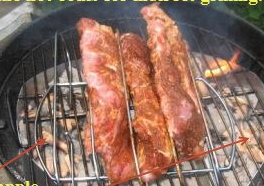
Back to grilling the lamb.  I prepare the lamb by rubbing it with the pesto (which is well-seasoned) and black pepper.  The charcoals are prepared in a charcoal starter, which is a cylinder, which is about 2 feet tall (0.6096 meters), that has a wooden handle.  A small basket inside the cylinder holds the charcoal briquettes, which are ignited on an open fire.  Once the briquettes are glowing, they are ready to be place in the grill.  I neglected to take a picture of indirect grilling, so I borrowed an illustration from the Weber website.  Keep in mind that we roasted leg of lamb, NOT ribs.  The meat is never directly over the hot charcoals, but rather sits above a drip pan.

6-Hot-Charcoal-Briquette-Holders-in-Kettle-Grill-with-Ribs

So, you put about 25 coals on each side of the meat.  You must add newly heated coals about every 30 minutes. Once the meat reaches 130° F (54.44 C), take if off the grill and let it sit until it reaches 140° F (60 C).

Of course, I’ve written about my caprese salad, so that recipe can be found on one of my past blog posts, but here’s a picture of it.

Caprese and Pesto

Also, since I’m still working on using up basil, I decided to blend three large hands full of basil with 8 cloves of garlic and enough olive oil to make a nice liquid concentrate of OGB for later use.  I put the plenty in the freezer for later use.  Since it’s so very concentrated, I put a large spoon full on a bread plate to which I added a little more olive oil and a spoonful of  balsamic vinegar for a nice bread dip.

The sweet potatoes were baked, mashed with butter, salt, and a spoonful of pure maple syrup.  You may notice the color of the sweet potatoes are more like Yukon Golds.  Their dullness of yellow instead of orange is off-putting, but they are delicious!

Lamb and mashed sweet potatoes

I prepare banana cream for dessert.  To make it sound fancy, I used the French, crème de banane.  I found some very nice ripe bananas at the market, so I put three in a glass bowl to which I added 8 ounces (226.80 grams) of mascarpone cheese and four ounces (113.40 grams) cream cheese, one half cup of pure maple syrup, one spoonful of dehydrated orange rind (something I produce to flavor biscotti).  I whipped it all with a hand mixer until all was creamy.  I chilled the banana cream in individual “berry bowls”.  I was an interesting texture, which surprised the guests!  “Interesting!”  “Thank you!”  I think.

Banana Cream

Perhaps not as pleasing to the eye, I found it tasty and not too filling as a dessert.  We drank a rosé and a zinfindel with the meal.

Mostly, it was about reminiscing with Cheryl and getting to know her friends, Darryl and Ann.  At the end of the day, the food becomes a companion for conversation, which contributes to those convivial moments.

Thank you for reading.
Growing a Tree

I saw some sort of add (video) on social media about a device called an “avocado boat”.   So, the premise was that you’d float an avocado seed in this little boat, and the seed would sprout (germinate) to, eventually, grow into a tree.

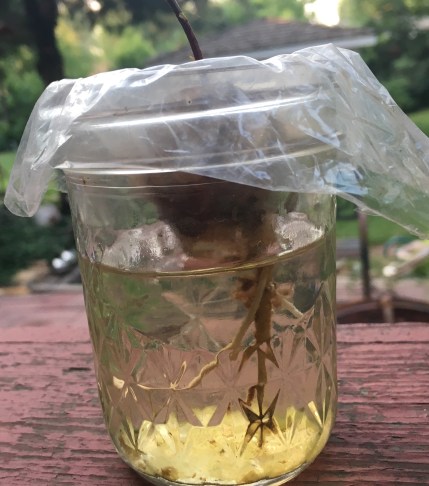
According to the video, you peel the pit/seed before germination.  First, one must figure out which end of the seed to face down and which side goes up.  I found an article that said the “fat side” is the bottom, so that is how I proceeded.  The little boats appeared to be a clever way to germinate the seed, but I didn’t want to waste my money on a gadget, so I devised a way to float the seed in the water without piercing it with toothpicks, as I’ve seen previously.

As an alternative to the “avocado boat”, I took a sandwich storage bag and cut a small hole in the corner so that the bottom of the seed would be immersed in water.  I held the bag onto a jar with a rubber band.  I  place the jars with their seeds on a railing on my back porch so that they would have light and warmth, but not direct sun light.

germinated avacado seed

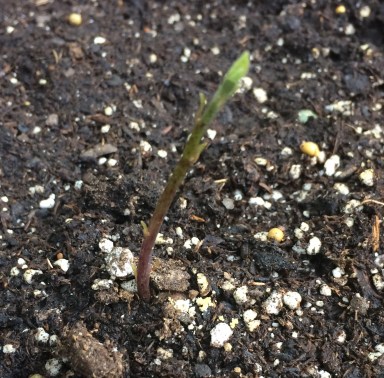
As you can see, there is a nice root reaching to the bottom of the jar, and a nice stem reaching for the sun.  It takes a while, about six weeks.  With this kind of root beginning, the next step required placing the root in well drained potting soil.  My featured photo in this submission is the plant after two months.

I found it better to place the pot with the seedling indoors, because I have squirrels, and they help themselves to any seeds in my yard pots.

sprouted avocado seed

Perhaps, next year, I will be able to show a larger tree.  At which point, I may be able to move the pots outside.  I am not sure if these projects ever produce fruit.  There is the concept of pollination.

Thank you for reading.
Basil, and More Basil!

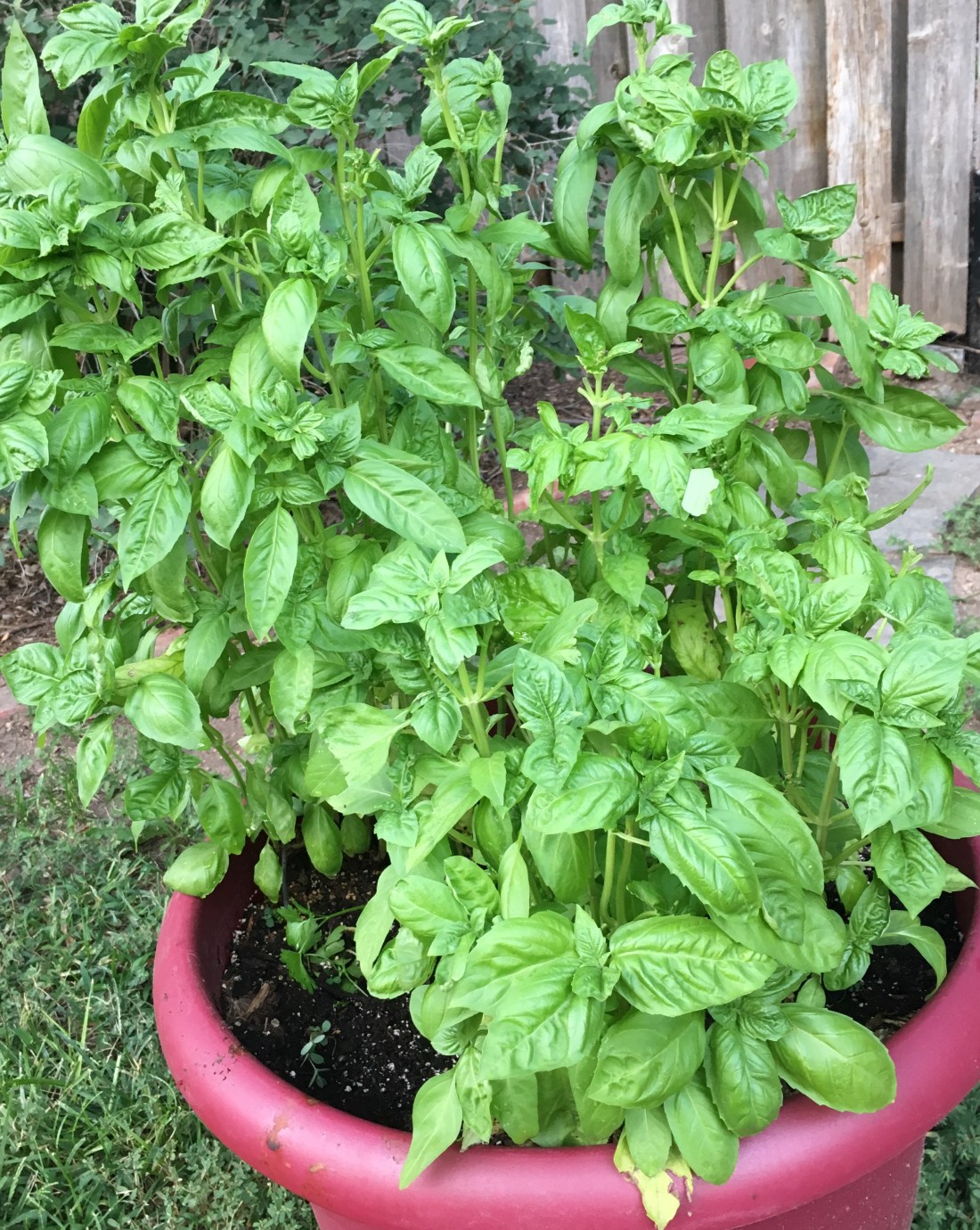
I’ve written about my basil windfall, previously.  I can’t help but write about it, again!  The fragrant plant and its deep green leaves, says, “summer” to me.  Never before, have I enjoyed this over-abundance of basil.  Now, let’s talk about basil.

Basil, also known as “St. Joseph’s Wort” belongs to the mint family, along with catnip, spearmint, and peppermint.  Most Italian-style cooks use basil in many dishes, because it goes well in tomato-based dishes.  I like to use basil in much of my cooking, and the marriage of tomatoes, garlic, basil, and olive oil can be a sublime experience when used in soups, sauces, beef roasts, and grilled lamb.  The vegetarian or vegan can even use different combination for vegetable dishes.

Pino Luongo, one of my favorite cookbook writers (actually less cookbook and more stories to go along with the ingredients of favored recipes) talks about the way he uses basil in his Tuscan cooking.  He reminds us not to be tied, so much, to recipes that tell us how much of what to use.  Luongo, says, “Use your senses, and learn through trial and error.”  He also suggest that we “improvise based on your acquired knowledge.”  I come from a family of people who like to cook, so that’s an example of my “acquired knowledge”.  Of course, I add, use safe food handling practices.

Besides being in Italian cooking, basil has a popularity in Thai and Vietnamese cuisine.  Having just eaten Pho (Fuh, which means noodle) today, which is a wonderful soup with cellophane noodles in a generous beef broth (in today’s case), I delighted in the soup brought to the table in its cavernous bowl.  Presented separately, on a small plate, are bean sprouts, mint or basil, and a wedge of lime.  We place the sprouts and mint/or basil in the steaming bowl of soup and top is off with a squeeze of lime.  I’ve only had Pho with beef brisket in its broth with its condiments.

Holistic health practitioners recommend basil for its anti-inflammatory, anti-bacterial, and anti-viral properties.  This comes from Medical News Today, and it adds that basil is “nutrient heavy” and calorie light, but then I cannot think of any herbs considered calorie heavy!

As mentioned, previously, I continue to find ways to preserve my basil, in addition to drying it for later use.  In the dead of winter, I love pulling my frozen pesto from the freezer, as green as the day I put it in.  Yes.  I’ve related that in previous blog entries.

Seasoned Basil Freeze

With the large batch of basil plucked from the plant, I decided that 15 jars of pesto may need to be enough (actually my plan is for 20-25 small jars before winter sets in), I decided to preserve some pesto as a seasoning.  I took one large bowl full of basil leaves.

Basil

All together, it compresses into 2 heaping cups full in the blender vessel.

To that I added:

  • 1/4 cup Mediterranean olives – pitted
  • A dehydrated mix of celery, onion, mushroom, red pepper – 1 Tablespoon
  • 2 cloves of garlic
  • 1 teaspoon smoked salt
  • 3 grinds of black pepper
  • 1 cup of olive oil (add more if mix is too thick)

I blended this until nice and liquid.   I put it into the freezer, and use the “seasoning” in dishes throughout the winter months.  Remember, the olive oil preserves the basil perfectly, and (I say it again), it’s as green the day you thaw it as the day you froze it. Look at that color!

Seasoned Basil

I prefer freezing such things in glass.  Remember to label it, and put the date on it so that you use the oldest items first.

Enjoy, and thank you for reading.

Sunsets and Landscapes

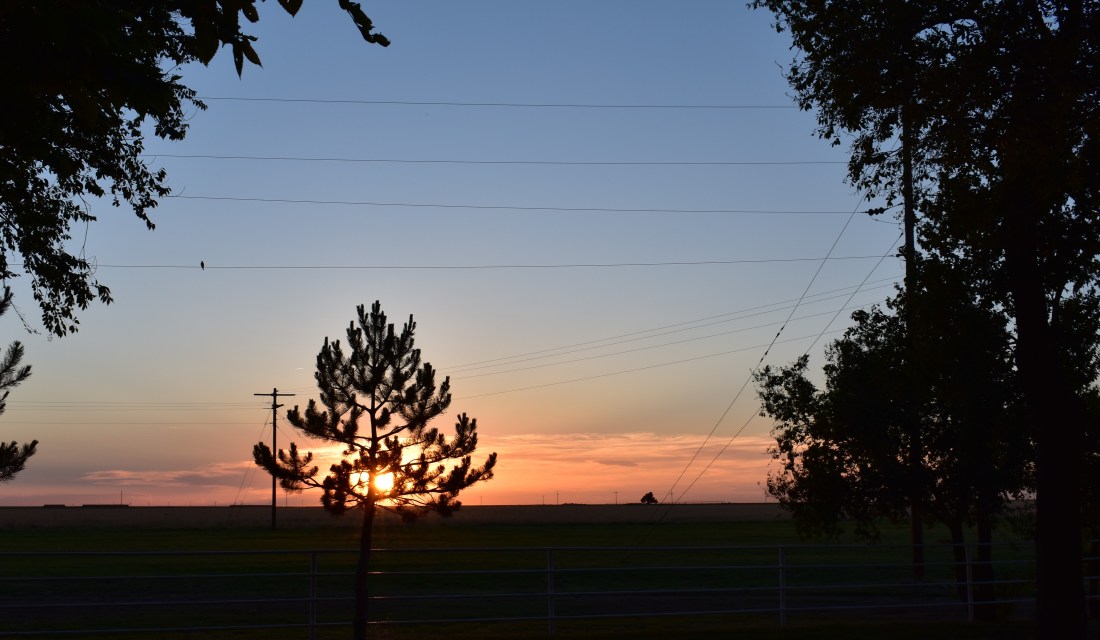
If you ever doubt a higher power, look at nature.  I love to be outdoors.  My featured photo is a sunset taken at a retreat ranch south of Dumas, Texas.  It looks as though the evergreen tree, through which I photographed the sun, is on fire!  Notice the colors of the sky and horizon framed by the trees.

I’ve just passed the week in California.  Even with wild traffic on the freeway, one can eventually get to the beauty of the hills.  My other brother-in-law, Bob, lives in the southern wine country.  The homes built in the granite hills above Temecula, make me think of the Mediterranean, because of the olive trees and grape vines.  The date palms make me think of Middle East.  Notice this sunset.  Those colors are postcard worthy!

Temecula Sunset

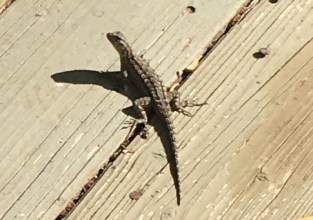
Included in the array of birds and other animals were, hummingbirds (Anna’s and Ruby Throat),  scrub jays, tufted titmouse, yellow vireo, house finch, common raven, goldfinch, and great horned owl.  I have not identified this little lizard, however.  He was very quick, so I could not catch him/her.  Perhaps you have an idea.

Lizard

At my brother-in-laws in Los Angeles, there lives an abundant sort of wildlife, too.  I could not get a picture of it, but look up the Red Whiskered Bul Bul.  There lives a pair in one of the trees.  The green June beetle intrigued me, too, but, alas, too fast for a picture.  Take a look at these gulf fritillary.  They have brilliant coloring.

Gulf Frittilaries

These were shot with my phone.  I didn’t feel like dragging my camera through tsa, and I had my limit of carry-on.

Yes. I write few words, but I hope the pictures make up for it.

Thank you for reading.

Hummus and Flatbread

I am passing the week with my 82 years old brother in law (Bill) who is in treatment for cancer.  While he does not want to be “taken care of”, I cannot help but want to cook, though I am not surrounded by the things in my own kitchen.   Fortunately, Bill and his late wife stock a well-used kitchen, as far as cooking utensils are concerned.  The ingredients in the kitchen are rather dated, so I am pleased to explore the groceries of Southern California (SoCal).  My focus turns on nutrient-rich foods served in small courses, more like appetizers.  My husband and Bill’s late, Hawaiian, mother would call them “poo-poos”.  Now before you snicker, Islanders serve “Poo-Poo Platters” much the same way Spaniards serve “tapas”, in other words, small bites.

Lucky for me, I once worked with an Egyptian woman who taught me her version of hummus, and it continues to be my favorite hummus, to this day.  My first challenge is that Bill declared to me that he “dislikes” hummus and chick peas.  I said, “Fine, then I’ll make it for us!”.  So, I will let you know how I make hummus and flat bread.

I like to cook with fresh ingredients.  No, I did not grow my own garbanzo beans, but I do purchase about 10 ounces of the dried beans.  I cook those in boiling water which as been generously salted until they are soft.  Once those are cooked and cooled, I am ready to proceed.  Oh, yes!   I don’t like the high price of tahini, or sesame paste, so I make my own.

Tahini:

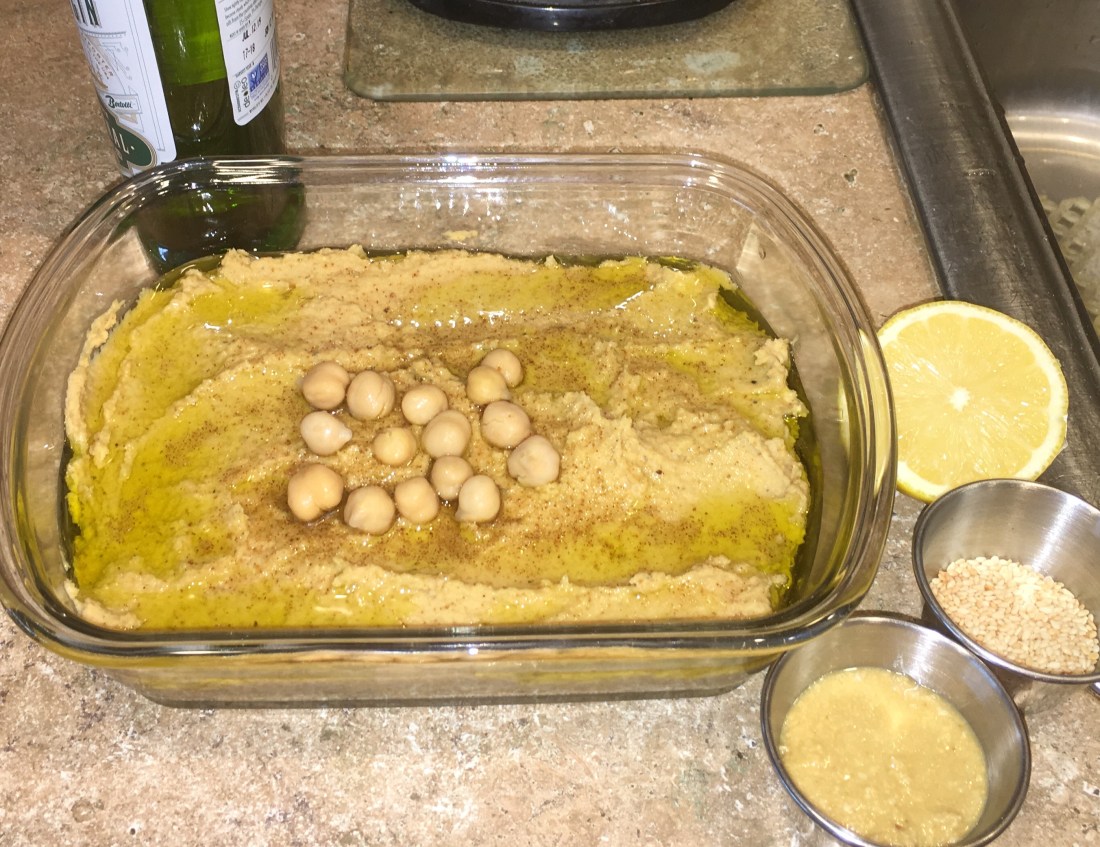
1/2 cup raw sesame seeds.  Put them in a small, dry skillet and heat them, stirring often, until they are brown and toasted.  Notice in the photo, what “browned” sesame seeds look like.

Once the seeds are toasted, cool them.  The next step is to grinds the toasted sesame seeds.  I have a coffee grinder that I use exclusively for spices, seeds, and other things I need to grind.  I do not grind coffee in this grinder.

When the ground seeds resemble a paste, add olive oil to support a thick paste consistency.  Again, notice the tahini in my pictures.

Hummus:

Blend – 1-2 cups soft garbanzo beans (chick peas), 4 gloves of garlic, 1/4 to 1/2 Tahini, Salt, pepper, chili powder, cumin, the juice of half a lemon, and plenty of olive oil.  Blend until you have a nice consistency, to your taste.  ( I hope I remembered all the ingredients!)

Spread the hummus in a walled plate or wide glass pan.  Drizzle olive oil and sprinkle smoked paprika on top.  I like to decorate the middle with a few, set aside, beans for garnish.  Serve with flat bread.

The whole presentation of hummus and flat bread

Flatbread:

I just use a simple bread recipe of flour, yeast, a little sugar, salt, and a little oil.  Make a good dough, and let it rise for a bit (1/2 hour).

Form the dough in small rounds, about the size of a golf ball.  Roll out and cook on a hot griddle.  Cook on one side, and when you flip it to cook on the other side, a nice bubble will form.  Then you can call it a “pita”!.  I like to cut the round flat bread into fourths.

Serve with the hummus , which is high in fiber, protein, and good fats, with the olive oil.  The garlic is good for you, too.

Oh, I should tell you that Bill, who earlier said he dislike hummus, had three servings of his “small” bites!  Turns out he loves homemade hummus!  Things are always better when we make them from scratch!  I should mention that Bill likes herring in sour cream, so we served the hummus and flat bread with a side of herring in sour cream, to take from many cultures today.  The color of the food would have looked better on a darker-colored plate, but I made do with what I had.

On the plate

Enjoy, and thank you for reading.
The Wonders of Traveling to the City – Los Angeles

We landed at LAX, the international airport of Los Angeles, California today.  I love traveling.  Yes.  There are delays, many personalities, and some inconveniences.  Those little “bothers” dim when compared to the phenomenal wonders of witnessing the human experience in the process.  There are those who are laid back, as I tend to be, because we know we cannot hold back the tide, such is air travel.  There are those who appear to be stressed and uptight, perhaps, because they have no control over time and space, such is travel.   And there are those who appear to be oblivious to the process of travel and other life realities, in general.   

On the flight from Colorado to LAX, I had the pleasure of observing all three.  First, there was my seat mate who was traveling to LA to meet up with friends at Disneyland.  She amused me, not because she was unaware of direction in her home town of Colorado Springs (I mentioned that Cheyenne Moutain is always on the west, and if she faces it, her right would be north, and her left would be south.  To which she replied, “I don’t know what that means”.  Okay.  I get that, I think.  She appeared to be a nice young lady, no matter how unaware of her surroundings.  The great perplexing thing was that, once we landed, she did not know how she would get to Disneyland.  She thought of taking an Uber or Lyft for the 35 miles to Disney.  I suggested public transportation.  We were glad to help her get there, through a little research.  I was glad to help an elderly lady get her three big bags to the curb queue for waiting on family to fetch her. 

What I enjoyed the most, was the train ride to Pasadena.  Los Angeles has a very nice light rail.  On the ride, I spoke with homeless people who rode the rail for most of the day.  I interacted with some who were suffering from untreated mental illness, and with hard-working folk who toiled long, hard days to support their families in jobs that contribute to the economy, put food on our tables, and tend toward jobs that most of us do not want to do, nor do we raise our children to do such jobs.   

On the train in LA

I loved watching a little girl explaining to her mother, in Spanish, about her Russian Nesting Dolls, which she received as a gift from her teacher at school in the first day.  The little girl explained to me, the origins of her gift, in perfect English.  She was about 9 years old and very bright.

Little girls with nesting dolls on train

The first train from LAX takes us to Union Station, built in 1939 as a Passenger Terminal.  Called the “Last of the Great Railways, LA Union Station gained notoriety in 1980 by being place on the National Registry of Historic Places.  When we took the train from Kansas City to Los Angeles two years ago, we had the pleasure of departing from a great Union Station and Arriving at an equally great Union Station.  If only the walls could speak! 

The ride from LA Union Station to Pasadena afforded the observer with great contradictions.   Hibiscus “hedges” lined the streets while on those streets were small microcosms of tent “villages” inhabited by homeless people.   My heart breaks for the many circumstances that render one homeless, , and I believe we can learn much from them, because I witnessed great survival skills and resourcefulness in those with whom I’ve interacted.   

By the time we reached our destination of Pasadena, CA, I had spoken to 15 people each with a story to tell.  If we, but, listen, the voice of humanity shines, and we walk away a little smarter for the experience.   

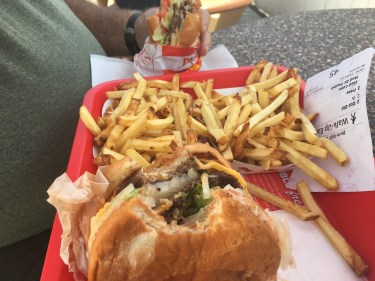
Not only does the city offer the continuum of the human experience, I like to go to grocery stores to see what the locals purchase.  I like a well-stocked grocery with a wide array of ethnic ingredients, and Los Angeles does not disappoint!  Opportunities for dining out are fabulous!  One of my favorite hamburger spots is In-n-Out Burgers!  Opened in 1948 by the Snyders, the franchise boasts that it has no freezer or microwave.  Each “store” provides a viewing window, where we wait and watch each burger assembled.  The “double-double” has two freshly cooked patties that are place on buttered-toasted buns, freshly sliced onion and tomatoes and a chunk of lettuces pulled from the freshly broken head.  The fries come from a potato placed in a chopper directly into the hot oil.  All this is washed down with a sparkling cola.  There are even items from a “hidden” menu such as “animal fries” and a patty cooked for your dog! 

In and Out

After sitting with my brother-in-law, as he received chemo-therapy infusion, we treated ourselves to a snack of “inari-sushi” from a “stand” that has been in existence from Dale’s (my spouse) childhood. He’s 69 years old, so that Inari-Sushi stand has been around for a while.  One orders from a window, and the person brings the order to the car.  Inari-shushi is sushi rice, sesame seeds, with seasoned rice vinegar tucked into a tofu pocket.  Eaten with soy sauce and pickled ginger, it’s a taste explosion you won’t soon forget.  Now, I’m on the hunt for recipes on making the tofu pocket!   

Thank you for reading.