I usually post this on Riki’s birthday, September 27. However, because of a stolen WordPress web address for this blog, I was unable to post on the 27th. Thanks to the WordPress support staff, I was able to get back into my blog. Why would anyone feel the need to highjack someone’s blog?
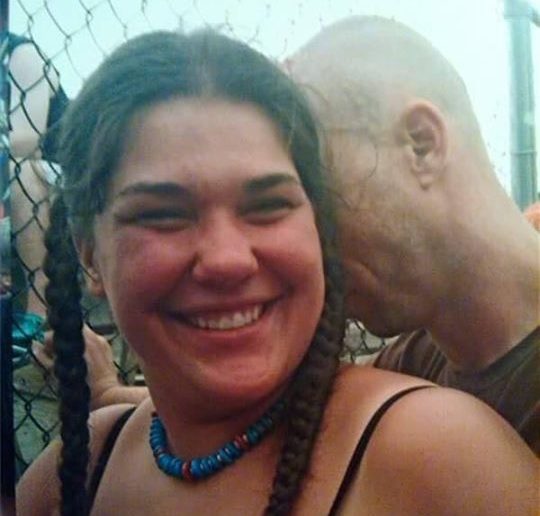
This year, we observe 10 years since Riki’s passing. She walked on her journey at 7:30 a.m. on that dreadful New Year’s Day in 2016. While we all try to see the “plan” in the passing of one so young, leaving behind three beautiful children, ages 7, 11, 12, and husband. Riki did not get to see her oldest enter into his teen years. She did not get to see her sons graduate. She won’t get to see Sammy graduate. She did not get to meet her two beautiful grandchildren. She did not get the privilege of continuing her teachings to her children. They know they’ve missed out of learning all that she had to teach them.
The memories each of us have of Riki, my daughter, Stevie’s sister, Korbin, Shawn, and Samantha’s mother, friend to The Village, and spouse to Jonathan, always serve us as a blessing. As I write this, The Village is celebrating Riki’s life. She lives through her beautiful children, and through anyone who loves her.
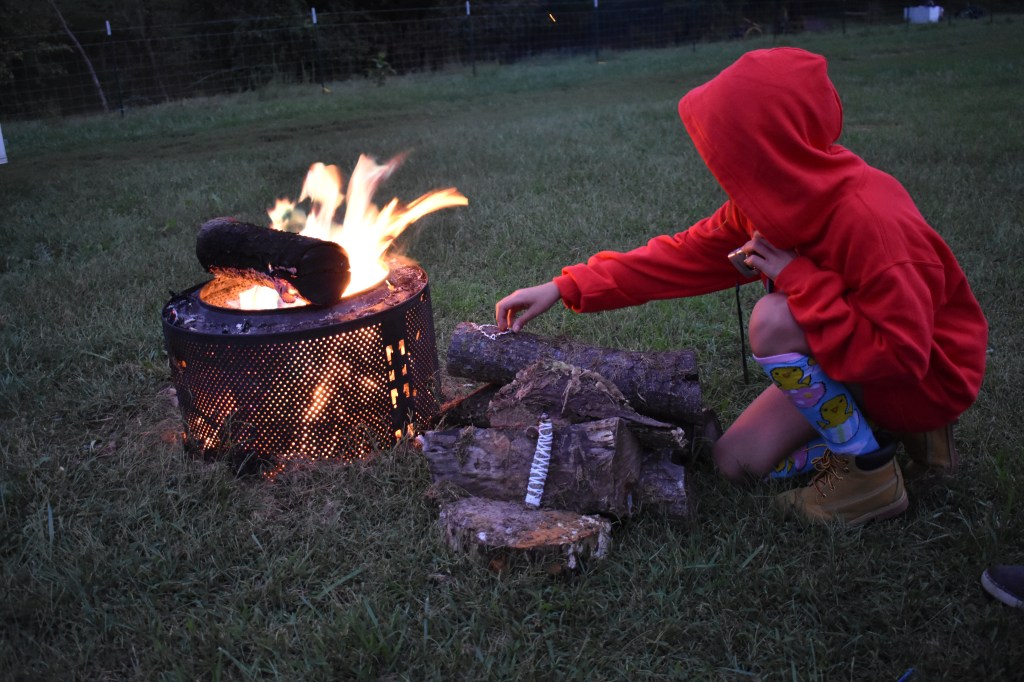
Every year we light a fire to honor Riki. Here’s Sammy lighting the fire.
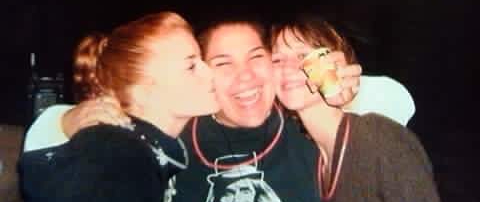
Riki was always a most interesting child, who grew into an interesting adult! When Riki was in sixth grade, she dreamed of driving a car. In this dream, Riki drove through the countryside, and before she reached home, she picked up several “furries” along the way. She told me she picked up three dogs, some cats, a raccoon, some skunks, possums, and a bobcat before reaching home. They all rode along happily. She loved animals. I often wondered if her dream was a metaphor for all the friends she would later “collect” as an adult. Riki befriended people easily. She created her own “Village,” a beautiful group of people who called her, “Mama Bear.” She was a motherly figure to so many, including those with whom she worked. Riki had great friends, and Riki was a great friend, too!
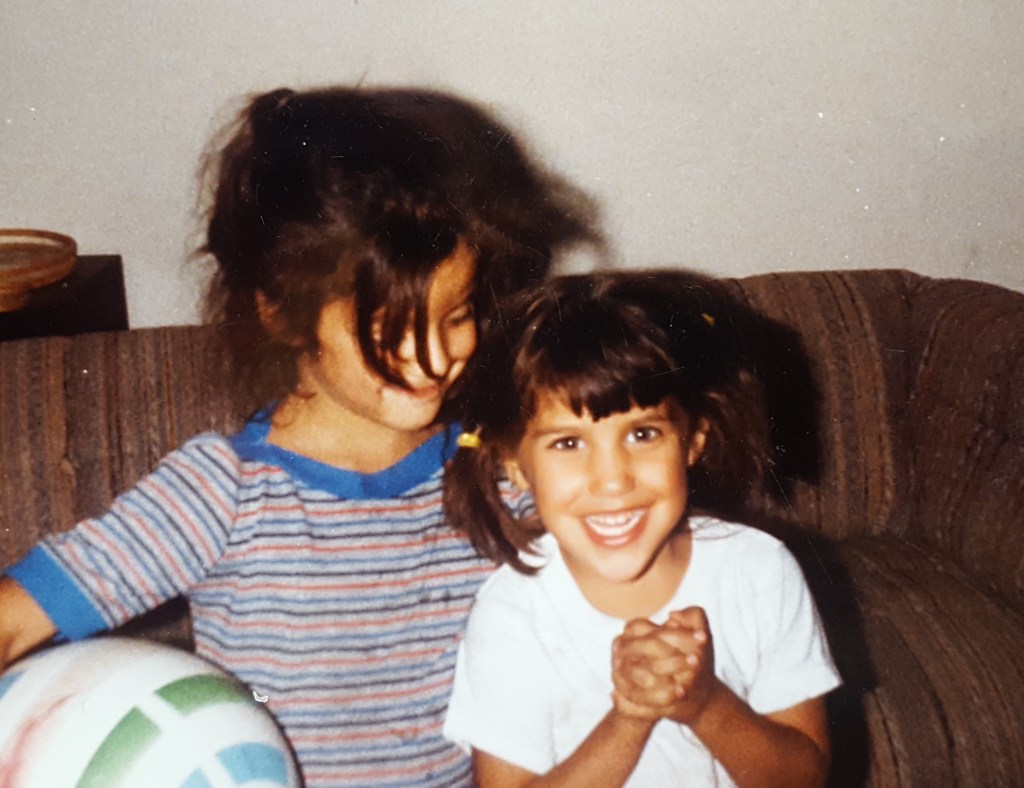
Riki with Cousin Andrea
These 10 years have passed, and those friends have not missed graduations, birthday parties, a baby shower, and indeed any of the many rites of passage for Riki and Johnny’s children.
I miss Riki’s sense of humor, her great cooking and baking, her fierce love of her children, her beauty, and her drive to be the best mother possible. I’m glad the children talk to me about what they miss about their mother. I know they suffer dearly.
Cherish your loved ones. We will never pass this way again. Thank you for reading.
I am a geographer specializing in human systems. My passion is studying underrepresented populations so that I can assist in their integration into the communities in which they live. I studied Human Ecology because it is a wonderful blend of the disciplines of geography, anthropology and sociology. No matter the context in which I find myself, I am an observer of humans in their environments and how the influences in those settings build and nurture sense-of-self, sense-of-place, and sense-of-direction in educational, familial, and community settings. My work focuses on the cross-cultural and intercultural traditions of multi-lingual populations acculturating into their receiving communities and being successful in educational arenas of higher education. This work includes gathering, analyzing, and writing about health, well-being, and environmental/social connectedness in their communities. My research focuses on Minority-majority, rural, Midwest communities. My role as director of intercultural learning and academic success at Kansas State University allows me to discover more about myself as I work with others in their paths to self-discovery in their own interactions with students and families who come from different parts of the country and the world all converging in educational spaces. Recently, I lived, worked and played in Southwest Kansas, a region marked by Minority-majority populations centers (56% – 68%). Some of my research results are used to address poverty, low educational attainment, poor health outcomes, and cultural norms in multi-cultural settings. I work to assure a representative sample for my research, so I engage in multi-lingual research (English, Spanish, Burmese, French, Tigrinya, and Somali). Building trust and relationships is the key to my success as a multilingual researcher. Presently, my research takes me in the micro-communities of populations represented by nine African countries (Eritrea, Ethiopia, Sudan, Kenya, Senegal, Uganda, Ivory Coast, Somalia, and Cameroon), seven Latin American countries, and six Asian countries. Yes, it is rural Southwest Kansas, and many of the densely-settled and frontier rural communities act as receiving centers for refugees and other displaced populations, because of the availability of jobs.
I am the recent recipient of National Geographic Society’s Research and Exploration grant to introduce Geographic Information Systems (GIS) to females of color. This inter-generational, intercultural class hosted middle school, high school, and adult females who learned the basics of GIS with a variety of applications from remote sensing to city planning to Google Earth, and to Pokémon GO! By the time the young ladies finished the class, they were able to build cities, map their communities, log trips from their countries of origin to the Midwest. I am in the mid-year of the grant funding, and my target for completion was July 2018. I have new funding to extend this work to new cohorts.
Currently, I work at Haskell Indian Nations University on an NSF project: Rising Voices Changing Coasts addressing climate change in Indigenous Coastal Communities in Alaska, Puerto Rico, Hawai'i, and the Louisiana Gulf Coast.
I am a mother, grandmother, sibling, friend, banjo player, and a geographer dedicated to studying humans in their environments.
View all posts by djhbolton