A Musical Biography: Las Cantigas de Santa Maria 2025

In this 13th year of my production, for public radio, I present the narrative and play list to “Las Cantigas de Santa Maria: A Musical Biography of 13th Century Monarch, King Alfonso X” 

I dedicate this program to my mentor, the late David W. Bauguess and to all music teachers who instill the love of music in their students.  

I invite you to listen to this program on December 24, from 2:00 to 4 p.m. in the Central Time Zone.  The public radio station that has sponsored Las Cantigas in this 13th year is High Plains Public Radio.  Please tune in on hppr.org under holiday programming (not to be confused with HPPR connect, the talk show portion of their dual programming). 

 Hello. I’m Debra Bolton. Welcome to Las Cantigas de Santa Maria (The Holy Canticles of St. Mary), Songs and poems in praise of the Virgin Mary – and the poetic/musical biography of Alfonso, “the wise”, The King of Castile-Leon, now Spain, and who lived from 1221 to 1284.  I’m happy you’ve joined me today.   

Today, my research comes from the authors Deirdre Jackson, Dr. Jessica Knauss, and Emilio Villalba with Sara Marina, and Maestro Jordi Savall.   

I like to begin this musical journey with The Learned King declaring himself Mary’s Troubadour who will take her teachings to his Kingdom and beyond. We hear the prologue where The Learned King states, “I am here to spread your good word to my people, and in doing that, I pray for my place in the Kingdom of Heaven.”   

This is Pavel Zarukin 1:18  

Followed by the spoken declaration that Alfonso the Wise states that from henceforth, he will be Mary’s troubadour. :18 and CSM #4 by Ricardo Alves Pereira with the Prologue CSM B 3:47  

Pavel Zarukin – Score Exchange

That was Ricardo Alves Pereira with an instrumental version of the CSM Prologue B and King Alfonso X announcement that he serves as the Virgin Mary’s troubadour, henceforth, from Emsemble Obsidienne with Emmanuel Bonnardot.   the Learned King’s spoken declaration that he is Mary’s greatest public relations ad man, so to speak.  Alfonso pledges to use every means to extol Mary’s virtues, especially where her miracles are concerned.  

In writing about the Enigma of the Cantigas de Santa Maria or the CSM, Emilio Villalba, says, “The curious thing about this marvellous musical monument from the 13th century is that it still holds many secrets and enigmas that make this work even more valuable.” He adds, “There is no doubt that Alfonso was one of the first kings to sign a musical book, making this work a unique codex.  

The CSM collection consists of poems put to music. The king also engaged 2D and 3D artists to depict visually what the songs portrayed.   The catalog consists of more than 420 poems set to music beginning with what is called a “cantiga de loor” song of love, that is “courtly love” and every 10th song is a song of love while the others focus on scenarios related to sins and crimes with their accompanying stories of Mary’s miracles from which Alfonso X hopes to promote morality in his kingdoms of Castile and Leon, which later become what we know as Spain.   

Let’s turn to the works of This Breton band called Bleizi Ruz, meaning red wolves in the Breton language.  This interpretation demonstrates that the Cantigas de Santa Maria continues to be of interest to musicians and scholars world wide. Here Blizi Ruz collaborates with Spanish Ensemble, La Musigaña. 

Cantigas de Santa Maria: 4:04 

CSM 1 – Des oge mais quer’ eu trobar.  Hana Blaziková, Barbora Kabátková, Margit Übellacker & Martin Novák  5:44 
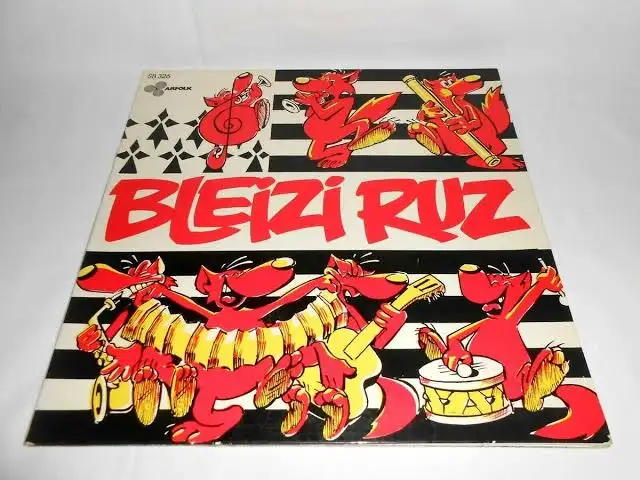
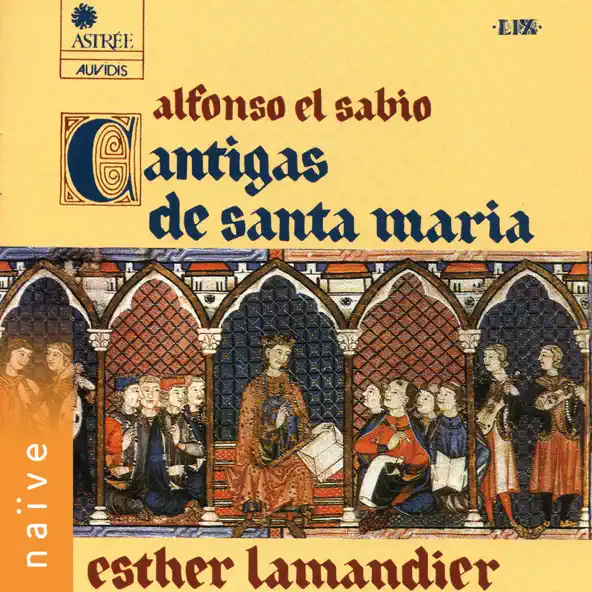
Album Cover

That was Hana Blaziková, Barbora Kabátková, Margit Übellacker & Martin Novák performing CSM 1, The Seven Joys. We began the set with Blizi Ruz and La Musigaña with an instrumental of CSM 1. 

You can find this transcript, along with photos, and links in my blog, Peopleandcultures.blog. Look for “Cantigas de Santa Maria 2025” 

You’re listening to Las Cantigas de Santa Maria, a musical biography of Medieval King Alfonso X and his devotion to the Virgin Mary. In this, we come to understand the miracles of the Virgin Mary as seen through the eyes and ears of Alfonso X, who ruled what is now Spain during the 13th Century.  

Each year, when I prepare this production, I like to read different scholarly interpretations of the CSM.  King Alfonso X remains an enigma. Instead of having his musicians and scholars do the work, he worked alongside them offering his own poetry and musical notations to the songs praising the miracles of the Virgin Mary.  Musician and musicologist, Emilio Villalba posits that four copies of the vast works were made so that the King could have them at each of his palaces. During great illness, the King held the rather weighty volumes on his chest as a sort of balm for healing.   

We’ll dive into works of other Alfonsine scholars later in this program.  Let’s continue with an Arabic tribute to the Virgin Mary.  Remember, King Alfonso X was a pluralist, and he ruled his kingdom, rather effectively, with Muslims, Jewish, and Christians side by side. We’ll hear two version of a la quarte estampie royal.  A Royal dance, specifically of Medieval times: 

La quarte estampie royal – Ensemble Alcatraz  2:33 

La quarte Estampie Royal – Jordi Savall 4:47 

We just heard Jordi Saval and his Hesperion XXI (21) from an album called Estampies & Danses Royales on the Alia Vox label. 

You’re listening to Las Cantigas de Santa Maria, a musical biography of Medieval King Alfonso X. I’m Debra Bolton. We now pause for this station break: 2:00  
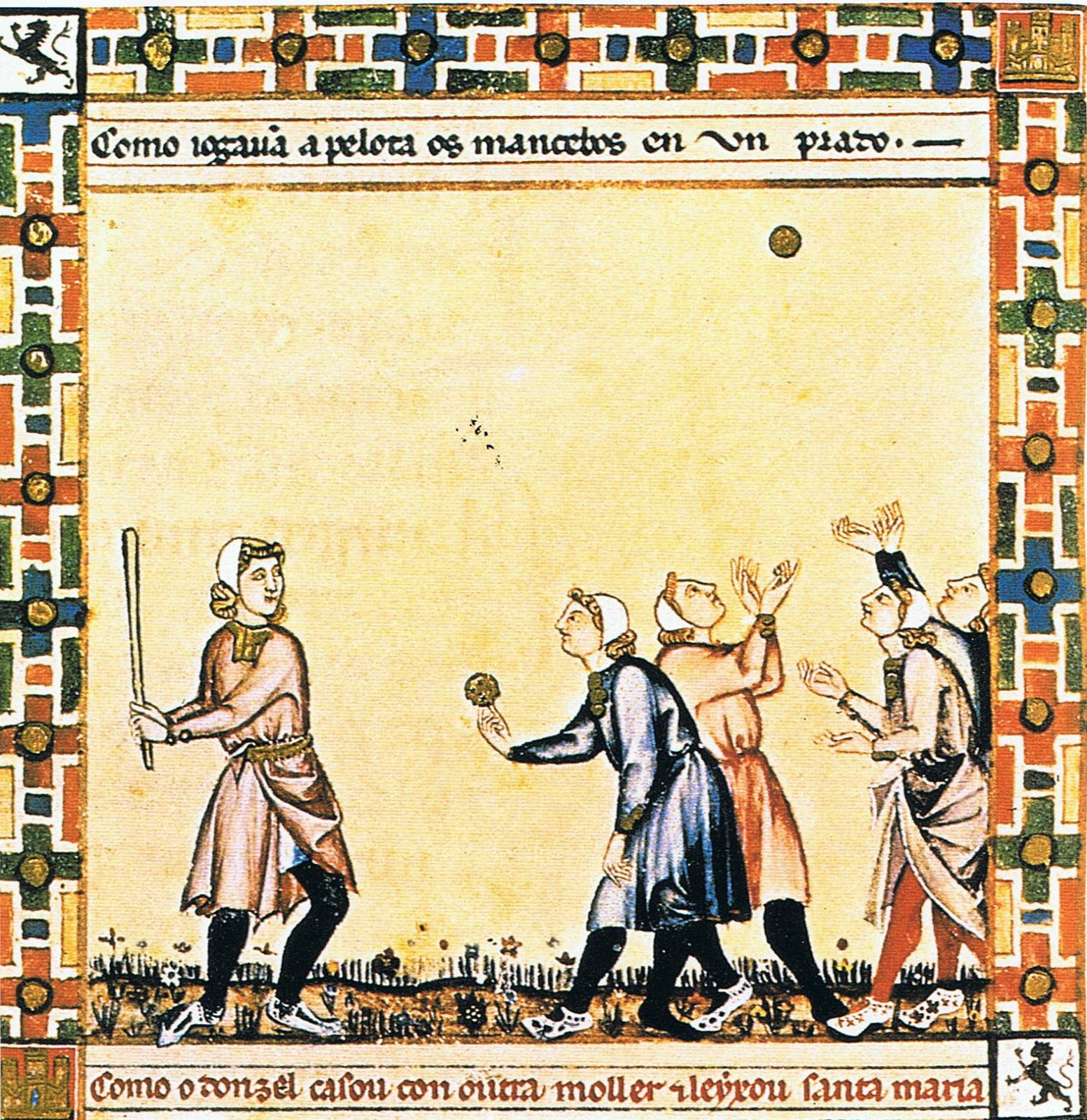
Welcome back to Las Cantigas de Santa Maria, a musical biography of 13th Century monarch, King Alfonso X, who ruled what is now Spain from 1251 to 1284. I’m your host, Debra Bolton. A friend from Spain shares a few articles he’s found on King Alfonso.  One such article, Work and Workers in Alfonso X’s CSM by Deirdre Jackson, sheds light on ways men and women coped with work challenges from work accidents to crop failure. Some scholars posit that Alfonso the Wise made a conscious effort to preserve ways of life in his kingdom, while committing himself to creating a cultural time capsule in the dominant language of the time: Galician-Portuguese, the embryonic Castilian of today.  We’ll hear two pieces of the CSM that speak to work life, with the added twist of Mary intervening to ease a tragedy.  

CSM 213 tells the story of A man named don Tomé from Elvas who made his living carrying things to market on his beasts. Tome worked with the thought that  his wife was faithful to him, but he was mistaken.  

One day authorities found her stabbed to death. When Tome returned to Elvas, they tried to arrest him, but he fled to the border. 

He settled in Badajoz, and decided to go to Terena on pilgrimage hoping the  Virgin would protect him from arrest, since the charge was unjust. He prayed to the Virgin to have mercy on him and to defend him. 

On his return to Badajoz, he encountered his enemies, but the Virgin prevented them from seeing him. Still hoping to find him, they went to Terena. On a riverbank, they saw the devil in the man’s guise. 

Once the devil’s trick was revealed, the authorities understood that Tome was innocent, and they begged his pardon. 

Here we have Tomoko Sugawara, performing CSM 213 on the Konghou, a plucked concert harp instrument of ancient China.  

CSM 213 Tomoko Sugawara 3:49 

CSM 267 Aquel Trovar 4:44 
That was Aquel Trovar performing CSM 267, A rich merchant from Portugal vowed someday to go on pilgrimage to Rocamadour. 

The merchant loaded his ship and sailed up the Atlantic coast toward Flanders. The ship was struck by a storm and the merchant was thrown into the sea. As he sank into the waves, he asked the Virgin to save him. The Virgin calmed the sea and carried the merchant to dry land.  

The ancient city of Rocamadour, with a current population of 604 people, includes buildings that appear to have been carved in the clifftop. Considered a religious city in the Occitania region of southern France,  Rocamadour borders Spain and features the body of St. Amadour and the sculpture of the Black Virgin.  This village figures into the CSM frequently. 

Let’s hear  CSM #8, the Minstrel of Rocamadour, named, Pedro de Sigrar, who sang and played  his fiddle in front of a statue of the Virgin. He prayed that she’d give him a candle, and she caused one to rest on his fiddle. A monk, the shrine treasurer, snatched it back, and accused the minstrel of sorcery. The candle returned to the fiddle and the people, seeing this, did not allow the monk to take it away from the minstrel again. The monk acknowledged the miracle, repented, and asked the minstrel’s pardon. This is the Waverly Consort with the late Michael Jaffee, leading. 

CSM 8: A virgen Santa Maria Pt. 1                   0:19 

CSM 8: Song    3:38 
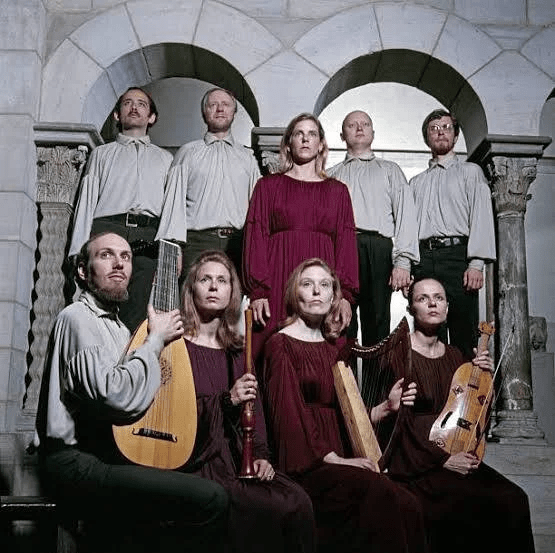
Waverly Consort: eBay Australia (source)

That was the Waverly Consort from their album: Las Cantigas de Santa Maria, one of my first encounters with the CSM, and it continues to delight. 

You’re listening to a musical biography of Medieval King Alfonso X of what is now Spain.  I’m your host Debra Bolton.  Thank you for listening.  Coming up in the second hour of Las Cantigas de Santa Maria, we’ll look at some contemporary interpretations of the CSM, including electric guitars replacing instruments of the 13th Century. 

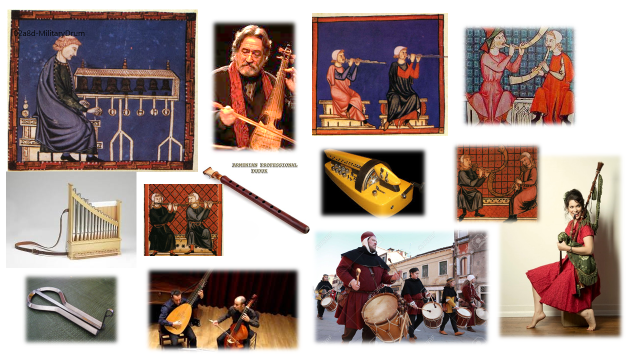
In this vast collections of the CSM, we learn that of the 420 songs, every 10th song is a Cantiga de Loor, a song of courtly love.  Let’s continue with Maestro Eduardo Paniagua, a musicologist and multi-instrumentalist specializing in period instruments of the time including viola de rueda, a.k.a. the hurdy gurdy, the oud (precursor to the guitar), the organetto (a portable organ), and varying horns and recorders. You can see some of these instruments on my blog: peopleandcultures.blog. We’ll hear CSM 80 and CSM 130, songs of courtly love, performed by Eduardo Paniagua. 

CSM 80       2:54 

CSM 130     3:02 
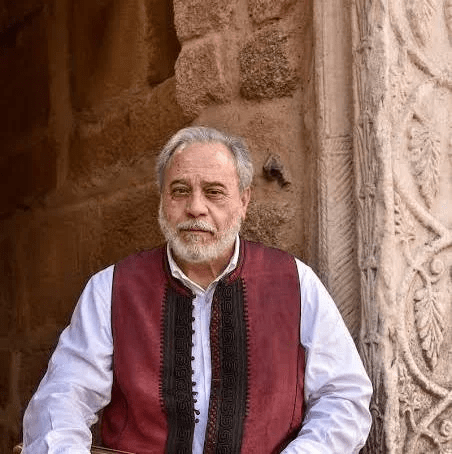
Maestro Eduardo Paniagua: Architect and Musician: Melomano Digital – “The Cantigas are kind of like a chest of gold coins!”

We just heard Eduardo Paniagua with CSM 80 and 130, songs of courtly love.  

As we approach the top of the hour, I hope you join us for the second hour to further our exploration of the history, the music, the King’s goals for this vast collection, and much more. 

Let’s listen to Frederic Hand performing, what he calls, a CSM fantasy followed by CSM 139, the boy who offered bread to the Christ Child.  You’re listening to Las Cantigas de Santa Maria, a musical biography of Medieval King Alfonso X.  I”m your host, Debra Bolton. 

HR 1 Segment 2 total timing: 29:27 
HR 2 Segment 1 

Welcome to the second and final hour of this holiday special Las Cantigas de Santa Maria, the holy canticles of the Virgin Mary and musical biography of Alfonso X, the King of Castile-Leon, now Spain.  I’m your host, Debra Bolton. 

Alfonso X ruled from 1252 to 1284.  To put the world into perspective at the time, the English language continued to change from its Germanic-rooted Olde English of the Beowulf poet (circa 9th or 10th century) after the Norman invasion of 1066. In the next century, we hear the English of Geoffrey Chaucer of Canterbury Tales fame and the Gawain Poet.  Europeans now use Arabic numerals in favor of Roman Numerals. In the Mongol Empire, Mongke, officially, marks the worship of his grandfather, Genghis Khan while Buddhism, Islam, and Christianity flourish. The Inca Empire of Peru is thriving. England begins the process of segregation of Jewish peoples, and other countries begin to follow suit. Poland became a place of refuge for exiled and homeless Jewish Peoples, but it later became host to many Jewish death camps under the Hitler regime. The Mexica people, also known as Aztecs, are building their great capital city Tenochtitlan on Lake Texcoco, what is now Mexico City.  King Alfonso X’s bid to be King of the Holy Roman Empire but fails as Pope Alexander IV (4th) denies Alfonso’s rights to the throne in favor of Count Rudolf, bringing prominence to the Habsburg family.  Count Rudolf was considered mediocre by many, as Alfonso was too ambitious and certainly too bright for that particular Pope of the time. 

From the 13th to the 21st Century, the Cantigas de Santa Maria continue to influence new and exciting interpretations.  Let’s begin this second hour looking at an electric influence of one of the most recognizable of the CSM, , and since it has an even number, 100, we know that it’s a song of love.  Here we have Gabriel Fox with his contemporary interpretation of CSM 100. 

Gabriel Fox, CSM 100         2:37 

Takashi Tsunoda, CSM Medley      6:26 
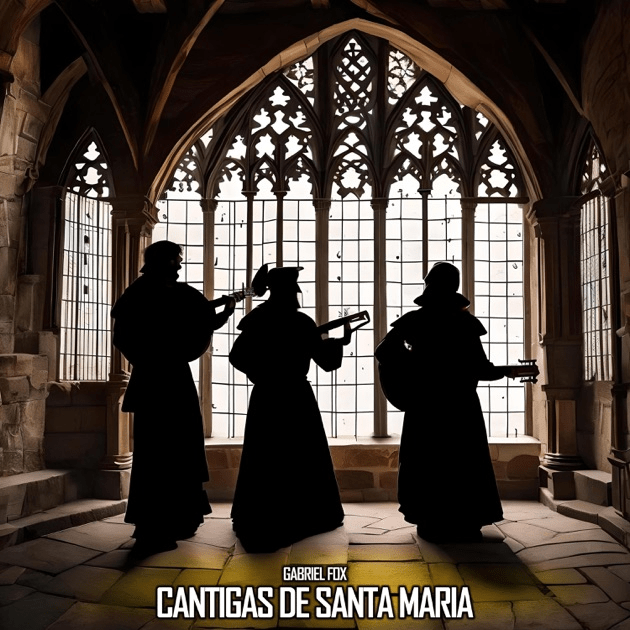
Album Cover: Apple Music (No copyright infringement intended)

That was Takashi Tsunoda performing on the Oud Harp, an instrument that he helped to build. Tsunoda also plays the gourd  banjo in that piece.  Tsunoda is listed under classical, jazz, and world music genres. 

You’re listening to Las Cantigas de Santa Maria.  I’m Debra Bolton, your host.  By the bye, you can read the transcript along with photos of the instruments and the musical playlist on my blog, peopleandcultures.blog.  Also, you can comment or communicate with me through the blog, too. 

Let’s continue with our exploration of the CSM.  Often, the performers will list their song or instrumental by the first few lines of the poem.  Thanks to the Oxford Cantigas de Santa Maria database, I can find the CSM number by using the lines from the poem.  Let’s hear Enea Sorini’s interpretation of CSM 48, the stream that was diverted for the monks of Montserrat. 

CSM 48  3:46 

CSM 77-119 by Forfaitz    5:12  

That was the Ensemble Forfaitz with CSM 77-119.  I can find little to no     information about Ensemble Forfaitz other than they play with Ensemble Unicorn. I’ve noticed that many interpreters of the CSM tend to bundle CSM 77-119 into a medley.  Rather than my telling you what each of the stories entail, this is where you can find each of the 420 poems: the Oxford Cantigas de Santa Maria database.  I continue to be fascinated by the stories in each of the poems.  

King Alfonso ruled Castile-Leon in the Iberian Peninsula. If you think about it, Muslim rule began in 711 and lasted until 1492, the year of the Inquisition, when Muslims and Jewish people were victims displacement by Christian rule some 200 years after King Alfonso X’s rule.  Alfonso the Wise ruled alongside his Muslim counterparts.   

 Let’s listen to the music of al-Andalus, the name of Muslim rule of the region. This is Eduardo Paniagua, an architect, musicologist, and multi-instrumentalist dedicated to reviving the music of the Iberian Peninsula in the Medieval era. Here he plays with Ensemble El Arabi. This is called Cordoba Lozana 

El Arabi with Eduardo Paniagua  Cordoba Lozana 5:52 
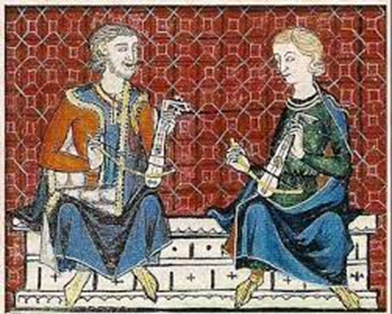
That was El Arabi with Eduardo Paniagua. You’re listening the a musical biography of Medieval King Alfonso X, Las Cantigas de Santa Maria.  I’m your host, Debra Bolton.  Let’s take this break from your public radio station, and then we will return with the second part of this hour. 

Music bed: Istampitta: La Manfredina (Italia Medieval) Jordi Savall 2:00  

(Hour 2: Segment 2) 

Welcome back to the final segment of Las Cantigas de Santa Maria. I’m your host, Debra Bolton Thank you for listening and for supporting your public radio station. 

Scholars and Alfonsine devotees continue to celebrate the Learned King’s birthday on November 23 of each year, this being the 804th year since his birth in 1221.  

Let’s discuss, for a moment, the language of King Alfonso X.   

In a past interview with Alfonsine scholar, Dr. J. K. Knauss, she noted that the great legacy of El Sabio is that he lived up to his name, “the wise” because he was obsessed with writing everything down.  Whether it was mathematics, astronomy, the virtue of playing board games and other leisurely activities to balance hard works, laws to govern his subjects, and teaching morality, he not only wrote continually, but he chose not to write in Latin, the language of Kingdoms of the day.  What made his legacy so strong is that he wrote in Galician-Portuguese, the embryonic Castilian, the present-day Spanish, though, like all language, changes continually as it incorporates varying native language of the Americas and other places colonized by Spain .  The Learned King is considered the “Father of Castilian.” Was he that much of a visionary?  It would seem so since Spanish only trails Chinese as the most common language worldwide, flanked by English, Arabic, Hindi, Portuguese, Bengali, Russian, Japanese, and Lahnda, aka, “Western Punjabi” according to The World Economic Forum and Encyclopedia Britannica online.  

Let’s begin this segment with Maestro Jordi Savall, the music scholar, historian, and viola de gambist extraordinaire!  I’ve had the great honor of attending three of his performances in Kansas City.  Nearing 90, Savall still gathers musicians from around the globe to see his vision of bringing to the fore music through the centuries from composers, obscure and famous.   

Here, we have Savall’s arrangement of CSM 248-353.   

Ductia (CSM 248-353) ( 3:43) Jordi Savall 

Je vivroie liement  (I’ve been living)– Ensemble Gilles Binchois 3:06 

You’re listening to Las Cantigas de Santa Maria, a musical biography of King Alfonso X, I’m Debra Bolton.  That was Ensemble Gilles Binchois with Je vivroie Liement, I’’ve been living! Preceded by Jordi Savall with his arrangement of CSM 248-353. 

When I spoke to Alfonsine scholar Dr. J.K. Knauss, who lives in Spain and focuses on writing books, non-fiction and historical fiction, she told me that the higher the number in the CSM collection of more than 420 poems, the more local the miracle is happening.   

Let’s hear Hana Blažíková performing CSM 383, The Pilgram woman saved from drowning, saved by the Virgin to whom the woman prayed. 

CSM 383 – Hana Blažíková   O fondo do mar tan    5:07 

Alfonso X El Sabio – Narciso Yepes    4:58 
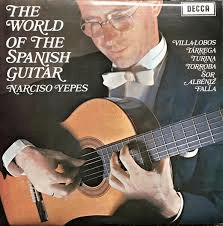
Narciso Yepes: Copyright DECCA Records

That was the great Narciso Yepes, born in Lorca Spain in 1927 and died in Murcia, Spain in 1997.  Yepes brought to prominence, the 10-String Classical guitar known for its range and timbre. Yepes performed his arrangement of a CSM medley in 1989.   

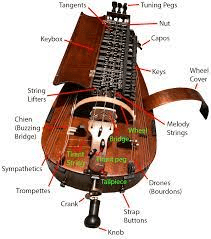
Well, our time together is waning.  Thank you for listening to this special programming, Las Cantigas de Santa Maria with your host, Debra Bolton.  Be sure to check out my blog, peopleandcultures.blog for this narrative and song selections.  You can also see pictures of the medieval instruments featured on this show.  Speaking of instruments, let’s hear the Viola de Rueda, which translates to a violin of the wheel. I’m speaking of the hurdy gurdy also called Zamphona.  I read that it takes five years to build one hurdy gurdy.  On my blog, peopleandcultures.blog I show the anatomy of the hurdy gurdy, a most fascinating instrument still played today. Let’s listen to Eduardo Paniagua and his Fuego de San Marcial. 

Fuego de San Marcial  Eduardo Paniagua              2:38 

 That was Musica Antigua led by Maestro Paniagua. 

Thank you for listening to Las Cantigas de Santa Maria.  I’m your host Debra Bolton.  Thank you for supporting your public radio station. 

To take us to the top of the hour,  Waverly Consorts CSM medley Instrumental from Waverly Consort’s Las Cantigas de Santa Maria (6:43) 

Instruments of the time:   

Shawm – 12th c conical bored double reed instrument of Middle Eastern origin, a precursor of the oboe. Like the oboe, it is conically bored; but its bore, bell, and finger holes are wider, and it has a wooden disk (called a pirouette, on European shawms) that supports the lips 

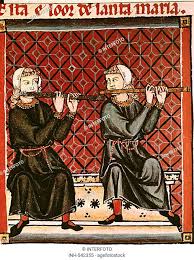
Recorder – Yes.  That woodwind instrument that many of us learned in grade school. We hear this in the CSM, usually, on a wider variety of wood recorders. 

Organetto – a small portable organ, often championed by Soprano, Esther Lamandier 

Oud – Literally, wood in Arabic, short-necked, pear-shaped with 11 – 13 strings grouped in 5, 6, or 7 courses.  A few of the oud players that stand oud are Driss El Maloumi, a group called 3MA and Haik Egitim Merkezi Yalova, both Maloumi and Yalova perform with Jordi Savall’s Hesperion groups.  The Oud is considered the most important instrument in Middle Eastern Music.   

Qanun (a.k.a., kanun, ganoun, kanoon) an Arabic stringed instrument, introduced to Europe in the 12th Century.  It’s played on the lap with picks that surround both index fingers, and the player can change the pitch of the strings with brass levers. 

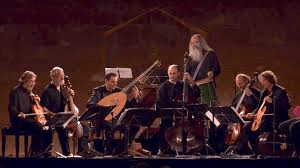
Hakan Güngör plays Kanun on the right, with Jordi Savall playing his vièle 

Hurdy Gurdy, a.k.a. Viola de Rueda, and the Zanfona.  Here we hear this instrument in Musica Antigua.  

Vielle – the Medieval fiddle with five strings and six tied frets. 

See image above 

Rebec – A three-string “fiddle” often held between the legs as it’s played. 

Viola de Gamba – (a.k.a., Viol or gamba), a six-stringed instrument, said to be a precursor of the four-stringed cello.  The Gamba, usually, is much larger and has frets, like a guitar. 

Gaita – Galician bag pipe, also common in Portugal.  

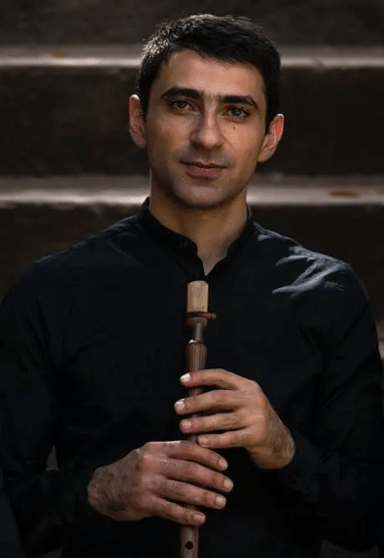
Duduk – Double reed Armenian flute, featuring those mournful, lamenting tones. Haïg Sarikouyoumdjian, pictured below, plays with Jordi Savall’s Hesperion group. 

I wrote this part for narrative, but did not include in radio program.  

For perspective of the time, King Henry III ruled England about the same time Alfonso X ruled Castile-Leon, the greater part of what is now known as Spain.  While El Sabio ruled his lands with Christians, Muslims, and Jewish peoples living and studying side-by-side with some appreciation and great tolerance, it would not be until 208 years later that Isabella and Ferdinand would expel all non-Christians and the time Christopher Columbus would set sail for Asia but landed in the Americas, which changed extensively the lives that he touched. Before that, well-civilized Indigenous tribes had not yet had contact with European colonizers. The surnames that most people connect with Latin American countries were the surnames of their Spanish conquerors.  During and after the inquisition, many non-Christians, Jewish and Muslim people, added the suffixes of –ez, -es, or –os, meaning “son of,” to their surnames. For example, the Muslim man, Alvar, became Alvarez.  The Jewish man, Martin became Martinez.  Consistent with most surnames, there remained a connection to the family trade or place of origins.   The Herrera were Sehphardic Jewish iron-smiths of Galicia.  Those hailing from Galicia, or Galego, were the Galegos.  In the present day, an extra “L” was added to make it “Gallegos” with the double-L being pronounced as “ya.” 

Let’s explore the music of the Iberian Peninsula during Alfonso’s time with music of the Jewish and Muslim peoples. First, we turn to the music of Jewish People of the region known as the Sephardim, who populated Spain, North Africa, Turkey, differing from the Ashkenazi Jewish of Eastern Europe.  King Alfonso welcomed Christians, Jewish, and Muslims musician into his Court.  He respected Muslims, the keepers of classical knowledge and for their sophisticated, cultured and their technological advances.  They were poets, artists, artisans, mathematicians, merchants, and ship builders.   the Jewish were known as astronomers, writers, economists, scholars, and architects. You’re listening to Las Cantigas de Santa Maria, a musical biography of 13th Century monarch, Alfonso the Wise. Be sure to check out my blog, peopleandcultures.blog for a transcript of this presentation and pictures of the many instruments played in these musical pieces. 

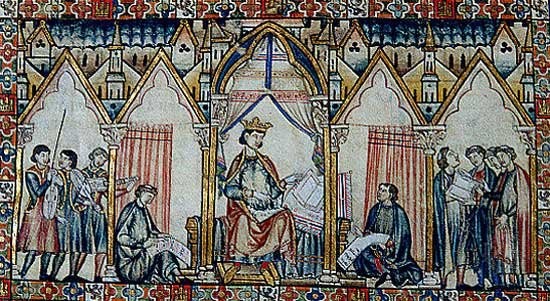
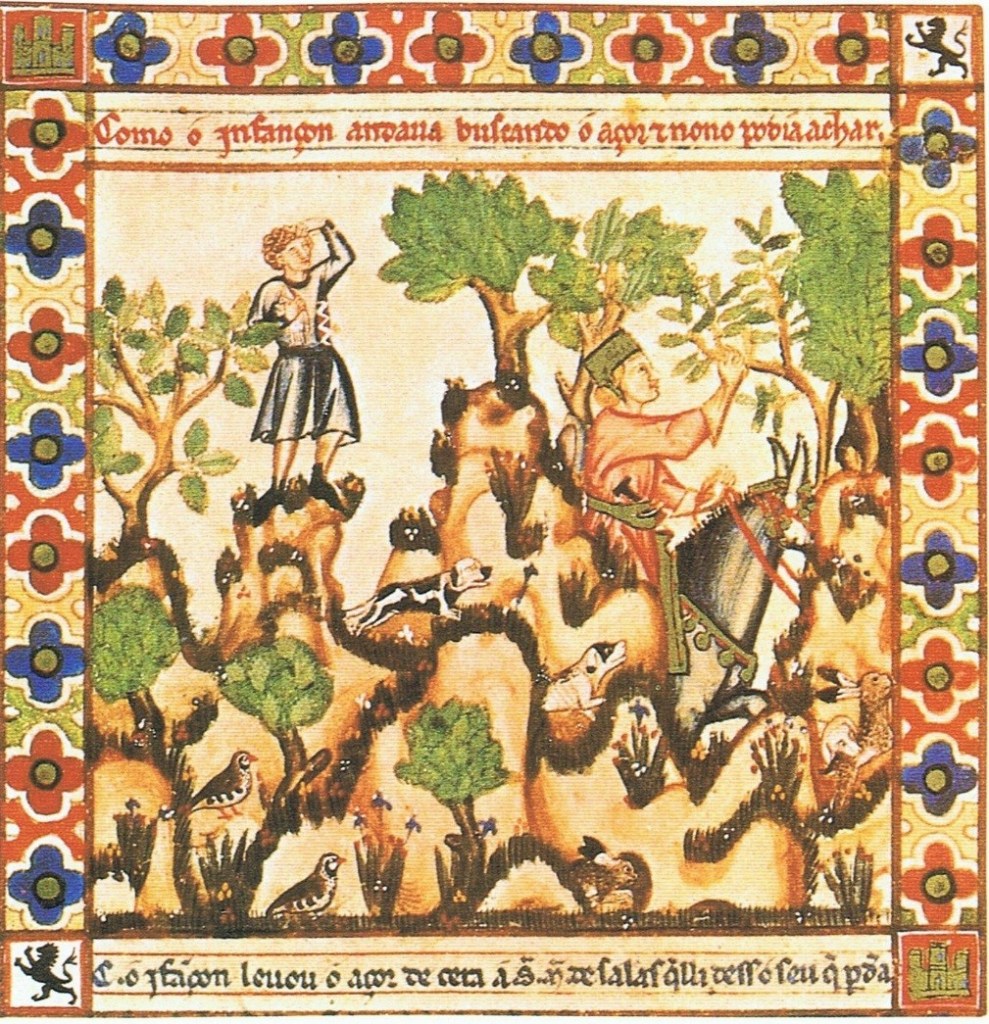
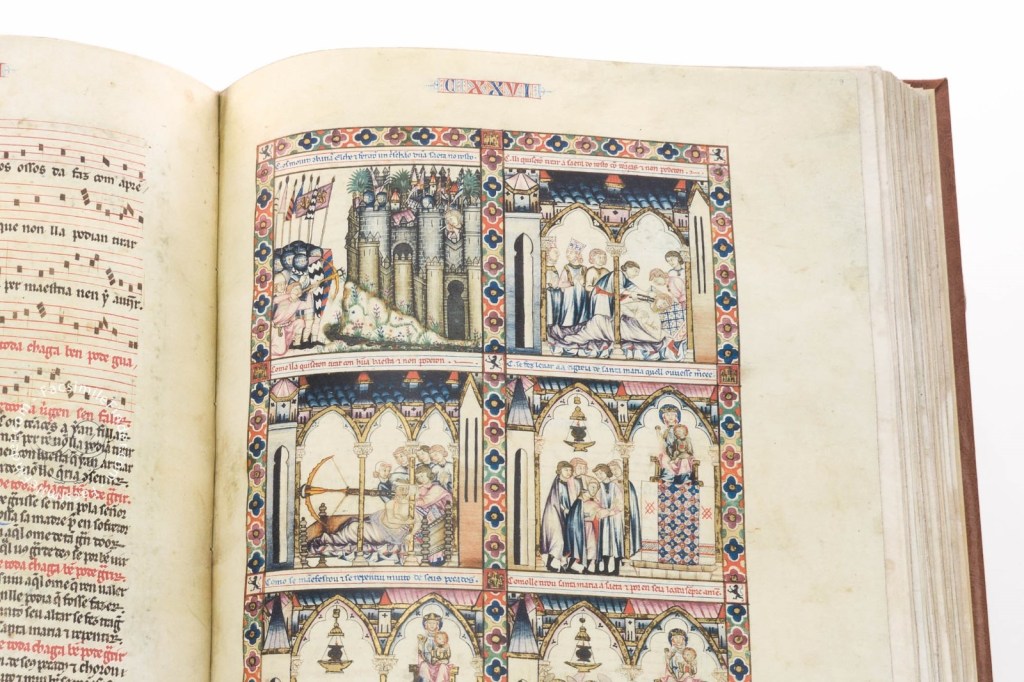
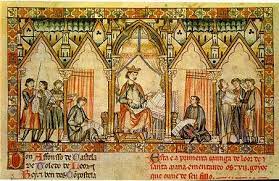
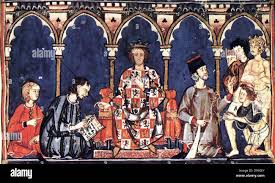
King Alfonso employed artists to create two and three-dimensional works of art to correspond to the poems and songs, which would have made the Learned King an early pioneer in multi-media.  Now, here we are putting it all in digital form!  Scholars say the works of art, the songs and the poems were Alfonso’s way of teaching morality to the subjects of his kingdom on many levels.  While those in his court were, themselves, learned and well-educated people, there were many in his kingdom who, perhaps, could not read or write.  Hence the need for the lessons in more than written forms.  

As we think of the language of Galician-Portuguese morphing into Castilian, and many now call the language “Spanish” coming from Spain, originally.  During the expulsion of Jewish and Muslims in 1492, we can see some of the suffixes that may be telling of their origins.  Christian suffixes were –ez, -es, and –os. When colonizing other lands, ironsmiths were quite important.  Think of the many people you know with the surname of “Smith.”  Hierro means iron in Castilian.   The surname Hernandez denotes the Christian ironsmiths, and the surname Herrera were the Sephardic Jewish ironsmiths, and the Gallegos hailed from Galicia.  We don’t think that the double-l was pronounced with the “y” sound at the time. In case you’re  wondering about Galician-Portuguese, the language that is now known as Castilian, here’s a short phonics lesson, “Cs” and “Zs” were pronounced with a “TH” sound or a lisp.  Most of those pronunciations hold true today in the Iberian Peninsula.  When Castilian came to the Americas beginning in1492, the thousands of Indigenous languages were erased, in most cases, as each of those countries were colonized by Columbus and those who followed him from Spain, a European Country. Spain made it to what is now New Mexico about 25 years before the Plymouth rock landing. Spain continued south and the English settlers moved west, illustrating why we speak English in the United States and much of Canada. 

Thanks to the authors who continue to educate me. My references come from the writings of Dr. J.K. Knauss. In addition, I refer to the research of Maestro Jordi Savall, and Maestro Eduardo Paniagua. , John Esten Keller, Robert I. Burn, Editor of “The Emperor of Culture” and from Oxford Univesity’s CSM database.  

Thank you for reading my blog. Be sure to listen to this radio program on High Plains Public Radio, December 24, at 2:00 p.m. Central Standard Time. (hppr.org)

Distinguished Alumni!

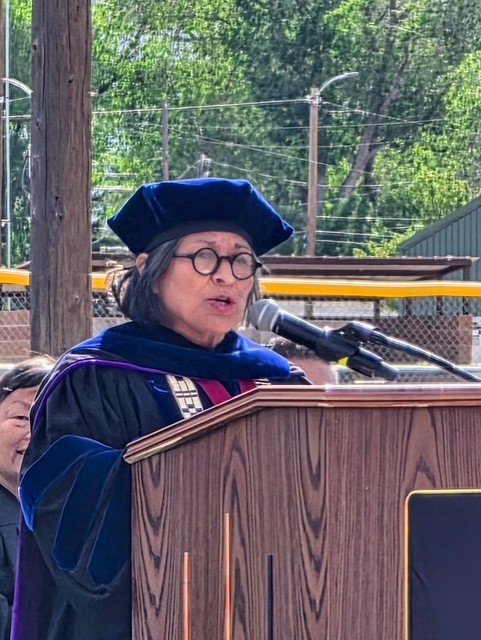
On the 50th anniversary of my graduation from Montrose High School, I was selected as a “Distinguished Alumni!” I remember that my sister, Eileen, had nominated me two times, but that was about 5-7 years ago. It was so great. I set out to write my speech to the 2025 graduating class and their families. I strove to make the points that everything one learns in high school, in deed, all our school days, can be applied to our adult lives. I hope I made the points.

May 18, 2025

Members of the Montrose County School District Board, President Fishering, Montrose Education Foundation, Inc. Members, Superintendent, Dr. Stephensen, Principal Voehringer, and Montrose High School Graduates, I am honored to stand before you today as the recipient of the Distinguished Alumna Award. 

First, I want to acknowledge that we stand on the original lands of my Father’s People, the Ute.  Please remember this truth. 

Graduates: You reached another great milestone in your lives.  Have you asked yourselves: “Where will I be in 50 years? What will I be doing?”  Well, as a graduate in 1975, 50 years ago, I didn’t ask myself that question either!  I never dreamed that I’d be standing before you these 50 years later.  My sense of determination, learned from my parents, is what brings me here.  I don’t know if you still do this, but we had to talk to the guidance counselor regarding our futures.  In my exit interview, the first words out of my guidance counselor’s mouth were, “I guess you’ll want to go work at the candy factory, because I don’t think college is for you.”  He didn’t really know me!  I was a 3.75 gpa student, but luckily, I had great teachers in my school days who saw me in a different light.  Everything we learn in elementary, middle, and high school prepares us for our futures.  Those years prepared me for who I am today! 

My middle school English teacher, Mrs. Bowers, recognized my gift for language and encouraged me to stay the course.  I wrote my master’s thesis, The Origins and Traditions of Foods in Charles Dickens’ Great Expectations, because Mrs. Heavers did a great job of helping us fall in love with literature.  I wish Bowers, Heavers, and Seivers, my English teachers, knew that I was an English teacher for 12 years at a community college.  

I love math, because of Mr. Saults, my 9th grade math teacher, taught with humility and a little humor.   I wish he knew that he laid the ground for me to love numbers and use those numbers in my quantitative research! 

Je parle français parce que j’ai pris deux ans avec Mademoiselle Halverson, et que je continue à utiliser cette langue dans mon travail aujourd’hui avec des refugies du Viet Nam, d’Haiti, du Senegal, et de la Cote d’Ivoire.  

French class was great!  We produced Neige Blanche et le sept nan!  I was cast as one of the dwarves!  (chante: hi ho, le temps c’est q’il fait beau…) 

I continue to sit in the front row at any program, lecture, or event, because Mrs. Sievers, my 11th grade English teacher, suggested it. 

I retired from Kansas State University after 20 years, and now I have the honor of teaching geography at Haskell Indian Nations University.  How did all this happen? 

I stand before you, with years of education behind me, and working in academics as a professor and researcher because David Walter Bauguess, my high school choral teacher, told me I was destined to do great things.  He used to call me “Dr. Debby.”  He loaned me his master’s thesis so that I could digest concepts of academic writing. He made it a point to honor each of my graduations with thoughtful reminders for me to believe in myself.  My brother Danny, a wonderful musician himself, and I were founding members of The Bel Canto Singers, under the direction of Mr. Bauguess.  He encouraged all of us to do great things. Sadly, we lost Mr. Bauguess on December 27, 2023.  David Bauguess would laugh at my bringing all of our music programs from 1971 to 1975 with me today.  The Bel Canto Singers performed its last of 1975 on May 20, shortly before graduation!  We even performed at our baccalaureate (sing a few lines of The Road Not Taken). I have our record album here, too! When the Japanese wrestlers came to MHS to compete against our wrestlers, Mr. Bauguess taught us the Japanese National Anthem (Sing:  Ki me ga a yo oh wah…). 

The lovely backdrop of my speech, indeed, my home: The San Juan Mountain Range

My parents were my strongest teachers.  My now 95-Year-old Mother Tina encouraged my imagination.  She never told me that my two imaginary friends, Deddie and Knocky, were not real,  and she even set the dinner table with a place for them.  She also modeled hard work, and we learned from that.  My Dad, Frank, modeled voracious reading and study.  He read National Geographic Magazine from cover to cover.  Sadly, Dad passed in 2007, may he rest in power.  Dad didn’t know that I was awarded National Geographic Explorer Scholarships in 2017 and 2018, joining other explorers like Jaques Cousteau, Sir Edmund Hilary, and Alexander Graham Bell.  And Dad had passed by the time I received my Ph.D. in Geography. 

Later today, I have the honor of attending Olathe High School Graduation, where my Grandson Dellon Nusz graduates at 12:30.   Graduating today from MHS are my niece, Alexis Hernandez and nephew, Hayden Hensley.  So, I am honored to have many of my family members here today.  Each of whom continue to be great inspirations to me.   

Graduates, my greatest message to you today is.  Always know who you are.  Study your ancestry.  Know how things work, whether it’s machines, political arenas, the mechanics of language, or about finances. Know why numbers are important.  They tell us the truth. Practice gratitude every day.  Honor your parents, your leaders, your teachers, your family, your siblings, and yourselves!  Use your voice to stand up for yourselves and others.  Be interested in everyone you meet, and finally: Know everything about something, and know something about everything.  Congratulations on your hard work to graduate high school.  I pray that your futures are bright.  Go Redhawks! 

July 2025

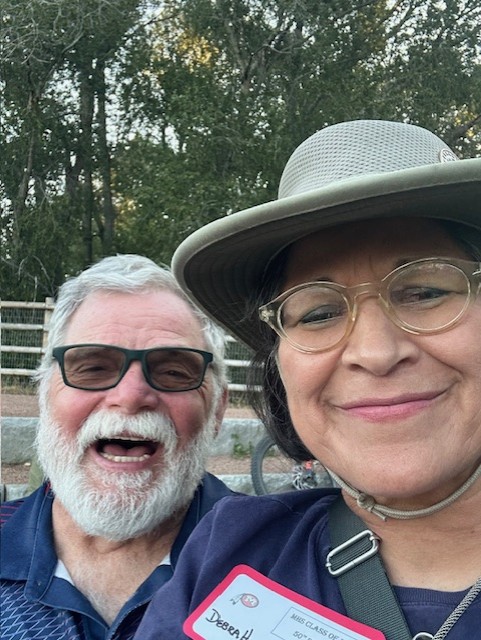
My graduating class hosted its 50th class reunion. It was great to connect with high school mates, and to see where we are 50 years later. Of the beautiful friends with whom to connect were my best friends Roy W. and Lynnae C. My brother Danny and I were in the same friend groups. Here we are.

Roy and Me
Lynnae and Me!
Roy and my brother, Danny

Thank you for reading my blog.

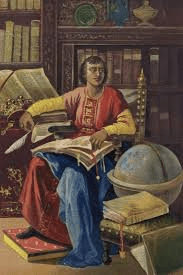
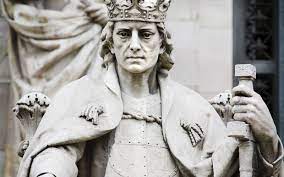
King Alfonso X, 13th Century Learned Monarch

In this 12th year of my production, for public radio, I present the narrative and play list to “Las Cantigas de Santa Maria: A Musical Biography of 13th Century Monarch, King Alfonso X” 

I dedicate this program to David W. Bauguess, my high school music teacher and my continual mentor.  We lost Davis last year, December 27 27, 2023.  May David rest in power.

I invite you to listen to this program on December 24, at 2:00 in the Central Time Zone.  The public radio station that has sponsored Las Cantigas in this 12th year is High Plains Public Radio.  Please tune in on hppr.org under holiday programming (not to be confused with hppr connect, the talk show portion of their dual programming). 

 Hello. I’m Debra Bolton. Welcome to Las Cantigas de Santa Maria (The Holy Canticles of St. Mary), Songs and poems in praise of the Virgin Mary – and the poetic/musical biography of Alfonso, “the wise”, The King of Castile-Leon, now Spain, and who lived from 1221 to 1284.  I’m happy you’ve joined me today.   

We begin this musical journey with The Learned King declaring himself Mary’s Troubadour who will take her teachings to his Kingdom and beyond. First, we hear the prologue where The Learned King states, “I am here to spread your good word to my people, and in doing that, I pray for my place in the Kingdom of Heaven.”  This is Ensemble Unicorn, from Vienna. CSM 60 Cut #1 2:16 

That was Ensemble Unicorn, Vienna with CSM #60, the prologue in which El Sabio declares himself Mary’s troubadour whereby he is her greatest public relations person, so to speak.  Alfonso pledges to use every means to extol Mary’s virtues, especially where her miracles are concerned.  

The Cantigas de Santa Maria is a collection of poems put to music.  The catalog consists of more than 420 poems set to music beginning with what is called a “cantiga de loor” song of love, that is “courtly love” and every 10th song is a song of love while the others focus on scenarios related to sins and crimes with their accompanying stories of Mary’s miracles from which Alfonso X hopes to promote morality in his kingdoms of Castile and Leon, which later become what we know as Spain.   

Let’s turn to the works of Jota Martinez, a multi-instrumentalist and singer.  I first encountered Martinez’s music when he worked with Eduardo Paniagua in an album of Cantigas de Santa Maria performed on the Viola de Rueda,  also know as the Zanfona, but you may know it as the hurdy-gurdy. Here Martinez performs with his group, Ensemble Alfonsi, dedicated to reviving the music of King Alfonso X’s court, much like the goal of Maestro Paniagua.  We now hear CSM#1 Des Oge Mais Quer-eu Trobar performed by Ensemble Alfonsi led by Jota Martinez. (7:02) 

That was Ensemble Alfonsi led by Jota Martinez, who tells us that he began the task of documenting and reconstructing the musical instruments represented in the “Alfonsian” works. Martinez continues with, “After 15 years, we assembled the only collection of Medieval instruments represented in the Cantigas de Santa Maria into the, “Alphonsian Musical Insrumentarium.”  That link can be found under the tab, Instrumentarium at http://www.jotamartinez.com/instrumentarium.html  You can find this transcript, along with photos, and links in my blog, Peopleandcultures.blog. 

You’re listening to Las Canatigas de Santa Maria, a musical biography of Medieval King Alfonso X and his devotion to the Virgin Mary. In this, we come to understand the miracles of the Virgin Mary as seen through the eyes and ears of Alfonso X, who ruled what is now Spain during the 13th Century. 

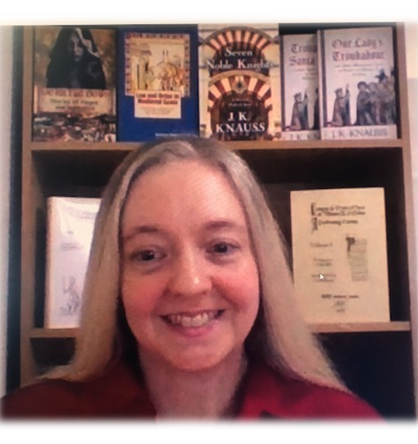
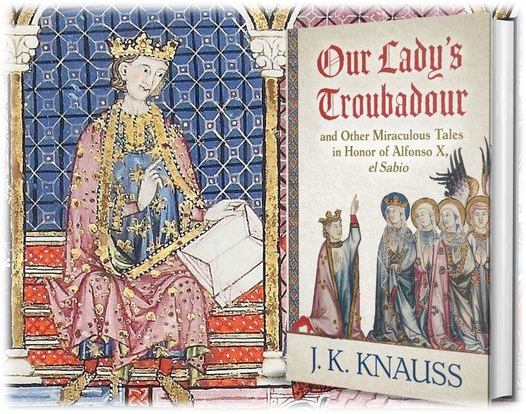
I spoke with Dr. J. K. Knauss, a leading Alfonsine scholar.  Dr. Knauss lives in Spain and continues her research to uncover more of the mysteries left to us from the reign of King Alfonso X, these 803 years later.  My dive into The Learned King comes from Knauss’ books, Law and Order in Medieval Spain, Violence in Las Cantigas de Santa Maria, and Our Lady’s Troubadour, and from her historical fiction such as Seven Noble Knights.  I asked J. K. Knauss how she discovered King Alfonso X.   

(Play her answer here), then play:  

CSM#166 Como Poden performed by Hesperus (3:37). 

Follow with: CSM#159 Non Sofre Santa Maria – Esther Lamandier 

That was Esther Lamandier, French soprano and multi-instrumentalist known for her unique voice along with the instruments she plays: harp, organetto, a portable organ, and the vielle, the medieval fiddle, the ancestor of the present-day violin.   You can see pictures of the varying instruments of this music, and you can read the transcript of my words here today.  

Before that, we heard Hesperus, led by the late Scott Reiss and Tina Chancey, who continues to play concerts in the Washington, D.C. area.  Their music blends Medieval, Appalachian, and world music.  One of my favorite albums is aptly called, “Crossing Over.” that was CSM #166, Como Poden per sas culpas: A Lame Man Healed at Salas. 

You’re listening to Las Cantigas de Santa Maria, a musical biography of Medieval King Alfonso X. I’m Debra Bolton. We now pause for this station break: 

Time: 26:20 

 Break: 2:00 music bed 

(Hour 1: Segment 2) 

You’re listening to Las Cantigas de Santa Maria, the story of 13th century monarch, Alfonso X and his devotion to St. Mary.  I’m your host and producer of this special, and my name is Debra Bolton 

King Alfonso ruled his Kingdom of Castile-Leon, now Spain, from 1252 until his death.  Scholars and Alfonsine devotees continue to celebrate the Learned King’s birthday on November 23 of each year, this being the 803rd year since his birth in 1221.  

Let’s discuss, for a moment, the language of King Alfonso X.   

In a past interview with Alfonsine scholar, Dr. J. K. Knauss, she noted that the great legacy of El Sabio is that he lived up to his name, “the wise” because he was obsessed with writing everything down.  Whether it was mathematics, astronomy, the virtue of playing board games and other leisurely activities to balance hard works, laws to govern his subjects, and teaching morality, he not only wrote continually, but he chose not to write in Latin, the language of Kingdoms of the day.  What made his legacy so strong is that he wrote in Galician-Portuguese, the embryonic Castilian, the present-day Spanish.  The Learned King is considered the “Father of Castilian.” Was he that much of a visionary?  It would seem so since Spanish only trails Chinese as the most common language worldwide, flanked by English, Arabic, Hindi, Bengali, Portuguese, Russian, Japanese, and Lahnda, aka, “Western Punjabi” according to The World Economic Forum. 

Let’s continue with music performed by Musica Antigua, under the direction of Maestro Eduardo Paniagua, architect, musician, and musicologist.  This album features the hurdy-gurdy, also known as the Viola de Rueda, hence the rosined wheel that rubs on the strings to make that pulsating drone sound sometimes called the “barking dog.” We will hear two pieces that highlight that unique sound of the hurdy-gurdy, and instrumental CSM#61 (2:55) and CSM # 327 (4:49), Las Piernas (Cuts 3 and 4) 

That was CSM #s 61 and #327, The story or miracle tells about a priest who made underpants from cloththat sat on the alter in  church dedicated to the Virgin outside the town of Odemira. The priest admired the cloth and coveted it. He stole it and took it to his house. He had a pair of underpants fashioned from it. While lying down, his heels began to press into his thighs. The pain was excruciating, and, confessing his sin, he called on the Virgin. 

He repented and had a large linen cloth placed on the altar. 

He was taken to the church and everyone prayed for him to the Virgin. She cured him and they praised her name. So the mircle goes. 

You’re listening to this holiday special, Las Cantigas de Santa Maria, a musical biography of Medieval King, Alfonso X. I’m Debra Bolton 

To get a feel for the language of the time, I turned to Alfonsine biographer, Dr. J. K. Knauss.  Here she recites the poem that is CSM#207, the statue that thanks a merciful knight who goes to the church to seek forgiveness for a man who has murdered his own son.  Here is Dr. Knauss reciting in the language of the time, which may be partially recognizable to those who speak Castilian.  That will be followed by the Martin Best Ensemble performing CSM#207 

Play her reading here followed by The Martin Best Ensemble’s “Se ome fezer de grado” CSM#207  

Followed by Los Tropas de Extremadura, music before the time of Muslim ejection from Castile-Leon.  Poems and songs performed by Eduardo Paniagua (5:07) (Inserted photo is of Dr. J. K. Knauss).

That was Los Tropas de Extremadura, music before the time of Muslim ejection from Castile-Leon.  Poems and songs performed by Eduardo Paniagua.  Before we heard the Martin Best Ensemble’s interpretation of CSM#207 preceded by Dr. Knauss’ recitation of the poem in Galician-Portuguese.  We’re coming to the top of the hour.  Be sure to stay tuned for the second of this two-hour presentation of Las Cantigas de Santa Maria with your host, Debra Bolton.  Let’s turn to this fantasia on Cantigas de Santa Maria based on CSM# 11, the Drowned Sacristan, who was brought back to life through the Virgin’s miracle. That will be followed by a traditional Galician tune. These are performed by Ensemble Alcatraz from their CD Cantigas de Amigo, songs for a friend. This will take us to the top of the hour.  Please join us for hour two of Las Cantigas de Santa Maria, I’m Debra Bolton.  Thank you for listening. 

We just heard Ensemble Alcatraz with a Traditional Galician Tune preceded by a Fantasia on CSM#11.  We pause now for a station break.  I’m your host Debra Bolton thanking you for supporting your public radio station.  

Music bed: 2:00  

HR 2 Segment 1 

Welcome to the second and final hour of this holiday special Las Cantigas de Santa Maria, the holy canticles of the Virgin Mary and musical biography of Alfonso X, the King of Castile-Leon, now Spain.  I’m your host, Debra Bolton. 

Alfonso X ruled from 1252 to 1284.  To put the world into perspective at the time, the English language continued to change from its Germanic-rooted Olde English of the Beowulf poet (circa 9th or 10th century) after the Norman invasion of 1066. In the next century, we hear the English of Geoffrey Chaucer of Canterbury Tales fame and the Gawain Poet.  Europeans now use Arabic numerals in favor of Roman Numerals. In the Mongol Empire, Mongke, officially, marks the worship of his grandfather, Genghis Khan while Buddhism, Islam, and Christianity flourish. The Inca Empire of Peru is thriving. England begins the process of segregation of Jewish peoples, and other countries begin to follow suit. However, Poland became a place of refuge for exiled and homeless Jewish Peoples. The Mexica people, also known as Aztecs, are building their great capital city Tenochtitlan on Lake Texcoco, what is now Mexico City.  King Alfonso X’s bid to be King of the Holy Roman Empire but fails as Pope Alexander IV (4th) denies Alfonso’s rights to the throne in favor of Count Rudolf, bringing prominence to the Habsburg family.  Count Rudolf was considered mediocre by many, as Alfonso was too ambitious and certainly too bright for that particular Pope of the time.  

Earlier, I’d mentioned that every tenth song of the Cantigas de Santa Maria, is a song of courtly love to reflect Alfonso’s devotion to the Virgin Mary.  Here we now listen to Jordi Savall’s interpretation of CSM#400, with the assistance of Maestro Savall’s Hesperion XX (20) and La Capella Reial de Catalunya and Pero cantigas de Loor. 

Play CSM#400 Pero cantigas de loor (3:49). 

Los Judios Y La Mordedura de un Perro. Los Destierros (3:28). 

We just heard a piece from the Album, Spain of the King, his troubadours and armies with a tune called, if google translate is correct, The Jews and the dog that bites the exiles.  It seems that King Alfonso, though he practiced pluralism, Jewish, Muslim, and Christians co-existing, he also practiced some segregation in certain parts of his Kingdoms, too, according to John Esten Keller, Alfonsine biographer. We began with CSM#400, a cantiga de loor, song of love. 

You’re listening to this musical biography of Medieval King Alfonso the Wise.  Thank you for supporting this public radio station.  I’m Debra Bolton. 

When I spoke to Alfonsine scholar Dr. J.K. Knauss, who lives in Spain and focuses on writing books, non-fiction and historical fiction, she told me that the higher the number in the CSM collection of more than 420 poems, the more local the miracle is happening.  In CSM#321, a girl who lived in Cordoba suffered from a disease of the throat called, scrofula. Her illness lingered for three years, and her mother paid lots of money for the cure. A man advised the woman to take her daughter to the king for healing. The king denied that he could cure the girl. He told the mother to take the girl to the statue of the Virgin dressed in a purple robe. They should wash the statue with water after mass and let the girl drink the liquid from the alter chalice for five days in a row, the number of letters in the name Maria. The mother did as instructed and the little girl was healed. 

Now we hear CSM#321 performed by Synfonye (8:07) 

Ensemble Alfonsi – CSM#339 Milagro en el Mar de Alicante (4:05) The Fish that Plugged the Hole in the Ship. 

We just heard Ensemble Alfonsi with CSM #339, the Fish that Plugged the hole in the Ship.  Before that, CSM #321, performed by Synfonye.  

If you would like to read this transcript or see pictures of the instruments used in these songs and tunes, please check out my blog, peopleandcultures.blog.  The instruments are quite lovely, and I think you will enjoy seeing them.  

In case you’re wondering about Galician-Portuguese, the language that is now known as Castilian, here’s a short phonics lesson, “Cs” and “Zs” were pronounced with a “TH” sound or a lisp.  Most of those pronunciations hold true today in the Iberian Peninsula.  When Castilian came to the Americas beginning in1492, the thousands of Indigenous languages were erased, in most cases, as each of those countries were colonized by Columbus and those who followed him from Spain, a European Country. Spain made it to what is now New Mexico about 25 years before the Plymouth rock landing. Spain continued south and the English settlers moved west, illustrating why we speak English in the United States and much of Canada. 

You’re listening to Las Cantigas de Santa Maria, a musical biography of Spain’s King Alfonso X and his praise to the Virgin Mary.  I’m your host, Debra Bolton.  Thank you for joining me today. Let’s pause now for a station break. In the next segment, we will enjoy more of the songs, poems, and tunes of the 13th Century as interpreted here in the 21st Century. 

END OF SEGMENT ONE 

Music bed for 2-minute break:  

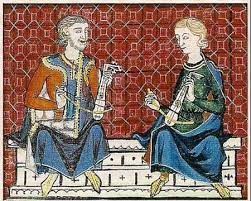
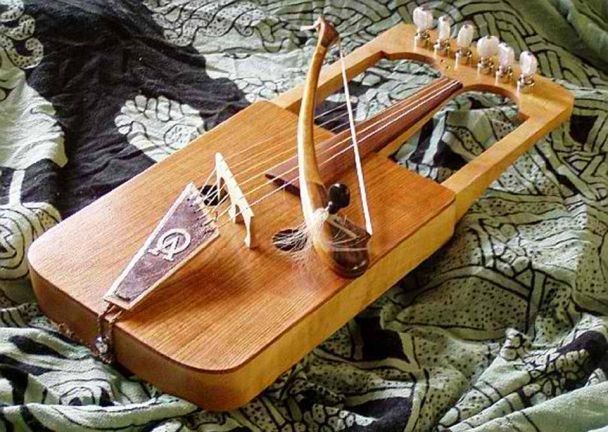
(Pictured above: Bowed Psaltry)

You’re listening to Las Cantigas de Santa Maria, a musical biography of King Alfonso X, El Sabio, the wise.  I’m your host, Debra Bolton.  

Let’s begin this segment with Maestro Jordi Savall, the music scholar, historian, and viola de gambist extraordinaire!  I’ve had the great honor of attending three of his performances in Kansas City.  Well into his 80s, Savall still gathers musicians from around the globe to see his vision of bringing to the fore music through the centuries from composers, obscure and famous.  Here, we have his arrangement of and CSM tune.  Ducia ( 2:05) Followed by a Galician tune, Santiago de Murcia (Murthia). (1:35) and  

Instrumental interlude from Waverly Consort’s Las Cantigas de Santa Maria (6:43) (Pictured below, with the late Michael Jaffe)

We just heard a rousing instrumental from the Waverly Consort from their CD Las Cantigas de Santa Maria.  They’ve performed the songs in English, and hopefully we have time to listen to the prologue as our final piece today.  Before that, we heard two Galician tunes, Santiago de Murcia, CSM 123, by Jordi Savall and from the Folias Gallegas Grant Herreid and Piffaro.  

You’re listening to Las Cantigas de Santa Maria, a musical biography of King Alfonso X, El Sabio, the wise.  I’m your host, Debra Bolton. 

Let’s explore the music of the Iberian Peninsula during Alfonso’s time with music of the Jewish and Muslim peoples. First, we turn to the music of Jewish People of the region known as the Sephardim, who populated Spain, North Africa, Turkey, differing from the Ashkenazi Jewish of Eastern Europe.   

King Alfonso welcomed Christians, Jewish, and Muslims musician into his Court.  He respected Muslims, the keepers of classical knowledge and for their sophisticated, cultured and their technological advances.  They were poets, artists, artisans, mathematicians, merchants, and ship builders.   the Jewish were known as astronomers, writers, economists, scholars, and architects.  

Now, we hear Music of the Sephardim of the time with two pieces performed by Voice of the Turtle followed by a series of short pieces of music of 13th century Muslims performed by Camerata Mediterranea. 

Voice of the Turtle: Toto bueno tengo (2:53) and Yo Hanino, tu hanina (3:50).  

Camerata Mediterranea: Cuts 11, 15, 17, and 18.  

You’re listening to Las Cantigas de Santa Maria, a musical biography of 13th Century monarch, Alfonso the Wise. Be sure to check out my blog, peopleandcultures.blog for a transcript of this presentation and pictures of the many instruments played in these musical pieces. 

King Alfonso employed artists to create two and three-dimensional works of art to correspond to the poems and songs, which would have made the Learned King an early pioneer in multi-media.  Now, here we are putting it all in digital form!  Scholars say the works of art, the songs and the poems were Alfonso’s way of teaching morality to the subjects of his kingdom on many levels.  While those in his court were, themselves, learned and well-educated people, there were many in his kingdom who, perhaps, could not read or write.  Hence the need for the lessons in more than written forms.  

As we think of the language of Galician-Portuguese morphing into Castilian, and many now call the language “Spanish” coming from Spain, originally.  During the expulsion of Jewish and Muslims in 1492, we can see some of the suffixes that may be telling of their origins.  Christian suffixes were –ez, -es, and –os. When colonizing other lands, ironsmiths were quite important.  Think of the many people you know with the surname of “Smith.”  Hierro means iron in Castilian.   The surname Hernandez denotes the Christian ironsmiths, and the surname Herrera were the Sephardic Jewish ironsmiths, and the Gallegos hailed from Galicia.  We don’t think that the double-l was pronounced with the “y” sound at the time.  

Thanks to the authors who continue to educate me. My references come from the writings of Dr. J.K. Knauss. In addition, I refer to the writing of  Professor Joseph F. O’Callahan, Mr. Andrew Casson, Maestro Jordi Savall, Maestro Eduardo Paniagua, John Esten Keller, Robert I. Burn, Editor of “The Emperor of Culture” and from Oxford Univesity’s CSM database.  

Knauss describes the importance of the Cantigas de Santa Maria saying, “The most appropriate single adjective for the corpus of cultural work produced under Alfonso X is ‘encyclopedic.’” He wrote books of history, astronomy/astrology, law, poetry, board games, and music.  Even his written leisure activities continue to survive the vagaries of time, bearing the King’s name as patron or author.” 

Now we take you to the beginning as I end this musical biography of Alfonso the Wise with this English version of the prologue where the Learned King declares himself Mary’s troubadour.  We hear this performed by the Waverly Consort. Thank you for listening. 

Prologue 1: (2:35) 

Prologue 2 (2:35) 

Instruments of the time:   

Shawm – 12th c conical bored double reed instrument of Middle Eastern origin, a precursor of the oboe. Like the oboe, it is conically bored; but its bore, bell, and finger holes are wider, and it has a wooden disk (called a pirouette, on European shawms) that supports the lips 

Recorder – Yes.  That woodwind instrument that many of us learned in grade school. We hear this in the CSM, usually, on a wider variety of wood recorders. 

Organetto – a small portable organ, which you heard performed by Esther Lamandier 

Oud – Literally, wood in Arabic, short-necked, pear-shaped with 11 – 13 strings grouped in 5, 6, or 7 courses.  A few of the oud players that stand oud are Driss El Maloumi, a group called 3MA and Haik Egitim Merkezi Yalova, both Maloumi and Yalova perform with Jordi Savall’s Hesperion groups.  The Oud is considered the most important instrument in Middle Eastern Music.   

Qanun (a.k.a., kanun, ganoun, kanoon) an Arabic stringed instrument, introduced to Europe in the 12th Century.  It’s played on the lap with picks that surround both index fingers, and the player can change the pitch of the strings with brass levers. 

Hurdy Gurdy, a.k.a. Viola de Rueda, and the Zanfona.  Here we hear this instrument in Musica Antigua.  

Vielle – the Medieval fiddle with five strings and six tied frets. 

Rebec – A three-string “fiddle” often held between the legs as it’s played. 

Viola de Gamba – (a.k.a., Viol or gamba), a six-stringed instrument, said to be a precursor of the four-stringed cello.  The Gamba, usually, is much larger and has frets, like a guitar. 

Gaita – Galician bag pipe, also common in Portugal.   

Duduk – Double reed Armenian flute, featuring those mournful, lamenting tones. 

You’re listening to a musical journey of 13th Century Spain’s King Alfonso the X and his devotion to the Virgin Mary, on this public radio station. I’m your host, Debra Bolton, and I appreciate that you’re here with me today. You can see this transcript and photos of the instruments if you go to my blog: https://wordpress.com/post/peopleandcultures.blog/2898 

The language of the time, Galician-Portuguese, finds scholars today who argue that Galician and Portuguese are dialects of the same language. It tends to remind one more of Portuguese than of Castilian, the root language of modern-day Spanish.  Portugal situated directly south of Galicia, the home of the (K)Celts and the Sephardim of the Iberian Peninsula.  Stay with us…  

Quarta Espanpie by Ferdinando de Martino Ensemble Comtessa Carmina Gemina: 2:43 

End of Hour 2, Segment 1 

2:00 minute break. 

We continue with Las Cantigas de Santa Maria, the musical biography of Medieval King of Castile-Leon, Alfonso X, the wise and learned.  I’m your host, Debra Bolton. 

For more perspective of the time, King Henry III ruled England about the same time Alfonso X ruled Castile-Leon, the greater part of what is now known as Spain.  While El Sabio ruled his lands with Christians, Muslims, and Jewish peoples living and studying side-by-side with some appreciation and great tolerance, it would not be until 208 years later that Isabella and Ferdinand would expel all non-Christians and the time Christopher Columbus would set sail for Asia but landed in the Americas, which changed extensively the lives that he touched. Before that, well-civilized Indigenous tribes had not yet had contact with European colonizers. The surnames that most people connect with Latin American countries were the surnames of their Spanish conquerors.  During and after the inquisition, many non-Christians, Jewish and Muslim people, added the suffixes of –ez, -es, or –os, meaning “son of,” to their surnames. For example, the Muslim man, Alvar, became Alvarez.  The Jewish man, Martin became Martinez.  Consistent with most surnames, there remained a connection to the family trade or place of origins.   The Herrera were Sehphardic Jewish iron-smiths of Galicia.  Those hailing from Galicia, or Galego, were the Galegos.  In the present day, an extra “L” was added to make it “Gallegos” with the double-L being pronounced as “ya.” 

Santa Maria by Irfan 4:45 

CSM #156 by Rocio de Trutos 2:37 

You’re listening to Las Cantigas de Santa Maria on this public radio station. I’m your host, Debra Bolton, and I appreciate that you’re here with me today. 

We just heard two pieces, Santa Maria by Irfan, a Bulgarian group focused on electro-acoustic music from a variety of genres and musical centuries.  Also, we heard Soprano Rocio de Trutos known best for her Bach Cantatas.  You’ve been listening to Las Cantigas de Santa Maria, the holy canticles of the Virgin Mary and the musical biography of Medieval King Alfonso X of Spain in music, poetry, and art.  I’m the producer and your host, Debra Bolton.   

El Sabio, King Alfonso the X ascended the throne of Castile-Leon, now Spain, in 1252 and immediately devoted himself to the creation of new laws, the Siete Partidas (seven parts) and the Fuero Real (Royal Municipal Code), both of which continue to be in effect here in the 21st Century.   

Scholars posit that the CSM continue to be a testament by which the king wished to be remembered after his death. That means that we, also, are part of the intended audience.  Knauss continues that the learned king, likely, did not fathom this kind of dissemination, now in this digital age.  She says, “With these technologies, it grants scholars who study the CSM a place in his highly exclusive circle of apprentices.” 

I began exploring the history of the CSM, because I found the tunes, songs, poems, and art pieces so wonderfully tuneful and passionate with their multimedia approaches.  I hope you’ve found this music and its stories interesting.  For more information, please visit my blog: https://wordpress.com/post/peopleandcultures.blog/2898

And, if you’d like to hear the show, encourage your local public radio station to run it, and it can be found at the Public Radio Exchange, PRX. 

Rosas das Rosas – The New York Consort for Poetry and Music  3:24 

CSM #383 Jordi Savall and Hesperion XX  8:14 

Rose of Rose CSM Waverly Consort   3:27 

Thank you for listening to Cantigas de Santa Maria, I’m Debra Bolton.   

A Reflection on King’s Legacy

For the past five years, I have offered a pre-luncheon reflection to honor the legacy of Dr. Martin Luther King, Jr.’s legacy. I post these remarks for your contemplation.

Please join me in an attitude of reflection.

As we gather to honor Dr. Martin Luther King’s powerful legacy, we stand in the wake of the passing, last Monday, of his second son, Dexter Scott King, himself a civil rights activist.  The Universe reminds us of how fragile life can be and our need to care for one another, as admonished by Dr. King.  May Dexter Scott King rest in Power. The elder King modeled for us servant leadership and showed us the power in finding value in each and every human and choosing love over hate and exclusion. We observe that King, often, had to stand alone on these beliefs. Dr. King said, “The ultimate measure of persons is not where they stand in moments of comfort and convenience, but where they stand at times of challenge and controversy.”  Were Dr. King alive today, what would he see?  Would he see progress or further chasms between love and hate?  King’s work toward social Justice and equity, possibly, leads us to ask, “Why does this struggle continue today?”  “What have we learned?”
Remember that King was lodged into the Birmingham Jail, because it was illegal for “Black Folk” to participate in public demonstrations; an exercise NOT afforded to those who were deemed “un-worthy” or “un-deserving.” Hear his voice, “We protest for the Negro brothers and sisters smothering in airtight cages of poverty in the midst of an affluent society.”  What do we observe these 56 years later?

Dr. King emphasized, “If we are to have peace on earth, our loyalties must transcend our, so-called, races, our tribes, our classes, and our nation. This means we must develop a world perspective and tear down the walls of separation and hatred to seek common ground and to dissolve hierarchies.”  He added, “Humans are put on this earth to serve one another.”

Alas, let’s ponder the words of U.S. Youth Poet Laureate, Alexandra Huynh: “Find shelter and strength in one another to go the distance that spans across what we’ve been given and what we deserve. Self-sovereign smiles and applause at every turn. It’s not so impossible when you start to consider that we are bigger together as brothers and sisters.”  

May Kansas State University, as a community defined by pluralism, find the common ground to stand together against darkness and hate to find light and love.

As we prepare for these bodily nourishments, let us greet one another with our own words or action that communicate Love. “Every effort we make to connect is meaningful.”    Verily, I say unto you…, and so it is.

I wish each of you, readers, love and respect.

Thank you for reading my blog. 

Las Cantigas de Santa Maria 2023

This is the transcript and playlist for my annual radio program called Las Cantigas de Santa Maria, a musical biography of King Alfonso X. One place to hear the music and production is on the world wide web. http://www.hppr.org on December 22 at 2:00 p.m. Central Standard Time.

Opens with Cantiga #1 Des Oge Mais Quer’ eu Trobar

Alvaro Sanchez Guillaumet: 4:35

Hello. I’m Debra Bolton. Welcome to Las Cantigas de Santa Maria (The Holy Canticles of St. Mary), Songs and poems in praise of Holy Mary – and the poetic/musical biography of Alfonso, “the wise”, The King of Castile-Leon, now Spain, and who lived from 1221 to 1284.  I’m happy you joined me today. 

We began this musical journey with The Learned King declaring himself Mary’s Troubadour who will take her teaching to his Kingdom and beyond. We just heard Alvaro Sanchez Guillaumet performing CSM#1 on the Hurdy Gurdy with frame drums and Oud. 

The Cantigas de Santa Maria is a collection of poems put to music.  The catalog consists of more than 420 poems set to music beginning with what is called a “cantiga de loor” song of love, and every 10 song is a song of love while the others focus on scenarios related to sins and crimes with their accompanying morality story.  Let’s hear the Waverly Consort in their English language interpretation of CSM #1 when the Learned King declares himself the Virgin Mary’s Troubadour and asks the “noble lady” to bestow the inheritance of eternal life and grant Alfonso’s kingdom a place in eternity.   2:43

That was the Waverly Consort led by the late Michael Jaffe with the prologue that precedes CSM# 1.  You heard an English translation of the King declaring himself the Virgin’s troubadour. The first time I heard the Waverly Consort’s CSM was a live recording from the Cloisters in NYC presented on NPR. Again, of the more than 420 Marian poems written by King Alfonso X and his assistant scribes, every 10th poem is a song of love for the Virgin.

Ben Sab à Que Pod è Val “Miragre” (Mirage)  Musica Iberica de Holanda (Iberian Music of Holland)  6:54

That was Ben Sab a Que Pod e Val by Musica Iberica de Holanda (Iberian Music of Holland) with a story of power and forgiveness.

King Alfonso ruled his Kingdom of Castile-Leon, now Spain, from 1252 until his death.  Scholars and Alfonsine devotees continue to celebrate the Learned King’s birthday on November 23 of each year, this being his 801st year since his birth.

Let’s discuss, for a moment, the language of King Alfonso X. 

In a past interview with Alfonsine scholar, Dr. J. K. Knauss, she noted that the great legacy of El Sabio is that he lived up to his name, “the wise” because he was obsessed with writing everything down.  Whether it was mathematics, astronomy, the virtue of playing board games and other leisurely activities to balance hard works, laws to govern his subjects, and teaching morality, he not only wrote continually, but he chose not to write in Latin, the language of Kingdoms of the day.  What made his legacy so strong is that he wrote in Galician-Portuguese, the embryonic Castilian, the present-day Spanish.  The Learned King is considered the “Father of Castilian.” Was he that much of a visionary?  It would seem so since Spanish only trails Chinese as the most common language worldwide, flanked by English, Arabic, Hindi, Bengali, Portuguese, Russian, Japanese, and Lahnda, aka, “Western Punjabi” according to The World Economic Forum.

In a very short phonics lesson, “Cs” and “Zs” were pronounced with a “TH” sound or a lisp, which I illustrate here in one of many miracles of in the Cantigas de Santa Maria.  This is CSM#368 Maria de Cordoba y Santa Cruz de Cadiz:  A woman, named Mary, lived in Cordoba next to the Church of Holy Mary the Great [the former great mosque]. She believed that she had a snake in her stomach and she travelled through Extremadura and then to Castile.

The abbot of Silos [Santo Domingo?] appeared to her in a vision and instructed her to go there. He said that the Virgin would show her how to get well.

When she got to Silos, she had another vision. This time, she was instructed to visit Santa Maria do Porto. The next day, the woman set off for that place.

When she arrived, she held a vigil and fell asleep in front of the altar. In a vision, the Virgin instructed her to go to the cathedral at Cádiz at daybreak.

She boarded a ship and they put out to see. When the people on board saw Cádiz and the church they praised the God and the Virgin.

Then the woman coughed up a red snake, like a thick eel. Everyone was amazed and praised the Virgin.

Performed by Eduardo Paniagua, the hurdy gurdy master devoted to recording all existing CSMs.

CSM#368 Maria de Cordoba y Santa Cruz de Cadiz.  6:39

END OF SEGMENT ONE

You’re listening to this holiday special Las Cantigas de Santa Maria, the holy canticles of the Virgin Mary and musical biography of Alfonso X, the King of Castile-Leon, now Spain.  I’m your host, Debra Bolton.

Alfonso X ruled from 1252 to 1284.  To put the world into perspective at the time, the English language continued to change from its Germanic-rooted Olde English of the Beowulf poet (circa 9th or 10th century) after the Norman invasion of 1066. In the next century, we hear the English of Geoffrey Chaucer and the Gawain Poet.  Europeans now use Arabic numerals in favor of Roman Numerals. In the Mongol Empire, Mongke, officially, marks the worship of his grandfather, Genghis Khan while Buddhism, Islam, and Christianity flourish. The Inca Empire of Peru is thriving. England begins the process of segregation of Jewish peoples, and other countries begin to follow suit. The Mexica people, also known as Aztecs, are building their great city on a lake in what is now Mexico City. King Alfonso X’s bid to be King of the Holy Roman Empire fails in favor of Count Rudolf, bringing prominence to the Habsburg family, Rudolf was considered mediocre as Alfonso was too ambitious and certainly too bright for the Pope of the time.

Let’s begin this segment with Patrizia Bovi Ensemble Micrologus and a song of love for the Virgin Mary 2:32

Cantigos de Santa Maria: Prologue instrumental (Gaita) the Galician Bagpipe: Ensemble Jehan de Channey, Vincent Aliquot, Vincent Barthelemy 1:26

CSM#159: 2:31 Talks about the Pilgrims to Rocamadour whose meat was stolen.  Performed by Ensemble Jehan de Channey, Vincent Aliquot, Vincent Barthelemy.

We just heard three pieces: We began with a song of love performed by Patrizia Bovi Ensemble Micrologus and we heard the Prologue performed on the Gaita, the Galician Bagpipe and we heard CSM#159, about the Pilgrim to Rocamadour whose meat was stolen. These stories are presented as miracles that put an end to pain, suffering, and criminal ways after the Virgin intervenes.

You’re listening to Las Cantigas de Santa Maria, a musical biography of King Alfonso X, El Sabio, the wise.  I’m your host, Debra Bolton.

Let us turn now to a song of love for the Virgin Mary as envisioned by King Alfonso X.  This is called Eno Mome de Maria, CSM#70 performed by Universalia in Re 5:41

That was Universalia in Re performing a song of love for the Virgin Mary.  You’re listening to Las Cantigas de Santa Maria, the musical biography of Medieval King of Spain, Alfonso X.

You’re listening to Las Cantigas de Santa Maria, the holy canticles of the Virgin Mary in music, poetry, and art.  My name is Debra Bolton.  I am your host for this special music.  If you go out to my website you will find examples of some of the art that corresponds with the songs and poetry and this narrative with the songs for today’s musical program. The website is https://wordpress.com/post/peopleandcultures.blog/1728

This is CSM 13, the story of A thief named Elbo always prayed to the Virgin and commended himself to her.

One day he was caught stealing and the magistrate ordered him to be hanged.

As Elbo was hanging on the gallows, the Virgin supported his feet so that he did not choke. He stayed on the gallows for three days.

The magistrate passed by, noticed the thief was still alive, and had the rope adjusted. The Virgin continued to protect Elbo.

The thief spoke to the magistrate and his men, explaining that the Virgin had been keeping him alive.  The magistrate praised the Virgin and had him taken down from the gallows. Elbo joined a monastery.

Performed by Robin Rolfhamre   5:34

You just heard the oud in that piece. The oud was the precursor to the guitar, oud being the Arabic word for wood.  That was the story of Elbo, who changed his thieving ways and joined a monastery.  Robin Rolfhamre is a professor of music and researcher in Sweden who plays lute, oud, and psaltry and who investigates the functions and performance of music in France in the 17th and 18th centuries.

Next, we’ll explore CSM 77-119, performed by Forfaitz. 5:12

77: A woman was almost entirely paralyzed. Her limbs were shriveled and twisted, and no medicine could cure her. On the Virgin’s feast in August, Mary straightened her limbs. Each of her limbs made a loud cracking sound as the shrunken tendons stretched. The bishop and the people who witnessed her healing wept and gave thanks to the Virgin.

78: The Count of Toulouse favored one of his courtiers. The man was devoted to the Virgin and refused to hear any mass but hers. The other courtiers were jealous of the pious man and plotted against him. They lied to the count, slandering him and accusing him of terrible crimes. The count decided to burn the man.  He instructed the lime burner to throw into the fire the first man who came his way. He sent his victim on an errand to the lime burner, but, on his way, the man stopped to hear mass recited at a hermitage. The count, thinking the deed had been done, sent another man to the lime burner. This man was the one who had slandered the Count’s favorite. The lime burner seized him and threw him into the flames. When the count saw the good man alive and learned of the slanderer’s death, he realized justice had been served. He wept, praising the Virgin, and promised to have the miracle proclaimed in all her churches.

CSM 77-119, each tell a story of an afflicted person or one who engages in crimes and how each time the afflicted or the criminal cries out to the Virgin with much contrition, and low, the Virgin saves them from their disease or sentencing.

Forfaitz. 5:12

Quen a omagen – Ansambl Triola  3:04

According to Alfonsine scholar, Dr. J.K. Knauss,

King Alfonso employed artists to create two and three-dimensional works of art to correspond to the poems and songs, which would have made the Learned King an early pioneer in multi-media.  Now, here we are putting it all in digital form!  Some scholars point of the works of art, the songs and the poems as Alfonso’s way to teach morality to the subjects of his kingdom on many levels.  While those in his court were, themselves, learned and well-educated people, there were many in his kingdom who, perhaps, could not read or write.  Hence the need for the lessons on morality in more than written forms.

Regarding the language:

The poems and songs employ the language of the time, which is Galician-Portuguese, Medieval Galician, or as some linguists and historians simply call the language, Romance, the root language of Castilian, the language of Spain and its subsequent colonized countries in the Americas. 

When we think about world events of King Alfonso’s time, between the 12 and 14th centuries, there was a sect of Christians called the Cathare, a

fundamentalists sect who believed there were two gods: A good one who presided over the spiritual world, and an evil one who ruled the physical world. Cathars viewed even sex within marriage and reproduction as evil, and so lived strict lives of abstention. Here I present the spoken text of the Papal Bull legislating torture of those practicing Catharism, called “Ad Exstirpanda.” Papal bulls are edicts issued by the Pope of the Catholic Church.  We know the one issued in 1492 before the launching of Columbus, the edict of colonizing so called, “Non-Christian” countries and enslaving Indigenous peoples some 200 years after Alfonso X’s rule.

At odds with the Catholic church, The Cathare believed in female deities and believed that Mary Magdalene and Jesus were married.  The text is presented in Latin, as the Cathar of the time were in France and Italy.

This lament, performed by Jordi Savall and Hesperion XXI Veri dulcis in tempore” translated “A true Sweet season” of the time from the CD “The Forgotten Kingdom.

Veri dulcis in tempore: 3:57

That was Jordi Savall and his Hesperion XXI performing music of the forgotten Kingdom of the Cathare in France and Italy.

After 1492, in addition to colonizing the lands and its people, Spain, also, colonized the languages of the Americas and the Caribbean. Since the so called, “first contact,” we saw Castilian overwhelming, and often erasing, many Native languages of the islands and the continents, thanks to the Doctrine of Discovery establishing a so called, “spiritual, political, and legal” justification for colonization and seizure of land NOT inhabited by visibly Christian (white) People. Again, the Spanish we hear today differs widely from that of the CSM and Alfonso X’s time.  However, you don’t need to understand Galician-Portuguese to enjoy this music, known for its complex musical structures and its use of what we now call, ancient instruments. 

Coming up in the next hour of Cantigas de Santa Maria, we will hear more songs and tunes about miracles of the Virgin Mary as we continue this musical biography of King Alfonso X, the wise, of 13th Century Spain

Go to an instrumental played by the Waverly Consort, Cut #15, to play to the end.     6:43       

Hour Two

Hello, I’m Debra Bolton. Welcome to the second hour of Las Cantigas de Santa Maria (The Holy Canticles of St. Mary), songs and poems in praise of Holy Mary – and the poetic/musical biography of Alfonso, “the wise”, The Kind of Castile-Leon, now Spain, and who lived from 1221 to 1284. I appreciate your joining me today.

As we continue in this exploration of this very small part of King Alfonso X’s tribute to the Virgin Mary, my references come from the writings of Dr. J.K. Knauss. In addition, I refer to the writing of  Professor Joseph F. O’Callahan, Mr. Andrew Casson, Maestro Jordi Savall, Maestro Eduardo Paniagua, John Esten Keller, Robert I. Burn, Editor of “The Emperor of Culture” and from Oxford Univesity’s CSM database.

From Burn’s edited book, The Emperor of Culture, Ellen Kosmer and James Powers write: The period witnessed a dramatic rise in the growth of European towns. As urban economies prospered, so too did craftsmen [see a] dramatic increase in the thirteenth century. The book trade went from a monastic to a lay enterprise, which mirrored the changing society. Thus, Alfonso’s commission of this literary works, written in a vernacular, the Galician dialect, with its lavish illustrations [and 3-D art]puts him in the company of other great 13th Century royal patrons, like Louis IX (9th) of France, the southern courts of Italy, and in English with Henry III and Edward I. The CSM is distinguished from other royal works for its length, depth, and wide range of topics.

Prologue: Ensemble Scandicus : 4:36

SM Strela do dia Apollo’s Fire: 4:22


You’re listening to a musical biography of Spain’s Medieval King, Alfonso X.  I’m your host Debra Bolton.  We just listened to two pieces: The Prologue was performed by Ensemble Scandicus, a multicultural European group focused on early music.

Also, we heard Apollo’s Fire with Santa Maria do dia.  Apollo’s Fire is a Cleveland Ohio-based early music ensemble as part of the Cleveland Baroque Orchestra.

Author J. K. Knauss describes the importance of the Cantigas de Santa Maria saying, “The most appropriate single adjective for the corpus of cultural work produced under Alfonso X is ‘encyclopedic.’” He wrote books of history, astronomy/astrology, law, poetry, board games, and music.  Even his written leisure activities continue to survive the vagaries of time, bearing the King’s name as patron or author.”

Here’s the New London Consort with Quen a Virgen Ben Servira. 8:24


That was CSM#103: The Monk who listened to a Bird’s Song for Three Hundred Years, Performed by the New London Consort.

Let’s take a moment to talk about some of the instruments that you’re hearing on this musical journey of 13th Century Spain, then called, Castile-Leon. 

Shawm – 12th c conical bored double reed instrument of Middle Eastern origin, a precursor of the oboe. Like the oboe, it is conically bored; but its bore, bell, and finger holes are wider, and it has a wooden disk (called a pirouette, on European shawms) that supports the lips

Recorder – Yes.  That woodwind instrument that many of us learned in grade school. We hear this in the CSM, usually, on a wider variety of wood recorders.
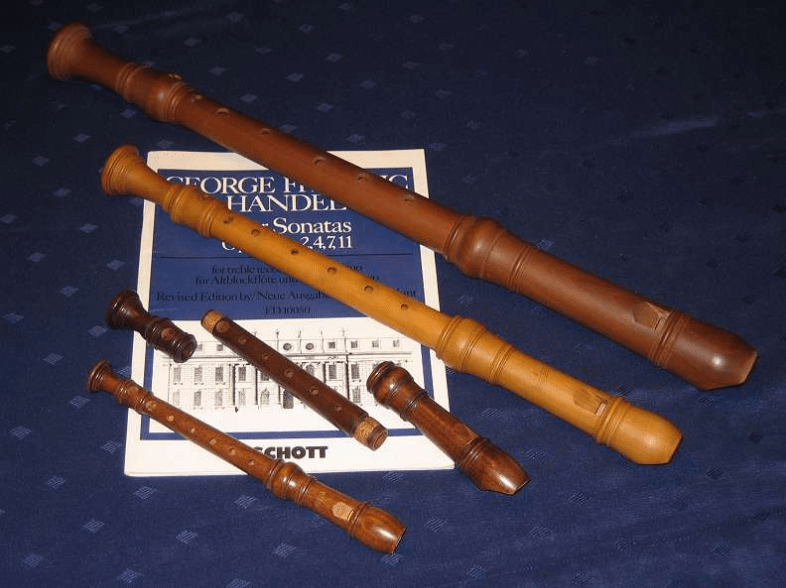
Organetto – a small portable organ, which you heard performed by Esther Lamandier

Oud – Literally, wood in Arabic, short-necked, pear-shaped with 11 – 13 strings grouped in 5, 6, or 7 courses.  A few of the oud players that stand oud are Driss El Maloumi, a group called 3MA and Haik Egitim Merkezi Yalova, both Maloumi and Yalova perform with Jordi Savall’s Hesperion groups.  The Oud is considered the most important instrument in Middle Eastern Music.  
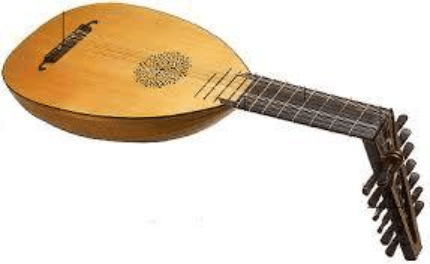
Qanun (a.k.a., kanun, ganoun, kanoon) an Arabic stringed instrument, introduced to Europe in the 12th Century.  It’s played on the lap with picks that surround both index fingers, and the player can change the pitch of the strings with brass levers.

Hurdy Gurdy, a.k.a. Viola de Rueda, and the Zanfona.  Here we hear this instrument in Musica Antigua.
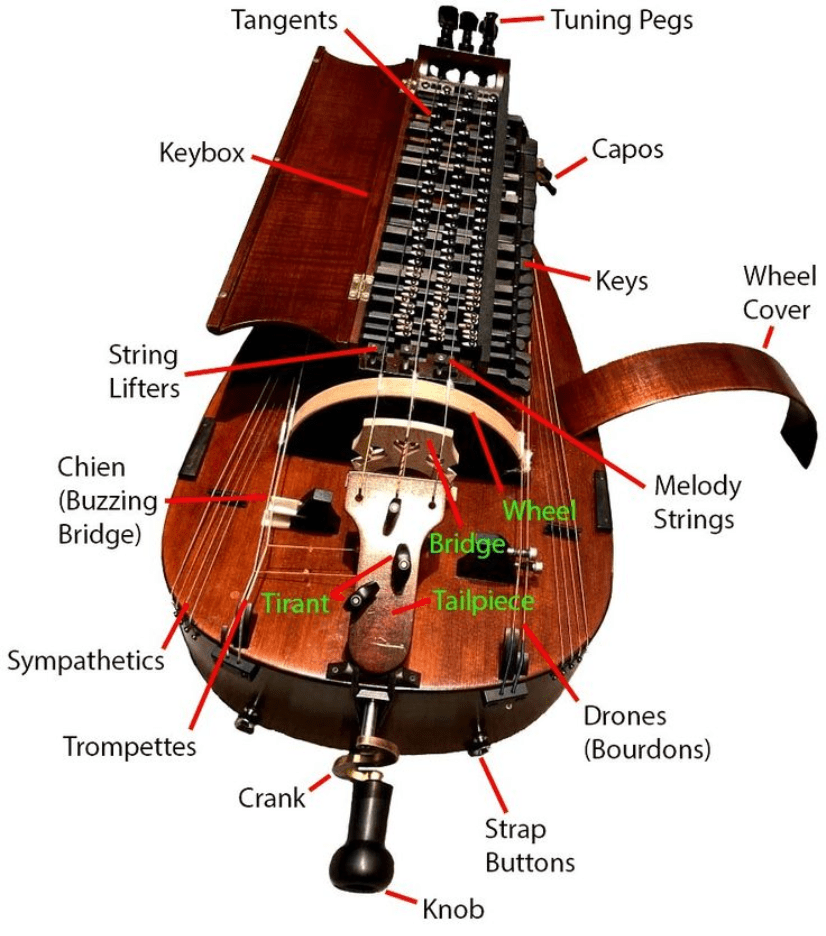
Vielle – the Medieval fiddle with five strings and six tied frets.

Rebec – A three-string “fiddle” often held between the legs as it’s played.
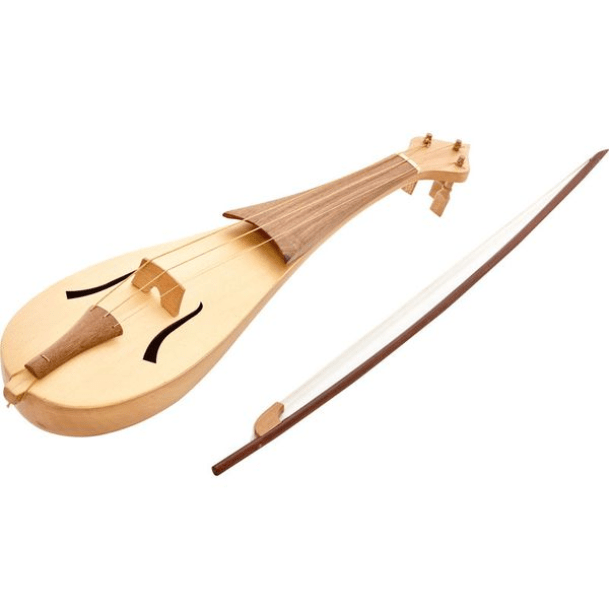
Viola de Gamba – (a.k.a., Viol or gamba), a six-stringed instrument, said to be a precursor of the four-stringed cello.  The Gamba, usually, is much larger and has frets, like a guitar.
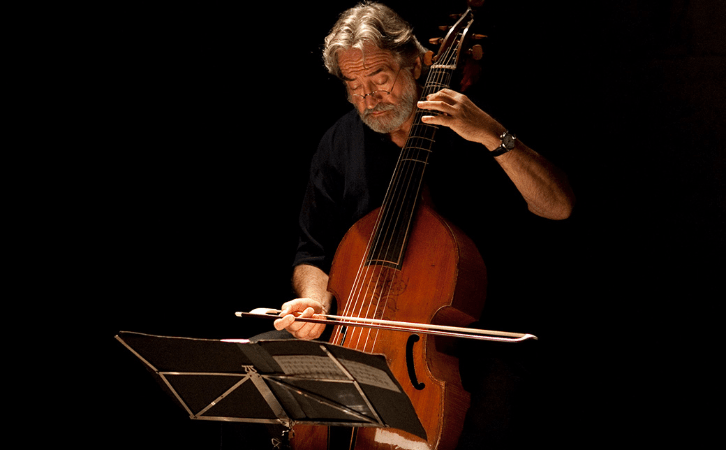
Gaita – Galician bag pipe, also common in Portugal. 
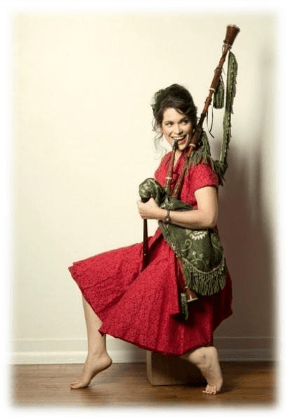
Duduk – Double reed Armenian flute, featuring those mournful, lamenting tones.

You’re listening to a musical journey of 13th Century Spain’s King Alfonso the X and his devotion to the Virgin Mary, on this public radio station. I’m your host, Debra Bolton, and I appreciate that you’re here with me today. You can see this transcript and photos of the instruments if you go to my blog: https://wordpress.com/post/peopleandcultures.blog/1728

The language of the time, Galician-Portuguese, finds scholars today who argue that Galician and Portuguese are dialects of the same language. It tends to remind one more of Portuguese than of Castilian, the root language of modern-day Spanish.  Portugal situated directly south of Galicia, the home of the (K)Celts and the Sephardim of the Iberian Peninsula.  Stay with us…

Quarta Espanpie by Ferdinando de Martino Ensemble Comtessa Carmina Gemina: 2:43

End of Hour 2, Segment 1

2:00 minute break.

We continue with Las Cantigas de Santa Maria, the musical biography of Medieval King of Castile-Leon, Alfonso X, the wise and learned.  I’m your host, Debra Bolton.

For more perspective of the time, King Henry III ruled England about the same time Alfonso X ruled Castile-Leon, the greater part of what is now known as Spain.  While El Sabio ruled his lands with Christians, Muslims, and Jewish peoples living and studying side-by-side with some appreciation and great tolerance, it would not be until 208 years later that Isabella and Ferdinand would expel all non-Christians and the time Christopher Columbus would set sail for Asia but landed in the Americas, which changed extensively the lives that he touched. Before that, well-civilized Indigenous tribes had not yet had contact with European colonialists. The surnames that most people connect with Latin American countries were the surnames of their Spanish conquerors.  During and after the inquisition, many non-Christians, Jewish and Muslim people, added the suffixes of –ez, -es, or -os to their surnames. For example, the Muslim man, Alvar, became Alvarez.  The Jewish man, Martin became Martinez.  Consistent with most surnames, there remained a connection to the family trade or place of origins.   The Herrera were Jewish iron-smiths.  Those hailing from Galicia, or Galego, were the Galegos.  In the present day, an extra “L” was added to make it “Gallegos.”

Santa Maria by Irfan 4:45

CSM #156 by Rocio de Trutos 2:37

You’re listening to Las Cantigas de Santa Maria on this public radio station. I’m your host, Debra Bolton, and I appreciate that you’re here with me today.

We just heard two pieces, Santa Maria by Irfan, a Bulgarian group focused on electro-acoustic music from a variety of genres and musical centuries.  Also, we heard Soprano Rocio de Trutos known best for her Bach Cantatas.  You’ve been listening to Las Cantigas de Santa Maria, the holy canticles of the Virgin Mary and the musical biography of Medieval King Alfonso X of Spain in music, poetry, and art.  I’m the producer and your host, Debra Bolton. 

El Sabio, King Alfonso the X ascended the throne of Castile-Leon, now Spain, in 1252 and immediately devoted himself to the creation of new laws, the Siete Partidas (seven parts) and the Fuero Real (Royal Municipal Code), both of which continue to be in effect here in the 21st Century. 

Scholars posit that the CSM continue to be a testament by which the king wished to be remembered after his death. That means that we, also, are part of the intended audience.  Knauss continues that the learned king, likely, did not fathom this kind of dissemination, now in this digital age.  She says, “With these technologies, it grants scholars who study the CSM a place in his highly exclusive circle of apprentices.”

I began exploring the history of the CSM, because I found the tunes, songs, poems, and art pieces so wonderfully extraordinary with their passion and multimedia approaches.  I hope you’ve found this music and its stories interesting.  For more information, please visit my blog: https://wordpress.com/post/peopleandcultures.blog/1728

And, if you’d like to hear the show, encourage your local public radio station to run it, and it can be found at the Public Radio Exchange, PRX.

Rosas das Rosas – The New York Consort for Poetry and Music  3:24

CSM #383 Jordi Savall and Hesperion XX  8:14

Rose of Rose CSM Waverly Consort   3:27

Thank you for listening to Cantigas de Santa Maria, I’m Debra Bolton. 

Thank you for reading my blog. 


Travels with Eileen

My featured image is one taken on the patio next to my building on campus, which is two years old. The dear dragonfly landed on wet concrete, lost his life, but left a lovely image that one can enjoy when sitting on the table next to it. The dragonfly lives on…

This long read functions as my trip diary. My summer began on May 13, 2023. The graduate school has its ceremony on the second Friday in May, so the next day, I headed to Colorado, to celebrate Mother’s Day. On Monday the 15th, my sister, Eileen, and I boarded the California Zephyr to head to San Francisco. I love riding the train, which I do quite often. It was my sister’s first time on the Amtrak. The train departed at 4:10 pm, and away we went. Before we embarked, I mixed a cocktail for us to have a toast to our journey. We settled for paper cups since I had no access to proper glasses.

Some of the beauty seen along the way includes the magnificent Colorado River, fabulous geological structures, and brilliant colors. I care not for the rafters on the Colorado that insist on showing the Zephyr passengers their breasts and butts! None too impressive.

We had lovely meals on the train, as per usual. The meals come with the roomette, which is for two passengers. One of my favorite things about train travel includes permission to self to sit and enjoy the ride. I usually bring a book for the return ride, but my sis and I talked the whole way, both directions. I love meal times, too! There are four to each dining table, and when one’s party is two, one gets to meet two other people to be dining partners. This was my 10th train trip on the Amtrak system in the U.S., and I still think that the most friendly people ride the train. At least those remains my experiences in the dining cars and in the observation cars.

We arrived in Emeryville 24 hours from embarking in Grand Junction, CO. Passengers heading to San Francisco must take a bus across the Bay Bridge to get to the City. We lodged into our hotel by 6:00 p.m., cleaned up, and went hunting for our first dinner in SF. Not far from our hotel, at the entrance to China Town, we found a lovely Asian bistro, called, NOMA. Great staff, and great food. Here’s a glimpse:

We turned in early for a big day on our first, full day. I like to travel with a bit of food, just in case, so we made coffee in the room, and we ate energy bites that I made for the trip. One little “bite” has oatmeal, raisins, cinnamon, honey, and almond butter. Mix all the ingredients and form into spheres about the size of a golf ball. They taste delicious, and just one makes a great breakfast with a hot beverage. That gave us energy for a long morning until lunch.

Our hotel was not too far from Pier 1 on the Embarcadero, so we went the opposite direction on Bush to head toward The Golden Gate Bridge on the opposite side. We walked by retail spaces, auto repair and sale garages, beautiful homes, and tourist attractions. We walked past the homes on Nob Hill and the area surrounding Lombard street. We checked on the prices of those homes for sale. Even the most “simple” homes were priced at 9 million! We marveled at the gardens (a.ka. “yards”) in front of the homes with fruit trees, wild growing rosemary and fennel, and tropical plants. Once we gazed at the Golden Gate Bridge, we began to descend the many stairs toward the Palace of Fine Arts.

Travels with my sis, Eileen, proved to be a most marvelous time, because she is curious and interested in her environments of flora and fauna. We loved the beauty of the Palace of Fine Arts, built for the 1915 Panama-Pacific Exhibition. From there, we could see most of the peninsula that is San Francisco. All this walking, and a little bit of foraging on the edible flora, we became hungry, so we headed to Fisherman’s Wharf.

One of my favorite things about the Wharf is the Maritime Museum of once active sea-going vessels, such as the Balclutha, which was closed for “safety concerns.” Years back, I attended several Sea Shanty Sing-alongs, but those were not happening this time either! Of course, we enjoyed the sea lions at Pier 39, too. On to the food…

Fisherman’s Wharf’s fame lies in its many food and local memorabilia. We found one of my favorite open-air fish market/dining places that serves clam chowder in a sourdough boule hollowed out to make a bowl for the chowder. Delicious! Then we wandered over to Ghiardelli Square to chocolate. Most of it was closed for remodeling, so we just saw the small retail store selling the famous chocolates. The walk prepared us for the Hotel Buena Vista for Irish coffee and a most friendly bartender!

After the coffees, we headed to Columbus Ave to visit City Lights Bookstore, as I do on every visit to SF. As per usual, City Lights Bookstore was a haven for readers, and the second floor dedicates itself to the Beats and their literary progeny. We found some books, some by Lawrence Ferlinghetti, the father of City Lights. Sadly, the clerk that waited on us was one of the most sour individuals I’ve ever met! I wondered why he was so rude and dismissive. What is a person like this doing in this haven for literature? I thought maybe he was having a rough day, so I gave him the benefit of the doubt. Nope! We returned two days later only to find the rude guy waiting on us again. He was pleasant to look at, but he, apparently, has a black heart! On to purchase dinner…

After City Lights and a picture-taking opportunity of Vesuvios (Featured in Mike Myers, So I married an axe murderer) we found Molinari deli with the most beautiful assortment of Italian cured meats, locally made mozzarellas, in-house made bread, and many delights.

We procured a lovely supper of meats, cheeses, olives, sun-dried tomatoes, bread, and wine to enjoy on our hotel’s roof top. Oops! I failed to mention that we stayed at the Orchard Hotel near the entrance of China Town. It has a lovely roof top with tables, chairs, and views of San Francisco! We took our lovely dinner to the rooftop where we enjoyed a chilly evening with great food and wine.

We had leftovers, which we enjoyed at the train station in Emeryville while we awaited our east bound Zephyr on Saturday morning. We retired to bed after a day’s walk of 12 miles, great food, and breath-taking sights. On to Thursday’s adventures…

Early to rise, and after a small breakfast of my energy bites (1 cup oats, 1/2 cup honey, 3/4 cup raisins, 1 cup almond butter, all mixed and formed into a golf ball sized sphere!) and coffee before heading to the Embarcadero, Pier 31, to board the vessel that took us to Alcatraz.

My main interest in visiting Alcatraz was to honor the “Indian” occupation in the 1970s. We were protesting the generations of erasure pursued by congress. We are still here! From Alcatraz, one can only imagine the gorgeous vistas from this place of imprisonment for crimes ranging from theft of fewer than $100 to murder, all in the same place. Yes. People should be held accountable, but some who have done worse are still walking free.

Back to Pier 31 by noon, we were ready for finding food! Luckily, The Ferry Building is near Pier 1, and though it was a bit of a walk, it was worth it! The Ferry Building, now the Ferry Building Marketplace, was built in 1898. While it had some decades of decay, it stands in a state of continual renewal and reimagining. It hosts vendors in an enclosed “farmers’ market” style of booths ranging from caviar to fungi, and all foods in between. For two foodies, it was hard to settle on one cultural food choice, so we combined different taste profiles. For some reason, I didn’t get pictures of our meal, only our desserts: cheesecake with caviar and Aztec chocolate with marshmallow! Yum!

After lunches, desserts, and drinks at the Ferry Building, we headed out for more walking. We ascended the steps to Coit Tower, walked around in surrounding neighborhoods and headed back to the hotel after we took pictures with the Transamerica Building.

Since Eileen’s husband is a rabid Denver Nuggets fan, we had to find a place to watch one of the playoff games, and we found an Irish Pub with the game. We ate corned beef and cabbage with a nice Guiness while we watched the game. The Nuggets went on to become world champs!

After 9 miles of walking, we retired to sleep eager for our final, full day in San Francisco.

Friday, being our final day, we opted for public transportation since the cable and street cars are moving museums. First we went to the Castro District. Sadly, the theater was dark that week. We walked around, and had a snack.

Then we rode the street car back to a point to catch the cable car to Fisherman’s Wharf, for some memorabilia. After much walking and site seeing, we headed to Columbus Ave. for our final big meal at the Mona Lisa, known for their Sicilian Caviar, which is garlic baked in butter and olive oil. I can just imagine how we reeked!

We returned to our hotel, packed our suit cases to prepare for our return trip, and fell into restless slumbers for an early morning departure on a bus from SF and across the bay to Emeryville to board the California Zephyr east bound.

When we arrived in Emeryville, we learned that the train would be six hours late. That’s okay. I love the train! Since we were in for a long wait, we savored a nice breakfast of leftovers from Molinari and Boudin Sourdough, and I made bloody marys with tomato juice from the snack stand. It was a great feast! Is this a travel or a food blog?

We boarded the Zephyr and recounted the great stories of our adventure. Eileen is the best of travel companions. We compliment eachother’s travel styles. She does research on prospective experiences, and I fly by the seat of my pants! Here are some of our final sites.

Thank you for coming along on our trip!

Well-Being Concepts

Now that we’re shedding out winter blankets, in the Northern Hemisphere, it’s time to think about warmer weather. Often times, we tend toward a more sedentary life in winter weather. That means we may gain a few pounds, lose a little muscle mass, and our motivation decreases. How do we keep this all in line so that we experience optimal health year around? My answer? Holistic Self-Care.

About a month ago, I reached my 66th birthday. The day before my 66th year, I taught a self-care class for my co-workers. It was fun. I called it, “Finding Hygge and Other Emotional Well-Being Concepts.” I’ve written about hygge and other forms of coziness in previous blog articles. I had a co-worker take the picture you see in the “featured image.” That was for my “Meet Your Presenter” slide in the power point for my workshop.

Let’s get started.

I offer this lovely image that I call, “Sunset on the Flinthills” as a gentle reminder for you to bring the natural world into your time reading this and for engaging in self-care practices. Here are some learning objectives:

  • Self-advocacy promotes equity and belonging
  • Health and well-being practices promote physical, emotional, social, and occupational well-being
  • Long-term outcomes include increased confidence and overall well-being

“When we cultivate environments of well-being, we see each other as holistic beings who seek fulfillment through work, leisure time, and personal or professional development. We strive to engage in self-care when necessary and without judgment.” -Bolton

Let’s Breathe

I borrowed this image from social media promoting a Mastery of Self, a book by don Miguel Ruiz Jr.:

  1. Sit quietly with all distractions muted as best as possible.
  2. Circle arms above head while inhaling – then exhale. Do this 8 times.
  3. Breathe in through your nose and out through your mouth: 8x
  4. Inhale to the count of 5 – Exhale to count of 5: 8x
  5. Place your hands on your diaphragm and breath out with a loud “ho!”: 8x

What is Holistic Health and Well-Being?

When we think of when we humans are at our best, there are many needs that must be met. I could bring in Maslow’s Hierarchy of Human Needs, here, but you likely know what those are, and this reflects that, too. I think most humans work toward self-actualization. Here is what we need:

  1. Physical needs – Food, clean water, oxygen, elimination, clothing/shelter, sleep, and movement/activity for sensory and motor stimulation
  2. Mental/psychological needs – attachment, orientation/control, self-esteem, pleasure, and avoiding pain
  3. Spiritual needs – Meaning, purpose, to love, and to be loved
  4. Social needs – Relationships, belonging, respect, affirmation

What under-girds each of these human needs, of course, is SAFETY? 

Safety means, security of body, employment, resources, our moral codes, any type of family, optimal health, and a place of one’s own.  Can you image what happens to humans who do not have the privilege of holistic health and well-being?  Can you imagine what happens to the human psyche when one is displaced due to war, poverty, colonization, or no job opportunities?

We must feel safe and affirmed in any space in which we navigate.  All of these needs move forward once safety has been met.

On another note of importance, we must understand others’ identities  and how those identities may contribute to feelings of non-safety when others view them as lesser than, who don’t belong, or somehow don’t fit in.  Remember, there are those who do not feel safe in certain environments.  That happens when basic human needs are not met.    Abraham Maslow was absolutely correct when he talked about basic human needs as critical to thriving.

Our Own Cultural Behaviors Contribute to Our Senses of Work, Rest, and Play

A dominant cultural behavior of the United States is work, work, work. Brené Brown tells us that “crazy busy is a great armor. It’s a great way for numbing. What a lot of us do it that we stay so busy, and so out in front of our life, that the truth ow how we’re feeling and what we really need can’t catch up with us.” I see this in my work place when my colleagues boast that, “I’m losing vacation days, because I don’t use them!” Unfortunately, that is an ethos that is honored in my work place. That is the opposite of praising for self-care.

Think About You:

  • What are some things you do to wind down after a hard day at work?
  • What are ways in which you balance work and rest?
  • Is “winding down” a practice you do?

Most of us are not in survival mode nor are we in subsistence mode. We tend to forget about “self-care” mode. Let’s change that practice!

Let’s Stretch

  1. Stand tall and reach for the sky with a full inhalation. Drop your arms as you exhale. 8x
  2. Stand tall and reach from side to side over your head. You will cross your right arm over to your left side and vice versa. 8 x
  3. Stand tall and reach for the sky. Take deep breaths. Reach up, and then bend to touch the floor. 8x
  4. Now, squat low and stretch your inner thighs to a ten count on each side. 8x

Take This Moment to Reflect

•What gifts or talents do you possess?

•What new characteristic did you discover about yourself recently?

•What are you grateful for?

Looking to the future

•Which value or action would bring you closer to a vibrant way of living?

•If you have or would design a personal ritual, what would it be?

•Have you found a way to focus on your successes?

•What kind of person do you strive to be?

•Have you ever thought of naming what you want your life to be as a chapter in a book?

What is Mental Health?

“…a state of well-being in which the individual realizes [their] own abilities, can cope with the normal stresses of life, can work productively and fruitfully, and is able to make a contribution to [their] community.” (WHO, 2004, p.12)

= positive capacity
= social and emotional wellbeing
= behavior, thoughts and emotions

≠ mental ill-health*
≠ happiness

Open dialogue on Mental Health

In you own words, what does the phrase “Mental Health” mean to you? What definitions/connotations does this phrase evoke?

Mental Health Defined

Its important to recognize that mental health encompasses our recognition of adapting ourselves to our surroundings in a way the promotes our well-being, while still acknowledging the experience. I say this to note that mental health isn’t singularly about being “happy” (especially not all the time). That is an unrealistic or attainable standard for mental health and ignores that we utilize all of our emotions to make sense of our experiences.

Prioritizing mental health ensures we are taking the necessary steps to alleviating those stresses while retaining our functionality in life. We see this in

-Driving personal development

-Seeking out and maintaining relationships with others

-Positive & Affirming

-Speaking Up when in need / communicating our concerns/problems to others who can help

-Expressing our Emotions

-There is no such thing as a “bad” emotion, its how we understand them and express them

-We all feel sadness, anger, joy, etc. We need to see all emotion as natural, but learn how to cope with them as they come

-Last example is a continuation of development

-When we stop problem solving, or setting goals we can slip into states of ill-health that can perpetuate the stresses we are experiencing

So now, what is ill-health?

How Do We Maintain Our Balanced Mental Health?

Personal Development

Positive/Respectful Relationships

Open Communication

Identify/Understand/Expressing Emotions

Setting Goal / Problem Solving / Taking Responsibility

So, Then Ill Mental Health May Be…

“… a spectrum of problems that interfere with an individual’s cognitive, social, and emotional abilities including both ‘mental health problems’ & ‘mental illnesses’”

Reflect

Stress is a normal response to situations

It includes both eustress (“good” stress) and distress (“bad” stress)

Stress responses vary based on the person

What does stress look like during an infectious disease outbreak?

Fear or worry about your own health

Fear or worry about the health of a loved one

Changes in sleep or eating patterns

Difficulty sleeping or concentrating

Worsening chronic health problems

Increased use of alcohol, tobacco, or other drugs

Stress can impact your body, thoughts, feelings, and behaviors- it can effect so much!

Body- headaches, muscle tension, chest pain, tiredness, upset stomach, etc.

Mood (including thoughts and feelings)- anxiety, restlessness, lack of motivation, feeling overwhelmed, irriability or anger, sadness or depression

Behavior- changes in appetite, angry outbursts, drug or alcohol misuse, tobacco misuse, social withdrawal, exercising less often

Self-Care is More Than a Hot Bath or Taking a Day from Work

Here are two quotes from researchers who study human behaviors in societies that push for power and material wealth.

Thank you for reading me. I hope this can be a nice road map for returning to a healthy way of life.

Namaste!

Cooking for One: Fun in the Kitchen

The kitchen window over my sink gives me great pleasure, because I see beautiful juniper trees, and I’m looking through colored glass!

Every time I cook a meal for myself, I think, “I should write about this in my blog!” It seems like I hesitate to write. I like having written more than my desire to write, sometimes. Two of my favorite pasttimes are writing and cooking. It’s great to share these loves.

Many of my friends love to cook! We used to make it a common practice to take turns hosting dinner parties. Then I moved. Establishing oneself in a new community takes time. Perhaps I don’t know the “right” people for such a thing, but I will keep trying. I love to cook, and I love to entertain.

Many people do not like to cook for themselves. I find it relaxing after a tough day at work. I use my mind in a different way than what I do at work. Music always accompanies my time in the kitchen. Time in the kitchen and listening to music are one of the places and times where/when I find my coziness (Hygge).

Let us begin with breakfast! My morning routine consists of drinking a lemon/olive oil system cleanser. I make it with 8 cups of water, two whole lemons, a dash of vanila, and four tablespoons of good olive oil. I blend it in 4 cups of water, and then I add the other four cups. Strain it into a half-gallon bottle. I drink 4-6 ounces before 30-minutes of exercise while listening to daily affirmations. Then I prepare my breakfast. Pictured here includes homemade granola (I think the recipe is found in a much earlier blog of mine). Some times I like to eat it was plain yogurt and honey, and other times I like to pour milk on it. I’m having this with a frothy coffee that I prepare in an electric milk frother.

The spices in my granola turn the milk a little murky looking, but the delightful flavor and crunch make it great!
This “Dalgona” coffee was made by whipping the instant coffee in two tablespoons of hot water. The middle layer is frothy milk, and the bottom layer comes from the frothy milk and whipped coffee blending.
This breakfast features homemade bread for the toast, peanut butter, raisins, and hemp seeds for added protein. It tasted great with a steaming cup of chai!

Winter drags out, but spring will be here soon, and the weather will be more amenable to having breakfast, lunch, or dinner out on the back deck or the front patio. During the pandemic and working from home, I took many breakfasts al fresco so that I can watch birds. Two rivers flow on the outskirts of town along with a 30-mile long creek/reservoir. That means we have bald eagles flying over town. What a better way to eat breakfast?

Often times, my breakfast may consist of left overs from the previous night’s dinner. I tend to eat anything for breakfasts. My 93 year old mother finds that “really weird” that her daughter eats “odd” things for breakfast. She defines “odd” as anything that is considered a “non-breakfast” item, like what we ate the night before. I have no such restrictions on myself. Lunches often consist of dinner leftovers, too.

This is a black bean burrito bowl. It can be vegan, but I used chicken stock to make the Spanish rice.

With social media, magazines, and cook books, one can always find new recipes. Of course, magazines and cookbooks contain such beautiful illustrations of the process and the final product. I like to read ingredients lists, which I think are there for suggestions, but recipes are meant to be experienmented with and tailored to fit your favorite flavor profiles. Most cooks know what kinds of spices go with specific dishes. I like to change it up sometime, so I will share some of those here, too.

This is a take on Jollof Rice with seasonings given to me by a friend from Ghana! I used garbanzo beans instead of lentils, because I had no lentils in the house!

With the two illustrations of rice dishes, I found these recipes online. Remember, when you cook with dry beans (garbanzo or black), since they are likely not “new crop” means that you must soak the beans to re-hydrate them before cooking. I don’t have access to new crop garbanzo or black beans, so I do soak and rinse before cooking them. Always add boiling water to your cooking pot. It helps the beans maintain their color and it helps them hydrate quicker in the cooking process.

I make the distinction between older pulses (legumes), because I love pinto beans, and I only buy new crop. They do not have to be soaked. Simply rinse and add to boiling water, which makes for a quicker meal. I get my new crop beans (usually harvested in late September or early October) from a farm in Colorado. The variety of pinto beans that I love is called, “vibrant,” and vibrant they are!

Sometimes a simple lunch can be grilled cheese, with marinated cucumbers and red onions with sparkling water.
When my grandchildren visit, lamb, Brussels sprouts, and asparagus are always on the menu. They set the menus in these cases.
This simple supper of tuna patties with homemade tartar sauce and a light glass of buttery chardonnay makes for a lovely meal.

I did not share my recipes in this blog today, because I think it’s fun to explore your own preferred flavor profiles. You likely know that some herbs and spices combine with certain ingredients. For example, I never put green chili in my marinara sauces, but I do add green chili to my bean and corn soups. You figure it out, if it interests you.

I realize that cooking or baking does not appeal to everyone. I present this as something that appeals to me.

Thank you for reading my blog.

Reflections in the Heat of Day

I find it difficult not to reflect on the pain in the world, at present. How do we center ourselves in the face of such hurt? Well, here I go again touting the benefits of mindful thinking and about my outlook on life. These are some common question that I ask myself. Am I practicing gratitude? Am I practicing stewardship of the land, water, language, and preserving other parts of the natural world? I do realize that when we navigate in environments of poverty, exclusions, marginalizations, and living in the fringes, it becomes a great challenge to have gratitude for much of anything. But, what if we looked inside for what is going well for us? Are we able to stop for a minute and think about for what we can be grateful?

I know. Digging through your mind in the midst of conflict, deep emotions, and sadness may be the worst time to gather positive reflections. I do know that it works, however. My practice, which now is a habit, has been part of my life these past four months. Yes. I am facing some great life challenges, and I can tell you that focusing on gratitude and daily affirmations works! Challenges become navigable.

Bianka’s Hummer

I find that nature offers the best self-care, meditative, and gratitude-giving opportunities. My sweet cousin, Bianka, a war veteran who now spends much of her time bike racing on BMX tracks with her twin brother, also a military veteran, who builds racing bikes, like his father did, now works to perfect her photography skills. That’s her hummingbird picture. It gave me time to stop to appreicate the delicate body, the exquisite little feet, the striations on the neck, and the moment in time when Bianka got this perfect photo of the little bird hovering near the sugar water feeder. When we take that time to appreciate the perfect details of the natural world, we begin to offer gratitude for what some may think of as mundane, but it helps us to be thankful for what we may think of as insignificant details of the world. Also, when we take time to offer thanks for the small things, it helps us to slow down from busy lives and be in a moment with ourselves. Try it.

Bianka Hummer 2

Consider camping as an outdoor activity where you get to interact with the natural world. Camping is one of my favorite pasttimes. It’s a time when I just allow myself to do nothing but breathe in the clean air, listen to the birds and other flying, loping, crawling, or jumping lives of the natural world.

Kelly’s Flock (a few of them)

My dear friend, Kelly, recently, acquired a flock of chickens to raise in his and his lovely wife’s backyard. Kelly told me about raising chickens, “It is therapeutic for me and I have peace when I am around them! I know they are just chickens to most people and is not a big deal, but I almost can’t put into words the joy these animals bring to me! I want many more, and one day, I will have chickens galore will be our theme!” I cannot imagine a flock of chickens being in more gentle hands!

Kelly’s Chickens at His Feet

Kelly went on to say, “I think the older you get the more you see the benefit of working to live and not living to work! We are in a world that is so disconnected from the natural things around us that we forget the incredible inner peace found in nature! We have lost the fact that nature is our kin and we have neglected that relationship.” Those are words that we Indigenous People live by, and those words coming from my dear friend Kelly mean the world to me.

I will end with a few of my daily affirmations that come from those around me who inspire me to improve:

  • I am curious to know something about everything and everything about something
  • I am thankful for…
  • I am courageous
  • I am living a great life
  • I am interested in everyone I meet (from my Dad)
  • I am valuable
  • I have wonderful friends who enrich my life
  • I learn great lessons from my loved ones
  • Today, I will learn something new

There are more, but I leave you with this great picture of a friendly kiss from Heidi, a dog who belongs to a business associate of my son.

Heidi Kisses!

Thank you for reading my blog.

Summer is Here!

My featured image comes from the drawing of my, then 7 years old, grandaugher! She had quite a long affair with unicorns. Now at the age of 14, I see different drawings of many different subjects. Interestingly, I see lots of mushrooms drawn these day. I hope the art work continues.

I love how our menus for the summer months change to meet environmental changes. Many of us may put lighter meals on the table during the hot days. Lately, I marvel at the versatility of chick peas (garbanzos or ceci beans), which makes them a perfect choice for a light meal packed with nutrients and protein. I do not always write down my kitchen creations. Many of them are what I dream up, and some are variations of dishes I’ve either prepared or eaten in other situations. Sometimes those recipes work, and somtimes they do not. I go with the flow, and there have been times, that I’ve thrown a failure out. The good news is that I have more great outcomes than I have failures in the kitchen, so that may be why it is a favored “medium” for this type of art.

Right now, my garden is not producing great things, but I am using garlic and onions from the garden. I allow dandelions to grow in one corner of the garden. The leaves are a great source of nutrients, and they add a satisfying crunch to any salad or sandwich with its slightly bitter flavor. The small leaves are not as bitter as the very large leaves. I like to walk around the yard to see if any purslane has grown around the sidewalks. It’s a great source of vitamins and add a special texture and flavor to salads. I love to forage in my yard and in the cemetery, a great source for wild garlic and wild onions.

Summer Salad

Cook quinoa as posted on the packaging. When quinoa cooks, pour into a bowl to allow it to cool.

If you used canned garbanzos, be sure to drain them well. If you prepare a small bag of the dry beans, know that it will cook up to three cups of the garbanzos. In that case, use one half of the cooked beans. Use the other half for your homemade hummus.

4- green onions diced

1- diced English cucumber

1- diced red pepper

1- small packge frozen sweet corn

1- batch cooked quinoa

1.5 cups well-drained garbanzo beans

4- chopped dandelion leaves (may use Romaine lettuce)

For the dressing, I use a simple vinegarette. One-half (106g) cup sherry vinegar, one-half cup (106g) of olive oil. To this, I add, 2 Tablespoons of molasses or date syrup (which helps in the emulsification process). For seasoning, add one-half teaspoon (2.84g) salt, one-half teaspoon chili powder, and one-quarter teaspoon of cumin. For an extra zing on the dressing, I add a few shakes of garlic and onion powders. Shake or whisk well, and set aside while you complete the salad.
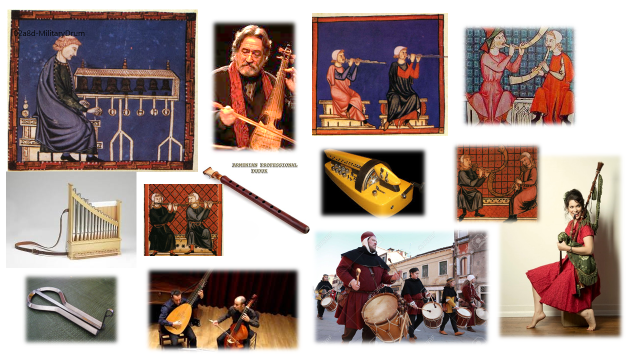
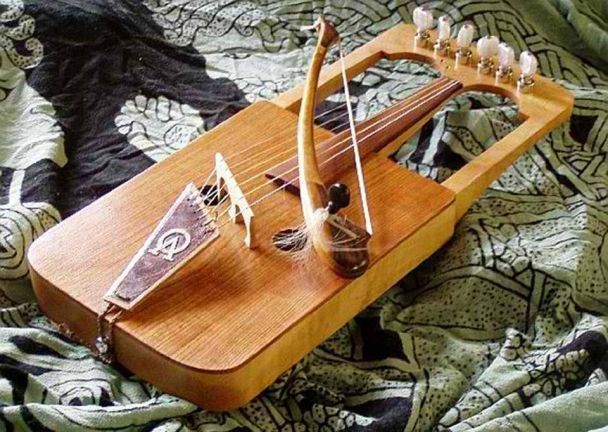
Toss in the vinegarette about 10 minutes before you serve the salad. It serves well when the salad is chilled, too. It’s a great accompaniment to grilled shrimp, and a nice glass of buttery chardonnay.

Actually, I had it with grilled lamb steak and a paloma drink made with tequila, lime juice, salt, and squirt grapefruit soda. Usually, I float a lime wedge, but the picture shows that I used a lemon wedge. It’s delicious and refreshing. Eating on the deck with singing birds and small wildlife flitting about makes it all perfect.

My Work and Why I Create in the Kitchen

My work as a cultural geographer with a goal of moving toward institutional equity for historically excluded identities is a great mission for me, but I realize the institution for whom I work has a goal, which is more performative (“look at what we do”) than authentic and action-oriented. The institution still sees that recruiting more student, faculty, and staff of color is more of a favor to us as opposed to the fact that human diversity stregthens institutions. That can feel like my work in intercultural learning is more for show since more and more programming is implemented toward a pereived deficit rather than building on the strengths of human diversity.

The feedback from the students I mentor is the great part, along with teaching, which I adore, however I am not paid what I’m worth, which brings me to why I create in the kitchen. After a hard day at work fighting politics and the, almost, daily feedback that I’m not enough (I have a great boss, but she has to fight the same kinds of negative pushback from her leaders), I find that an evening in the kitchen makes those negative parts of the day subside. I love to cook from scratch with the freshest ingredients. This is where it can get creative. Also, I love cooking with friends. Pictured here are my friends from India, who know the meaning of joy, happiness, and tasty foods. Now, for some ideas…

First of all, explore ingredients. Just like pairing a wine with a specific dish, spices can make or break the flavor profile of a meal. Learn what spices go best with what ingredients, such as meats, fish, vegetables, or fruits. For example, take a simple meal like spaghetti. You may choose a meat and tomato based marinara to go with your spaghetti noodles. Or you may choose a pesto sauce to pair with what ever pasta you choose. You can add shrimp to the pesto-based sauce. Be brave and experiment, if interersted in “kitchen therapy.” Also, there is no shortage of people willing to share their own secrets with you in a multitude of platforms.

If being in the kitchen does not interest, find that one thing that you can do to relieve stress. Give yourself permission to be you in however you show up. Is it art or cleaning the house (really!)? It could be decorating a room or your house. What ever interests you and you find it a way to relieve stress, take the time to heal yourself. I like to be in the kitchen, because it can be a very practical way to create something fun while I nourish myself and others, as the case may be.

Find those meals to prepare that are interesting and allow you to sit over them in leisure. Pictured above shows my English breakfast with Dalgona coffee. We take about two hours to consume this meal, because we want to take longer to eat it than what it took to prepare. Think of the all-day labor of, say, a Thanksgiving meal or other type holiday when special meals are presented at table. My mother used to say, “What took me all day to prepare, you’ve eaten in 15 minutes!” Many in the U.S. tend not to approach meals in a convivial manner, such as those in Mediterranean climates. Other advantages of consuming a meal slowly means that you know when your stomach is full, and there is no hesitation in pushing away from the table.

Sure, I have other hobbies that relax me. I like my “kitchen therapy” because it engages all the senses: smell, hearing, tasting, touching, and seeing. Yes. Other hobbies engage the senses, but I can’t eat my woodworking or jewelry projects.

Find your way. I will be a treat. Thank you for reading me.